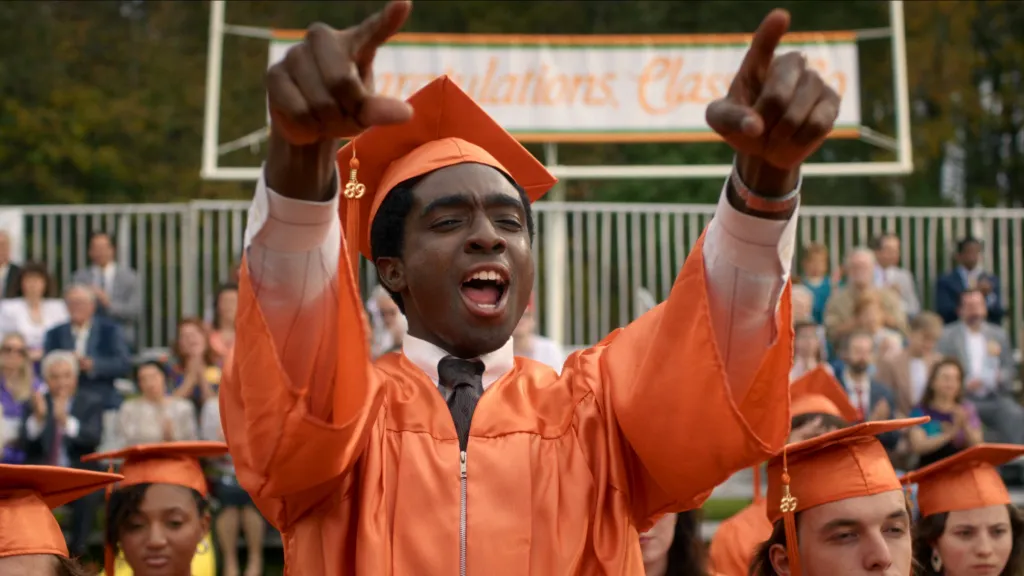
In the time since the Stranger Things series finale and the snowballing of Conformity Gate, members of the cast have opened up about not only their feelings on the ending but how the fan response evolved. Speaking in a new interview, Stranger Things star Caleb McLaughlin opened up about the Conformity Gate theory and why he thinks it put the fandom in a vicegrip. McLaughlin even revealed the details about the finale that fans missed, which might have squashed Conformity Gate before it could even get off the ground.
Stranger Things Star Roasts Conformity Gate Fan Theory
“At first, I thought the ‘Conformity Gate’ theory was dumb,” McLaughlin told The Hollywood Reporter. “I get that people want to live in this optimistic place of, ‘Oh, we want more Stranger Things,’ but the show is done, guys…The Duffers, our wonderful, amazing creators, wanted to leave everybody with this level of optimism that the show has always given everyone. So if they left the show without that, we would have left Stranger Things without the true essence of what we’ve been representing forever.”
McLaughlin then made a note about how the ending of the series was also rooted in its beginnings, pinpointing the exact narrative structure that should have tipped off viewers to the idea that it all reall was over.
“We started off season one playing Dungeons & Dragons, and we ended just like that,” he added. “And Mike’s storytelling and writing ability [that’s rooted in D&D] is how the show should have ended. I think people missed the concept of what the show is when they were like, ‘Oh, there’s going to be more.’ No, that’s just Mike’s imagination. That’s who he’s always been, even in season one. It’s all just storytelling.”
Ironically, though McLaughlin’s point is sound, the exact same logic is what drove many Stranger Things fans to believe in Conformity Gate. After defeating Vecna and the story flashing forward, Stranger Things revealed that the characters had all largely “conformed” into idealisitc versions of themselves, such as Lucas finding love with Max, Mike growing up (and adopting his dad’s haircut), Will moving away from Hawkins, and Dustin finally getting his big moment (resulting in girls inviting him to a party), plus Hopper and Joyce getting together and other character settling down. All that, combined with other elements like continuity errors and plot holes, had fans convinced that the life seen at the end of the finale was actually just a glamor created by Vecna, who had actually won in the end.
To make it even more distinct, Max even appeared to call out all of this in the finale during the conclusion of their Dungeons & Dragons campaign, noting, “That’s it? Comfort and happiness? Could you be more trite? I thought you were some kind of master storyteller or something.” What some fans interpreted as set-up for the ultimate rug pull was actually the Duffers having a bit of a meta-commentary about the show itself.
As noted by McLaughlin, though, this culminating scene ties together the entirety of the series, not only in how the D&D games have mirrored life the entire time but in bringing it all in for a landing. Once the story is over, they all put their characters away on a shelf and leave, watching as the next generation takes over the game. The ending was always there, even as compelling as a Tiktok to the contrary might have been.