Videos by ComicBook.com
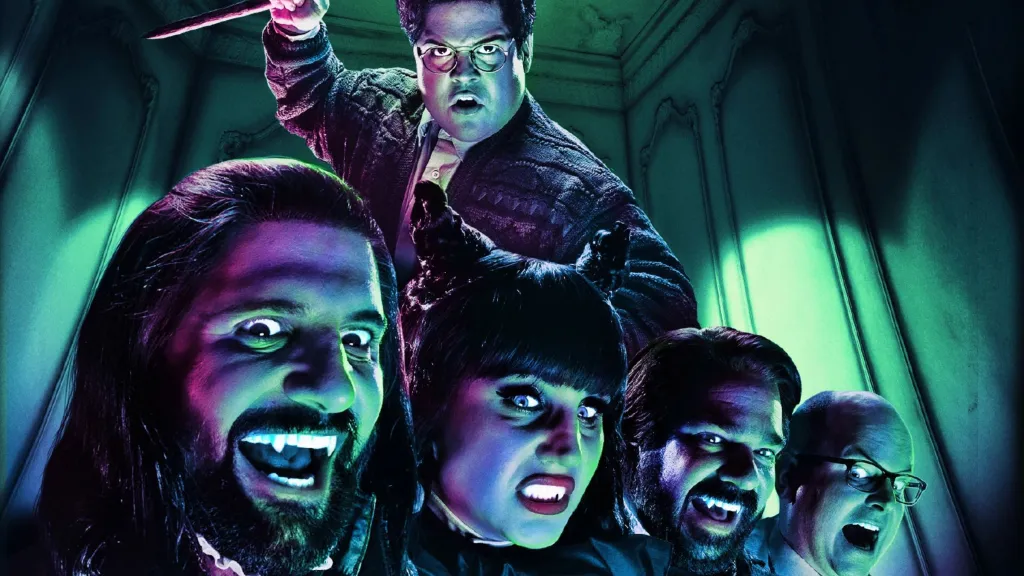
With diverse and compelling characters, plotlines that gave the show good reason to exist, and phenomenal performances by Harvey Guillén, Natasia Demetriou, Matt Berry, Kayvan Novak, Mark Proksch, and Doug Jones, it’s a show that never had a truly rotten season. That said, of the six, some are undoubtedly better than others.
6) Season 6

When it was announced that What We Do in the Shadows would be ending with its sixth season, fans were both sad to see it end and somewhat grateful that it was a show going out on its own terms. Had it overstayed its welcome, it could have diminished the impact of its earlier years. Unfortunately, Season 6 still feels like the show overstayed its welcome a bit.
To be fair, it must have been incredibly difficult to figure out how best to end a show about eternal beings, and it makes sense to focus so much on Guillermo, but really all the season has to say is that Guillermo moves away from being a familiar/bodyguard and towards being a corporate drone only to find out the two lives aren’t so different. It’s a fine enough point, but it’s obvious that’s what they’re going for as soon as we’re introduced to Cannon Capital Strategies. Furthermore, the season’s way of forcing Nadja and Nandor into Guillermo’s new job just doesn’t play as smoothly as one might hope. The result is a season that is rarely funny and even less frequently feels like a necessary extension of the overall story. Season 6 is What We Do in the Shadows‘ weakest year by a country mile, even if it hovers a notch or two above being poor television.
5) Season 4

When it comes to major running plotlines, Season 4 has the greatest disparity in terms of quality. Just as with Season 3 (more on that in a second), the Laszlo-Colin Robinson plot is great here. For the most part, What We Do in the Shadows‘ vampiric characters are individuals who change slightly but end up returning to who they were in Season 1. But, here, we see Laszlo become a father figure, and we know it’s changed him, even if his progeny (a reincarnated Colin Robinson) almost immediately forgets all their time together.
Nadja’s opening of a vampire nightclub, however, consistently falls flat. It’s there to show she has ambition and wants to grow, but that was already done with the previous season’s Vampiric Council thread. Falling somewhere towards the middle is Nandor’s finding of a Djinn lamp, and that mostly works not in a narrative sense but rather because Anoop Desai’s put-upon line readings are so hysterical.
4) Season 3

The good thing about Season 3 is its middle few episodes are quite strong. That’s not to say any of it is particularly poor, but early season episodes like “The Cloak of Duplication” and “Gail” rely a bit too much on either cringe humor or one-joke premises. But episodes five through eight, “The Chamber of Judgement,” “The Escape,” “The Siren,” and “The Wellness Center,” are all winners (the moment in “The Chamber of Judgement” when Derek, now a vampire, explains away his crimes with a “Whoops” is amazing).
Like with Season 4, Season 2 has several major running thread plotlines, and of the two biggest, one works better than the other. The stronger of the two is Laszlo and Colin Robinson’s bonding, and the season does a really great job of dropping the latter’s impending death on the audience (though, of course, Colin Robinson would return). On the lesser end, Nandor and Nadja’s running of the Vampiric Council kind of comes and goes. However, the Season 4 plotline it led into, Nadja’s nightclub, was worse.