Videos by ComicBook.com
With or without the Doctor as an anchor, the spinoffs have explored a variety of tones, genres, formats, characters, and concepts. Here we’ve compiled a list of all Doctor Who’s biggest attempts to branch out, ranked from baffling misfires to bona fide canon classics.
10) K-9 and Company

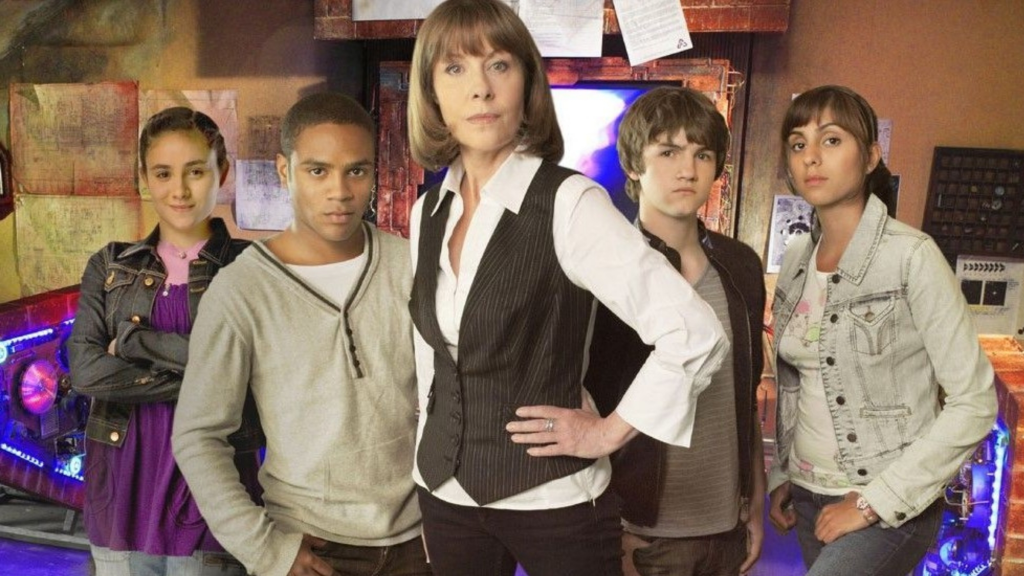
K-9 and Co grew directly out of the Fourth Doctor era’s most enduring companion: Sarah Jane Smith. The spinoff premiered in 1981 with the pilot ep “A Girl’s Best Friend,” and gave us Elisabeth Sladen’s Sarah Jane as a freelance investigator living on Earth, aided by a gist from the Doctor, K-9 Mark III. The concept was an early attempt to translate the companion experience into a standalone format. Sadly, however, the show struggled to justify itself from the start and never fully decided whether its audience was adults or children. It may have planted the seed for future spinoffs, but ultimately doesn’t stand up on its own and feels more like a half-baked proof of concept.
9) K-9

Unlike K-9 and Co before it, K-9 wasn’t actually anchored to a specific Doctor era, which became one of the many problems. Produced independently and airing in 2009 during the Tennant-to-Smith transition, the series reimagines K-9 as a semi-autonomous alien artifact stranded on Earth. The Doctor is reduced to a vague backstory, with no real concrete presence or tether to the larger Whoniverse. The show’s concept leans far too much into corny coming-of-age sci-fi tropes, focusing on teenage protagonists. While it could have been done well, K-9 feels awkward and hollow and more like a generic kids’ show than something in the Doctor Who canon.
8) Daleks!
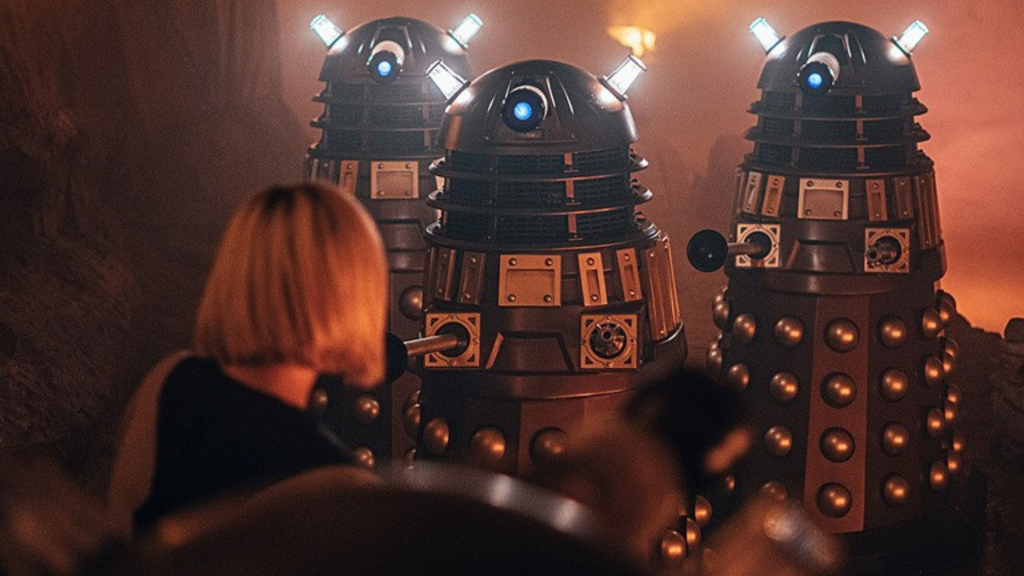
Daleks! removes humanity (and the Doctor) from the stage entirely. Produced during the modern era for BBC iPlayer, the animated series reframes the Daleks as the protagonists in their own internal power struggles, tying directly into Doctor Who lore about Dalek civil wars. Daleks! succeeds in offering fans a new perspective and explains why they’re such great villains by focusing on the Dalek hierarchy and obsession with purity. However, its short-form animation format and writing weak points mean it doesn’t quite connect emotionally. It’s an interesting experiment for fans into lore, but it lacks any great character-driven narrative threads or emotional payoff.
7) Class

Class sprang from the Twelfth Doctor era and emerged from Steven Moffat’s fascination with legacy locations. Set at Coal Hill Academy (the school from An Unearthly Child), the show turns a historic Doctor Who site into ground zero for an alien attack. The Twelfth Doctor appears in the premiere, explicitly passing the responsibility of survival onto the students. This handoff means the show starts out feeling like a more deliberate offshoot than the prior entries on the list. It’s also darker and more serious, with its story implications feeling more real and permanent. Yet ultimately, Class struggles to find its footing as a cohesive Doctor Who title. The tonal shifts are almost enough to give you whiplash, and it ventures so far from the original series’ optimism that it ends up feeling like another universe entirely. It never had a chance to get better, either, as it was cancelled after just one season.
6) Dreamland
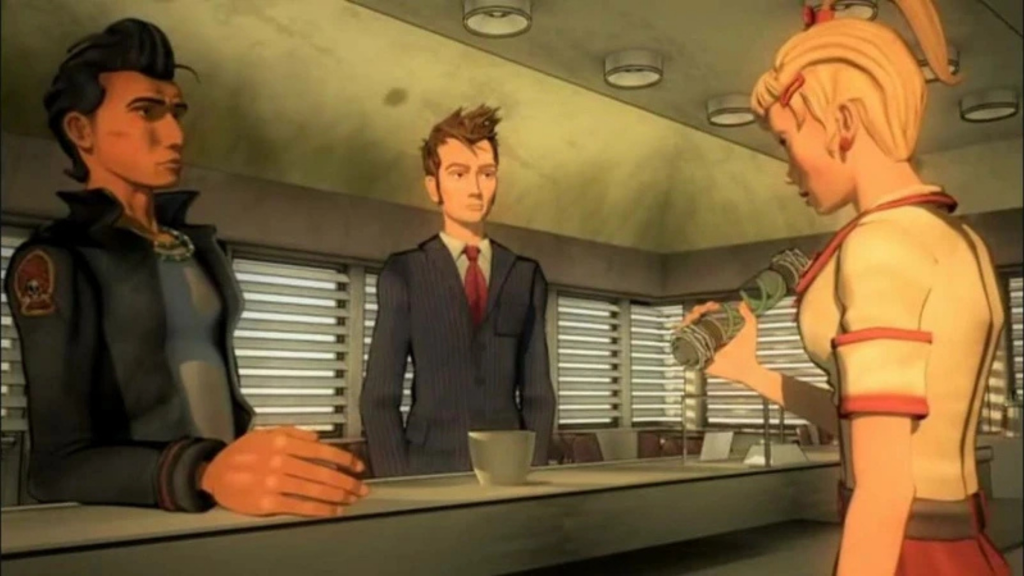
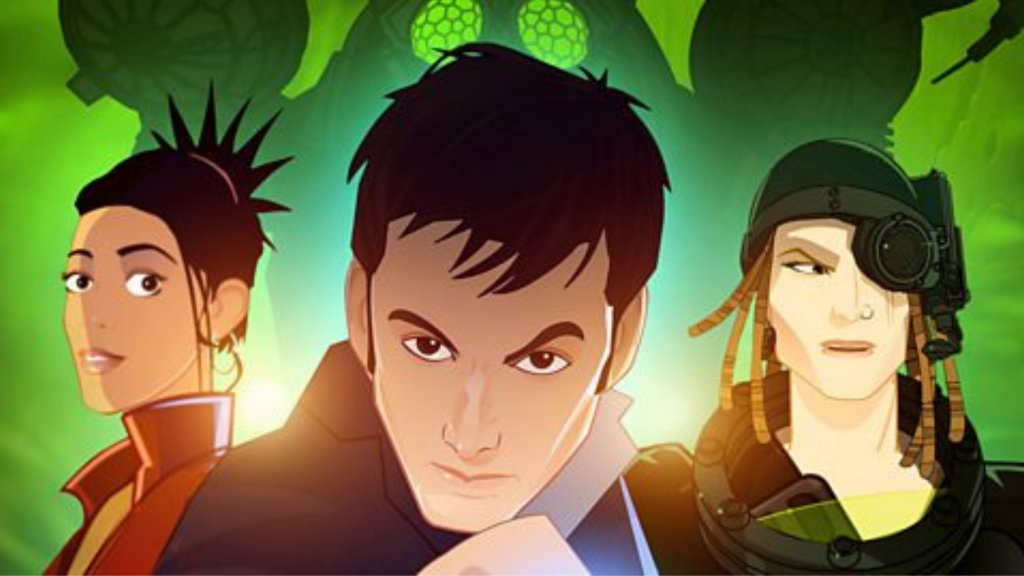
Dreamland crawled out of the Tenth Doctor era. Notably, it actually starred David Tennant as the Doctor, making it more of an animated side adventure than a true spinoff. Set in the desert near Area 51, the story has fun with UFOs and secret government conspiracies, eventually devolving into full-blown paranoia. While the premise fits in perfectly wth the pulpy sci-fi vibe of the Tennant era, the CGI animation sadly undermines anything interesting. Character movement is stiff, and the format prevents the story from going anywhere mind-blowing. Still, its direct connection to the Doctor gives it a bit more narrative legitimacy than some of the other peripheral projects on the list.