Videos by ComicBook.com
Evaluating these endings is a tall order. While a happy and neat ending is the ultimate goal, especially in a series that draws so heavily from beloved ’80s classics, the most striking conclusions were those that embraced the bittersweet reality of their trauma. From the flickering lights of the Byers’ living room to the final showdown in the Abyss, here is how the journeys of our favorite Hawkins heroes—and their greatest enemy—came to a close.
11) Robin Buckley

Robin’s ending felt somewhat secondary compared to the core group of older teens/young adults, but it infused a necessary touch of humanity after the years of supernatural. While she finally stepped out of Steve’s shadow and moved to the East Coast for college, her arc remained largely tied to her role as a support system for others.
The resolution to Robin’s story emphasized that not everyone needs to be special to have a meaningful life. However, because she joined the fray later in the series, her final moments didn’t carry the same emotional weight as those who had been fighting the Demogorgons since the very beginning.
10) Will Byers

Will Byers finally found the closure he deserved after years of being the Mind Flayer’s (second) favorite victim. His ending focused on moving on after severing his psychic tether to the Mind Flayer and the Abyss, allowing him to finally experience the normal life that was robbed from him since childhood. It was a quiet, internal victory that prioritized his mental health and his ability to exist as an individual rather than a vessel for a multidimensional entity or ancient evil.
Despite seeing Will living an authentically open life that embraced his queerness and his ability to move on, his ending felt slightly muted. While his bravery was never in question, his final scenes were more about the absence of pain rather than the presence of a new, definitive purpose. It was a necessary reset for his life after everything he’s been through, but it lacked the high-stakes emotional payoff that many fans expected, given his central role in the show’s mythology since the pilot episode.
9) Henry Creel

As the primary antagonist at the Mind Flayer’s “5-star General,” Henry’s ending was a masterclass in cosmic justice and flipped the tropes of 11th-hour redemption on its head. His descent into the darkness of his own choosing was a dark mirror to Eleven’s journey, showing what happens when power is fueled by nothing but nihilism. His defeat wasn’t just a long-overdue physical death but a complete dismantling of his dark philosophy, proving that human connection is fundamentally stronger than any of the twisted goals he championed.
Henry’s ending worked because it didn’t try to redeem him. He remained a terrifying force until the very end, even maintaining that he chose to let the Mind Flayer in as a child. His demise was more than earned and was even more meaningful that it came at Joyce’s hands after all the pain and suffering he caused the Byers and everyone close to them. While villains rarely get “good” endings in a traditional sense, Henry’s conclusion was perfect, providing the definitive closure for the big bad doesn’t always need to be tied to a journey back to the light.
8) Eleven

Eleven’s conclusion was a poignant mix of sacrifice and liberation (and a heavy dose of debate from the fanbase). After years of being treated as a weapon, she finally chose a path that allowed her to be a person first and a hero second. Her final sacrifice against the darkness was the ultimate realization of her strength, but the true victory was her ability to walk away from the battlefield and finally find a sense of home, no matter the cost of what she was leaving behind.
While her ending was deeply emotional, it carried a heavy sense of loss. She saved the world, but the cost of her journey was steep, leaving her with a lifetime of memories that few could ever truly understand and that she could never share with the new people in her life (if you choose to believe Mike’s theory). Leaving her ending ambiguous was a powerful, fitting conclusion for a girl who started as a number and ended as a legend.
7) Lucas Sinclair & Max Mayfield
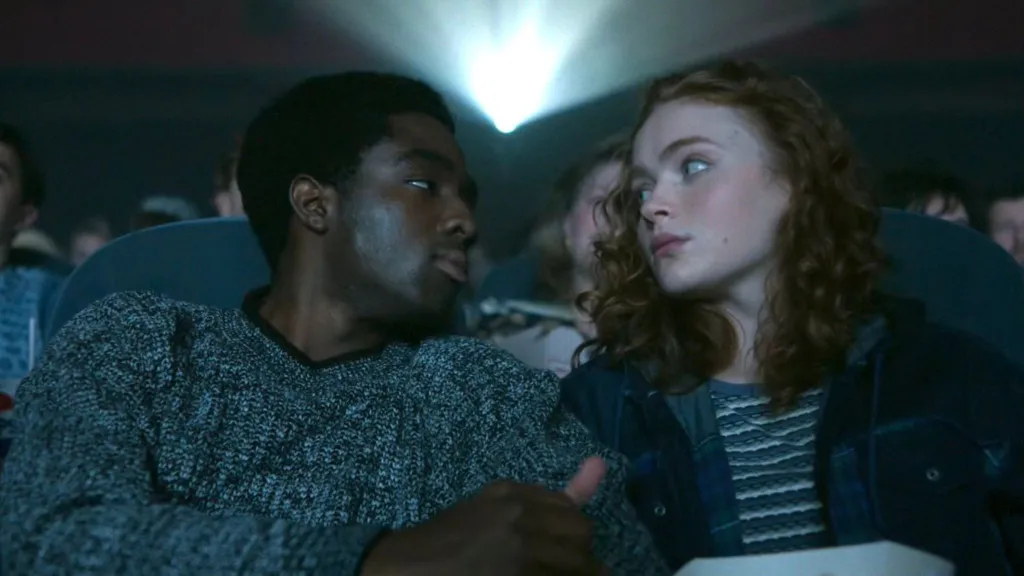
The resolution for Lucas and Max was perhaps the most heart-warming of the entire series. Their ending focused on the power of hope in the face of absolute tragedy. Lucas’ unwavering devotion while Max navigated the literal and metaphorical darkness of her recovery was a grounding, human element in the middle of the supernatural stakes. It wasn’t a clean victory, but it was a deeply resilient and realistic one.
This ending worked so well because it refused to give an easy answer. By leaving their future slightly open-ended but anchored in mutual love, the story honored the gravity of Max’s physical and mental injuries. It highlighted Lucas’s growth from a skeptical kid into a man of unwavering character. Their bond became the emotional anchor of the finale, proving that some wounds are healed through presence.
6) Jonathan Byers

Jonathan Byers’ ending was a subtle but effective return to his roots. After a period of feeling adrift, his conclusion saw him returning to his love of photography/filmmaking. He moved past the uncertainty of his later years to find a mature path forward, finally taking the step towards his own personal dreams at NYU that he had previously been so afraid of in Season 4.
His ending felt grounded and realistic. He didn’t need a flashy superhero moment (though, saving Steve from certain death on the SQWK radio tower certainly was that moment for many); instead, he found peace and his place in the world. By choosing to stay true to himself rather than conforming to social expectations or falling back on the shared trauma that bound him and Nancy, Jonathan’s story closed on a note of quiet dignity. It was a satisfying wrap-up for a character who had always been the series’ most observant and soulful outsider during the chaos.
5) Joyce Byers & Jim Hopper

For Joyce and Hopper, the ending was the hard-earned reward for years of relentless suffering. The confirmation that they were still together and stronger than ever offered a sense of normalcy that once seemed impossible for two people so haunted by the past. Seeing them finally able to share a home at Hopper’s cabin without the threat of Russian prisons or interdimensional monsters was a cathartic release for the audience and the characters alike.