Videos by ComicBook.com
These eight villains — some tragic, some terrifying — remind us that Star Trek’s greatest conflicts aren’t always the battles fought between ships, but within the consciences of those who believe they’re doing the right thing. From Shakespeare-quoting Klingons to zealots, soldiers, and forgotten monsters, here are eight great Star Trek villains nobody talks about — ranked from great to downright legendary.
8. General Chang (Star Trek VI: The Undiscovered Country)
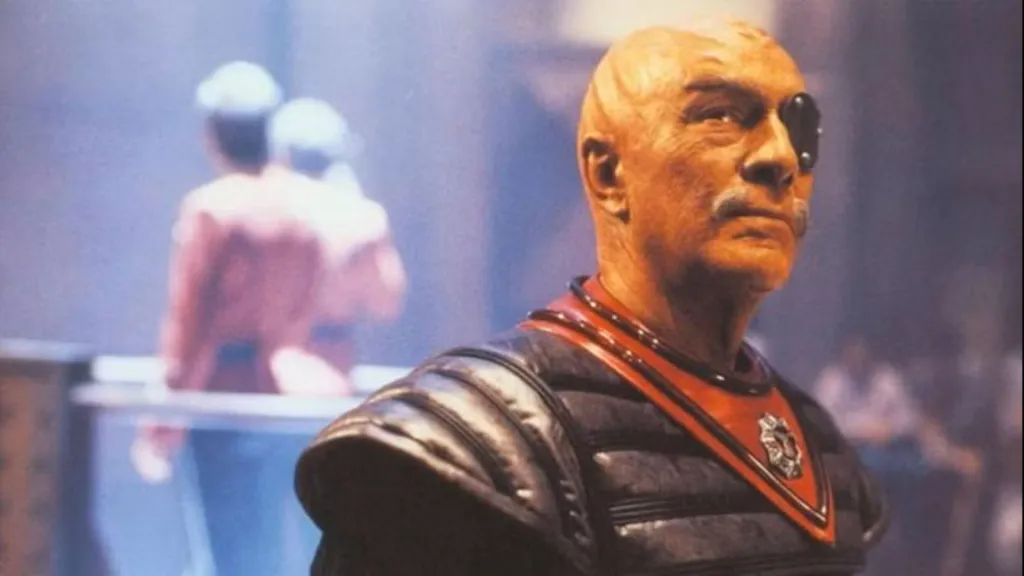
Many Klingons on Star Trek unfortunately suffer from lazy writing, conforming to the archetype of being loud, obnoxious (especially when drinking), and always looking for a fight. That’s partly why Klingon characters like Worf from The Next Generation, who have a little more depth, are so refreshing. But few Klingons have ever been as charismatic — or as dangerous — as The Undiscovered Country’s General Chang.
Played with Shakespearean flair by the late, great Christopher Plummer, Chang is part warlord, part philosopher, and an all-around menace. With his eyepatch quite literally bolted to his face (because nothing says ‘hard’ like drilling nails into your skull) and a tendency to quote Hamlet mid-battle, Chang is pure theatre and we’re here for it.
Not only did he mastermind a conspiracy involving Romulans, Starfleet officers, and fellow Klingons to sabotage peace between the Federation and the Empire, but he also orchestrated the successful assassination of Klingon Chancellor Gorkon and very nearly succeeded in killing the Federation president. If he wasn’t already metal enough, Chang dies laughing — reciting Shakespeare as his ship burns. Sophisticated, ruthless, and eminently quotable, Chang is truly the Klingon gold standard.
7. The Duras Sisters (Star Trek: The Next Generation / Deep Space Nine)

In a franchise that’s brought us many a scheming Klingon, arguably none were more dangerous or duplicitous than everyone’s favorite sisters, Lursa and B’Etor of the House Duras. First introduced in The Next Generation, the sisters combined the warrior pride of the Klingon people with dangerous ambition. While they weren’t afraid of a scrap, they also showed ruthless political cunning, manipulating alliances and even becoming key players in the Klingon Civil War.
Played with gleeful aplomb by Barbara March and Gwynyth Walsh, these sisters turned dishonor into an art form. They allied with the Romulans and even took their fight to the big screen in Star Trek Generations. Even after their death, it’s clear they are still considered formidable opponents as Worf still refers to himself as the Bane of House Duras. They might not have been your average double act, but they sure were entertaining, and in terms of sheer chaos and ambition, the Duras sisters certainly deserve more recognition.
6. The Vidiians (Star Trek: Voyager)
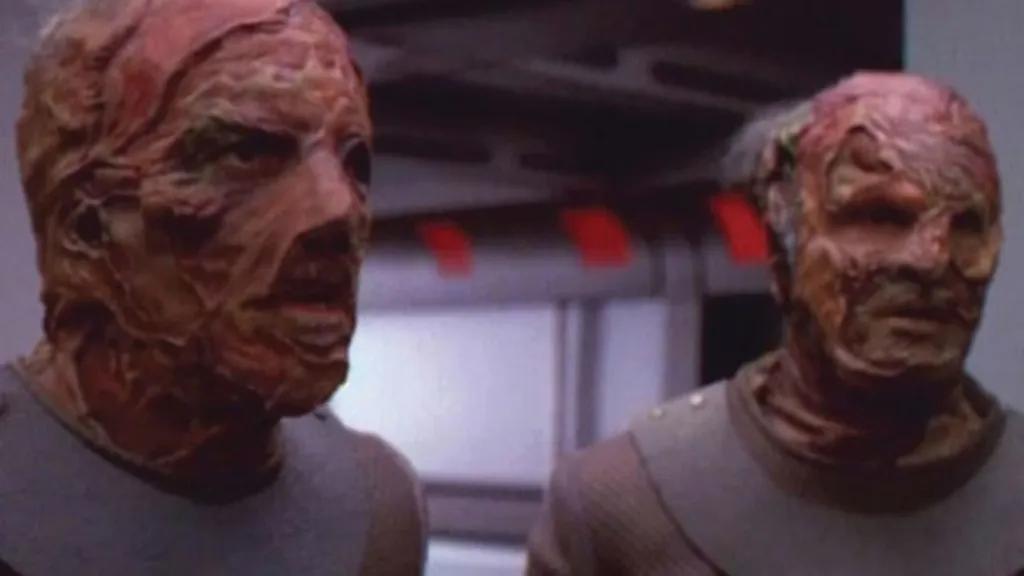
Forget the Borg or the (quite frankly, cheap Klingon knockoff) Kazon – Star Trek: Voyager, despite its many failings, introduced us to quite possibly one of the scariest Star Trek Villains ever, who quite frankly did not get enough screen time. Star Trek isn’t necessarily the sort of place you’d expect to find body horror, but it doesn’t get more nightmare-inducing than the Vidiians. This once-ordinary race was sadly ravaged by a disease known as “the Phage,” which slowly devours their flesh and organs. To survive, the Vidiians turned to piracy, harvesting body parts from other species — often by force – to stave off the progression of the disease.
Equal parts terrifying and tragic, the Vidiians brought the incredibly complex themes of medical ethics and survival horror to Voyager. What’s so scary about the Vidiians isn’t just their appearance but the lengths to which they will go to survive and their genuine belief that what they are doing is for the greater good. The moment when a Vidiian scientist literally skins and wears another person’s face to try to woo B’Elanna Torres remains one of Trek’s most unsettling scenes. The Vidiians weren’t monsters by choice — and that made them far scarier.
5. Nero (Star Trek)
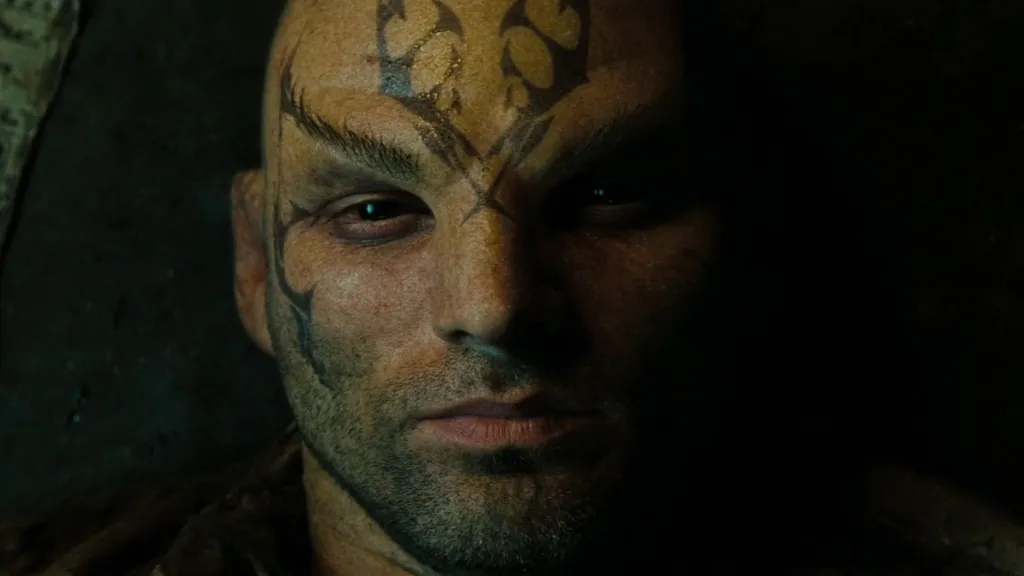
The Kelvin timeline films often get a bad rap, and while it’s easy to see why Benedict Cumberbatch’s Khan wouldn’t go down well, or the reinventing of other classic characters, we think that one reboot villain deserved far more credit than he got. Nero, played by Eric Bana, might seem like a one-trick pony, shouty and set on revenge. On paper, he’s certainly a stereotypical angry Romulan with an oversized ship and a vendetta against Spock; however, Bana’s performance gives the character a kind of unstable intensity that makes him truly compelling to watch.
A little cliché and just a tad insane, his hilariously casual greeting — “Hi, Christopher. I’m Nero.” — simply oozes menace, while his tragic motivation (the loss of his wife and child and home planet Romulus) adds an emotional weight and reasoning rarely seen in villains. Yes, he’s still a ruthless murderer, whatever his motivations, but beneath the chaos is a broken man lashing out at a universe that failed him — a theme that fits Star Trek perfectly.
4. Roga Danar (Star Trek: The Next Generation )

Introduced in the TNG episode “The Hunted,” Roga Danar’s story is one of the franchise’s most quietly heartbreaking tragedies. The Angosians used genetically engineered super soldiers to put an end to war on their planet; however, in a storyline designed to be a thinly veiled analogy for how we treat veterans and those traumatized by war, the Angosians neglected to rehabilitate the super soldiers, claiming their violent tendencies made them dangerous and throwing them all in a colony. A genetically modified soldier abandoned by the society he fought for, Danar becomes both hero and monster — a man programmed for violence in a world that no longer wants him.
“The Hunted” might not have been the most memorable episode overall, but it gave The Next Generation scope to tackle the human cost of war and the ethical dilemmas of genetic screening/ enhancement, topics that are just as relevant in the real world today. Played by Jeff McCarthy, Danar made a formidable villain. His ability to outsmart the Enterprise crew and evade sensors turns him into a tactical nightmare, but his motivations are painfully human. He doesn’t crave power — just freedom and dignity. That makes him one of Trek’s most layered “villains.”