Television tracked those shifts with remarkable ambition. The cable and broadcast landscape of the 2000s produced a wave of serialized sci-fi dramas that operated at a level of thematic complexity the genre had rarely achieved on the small screen before. That’s because writers’ rooms began constructing multi-season mythologies dense enough to sustain the kind of episode-by-episode critical analysis previously associated with prestige drama. That format shift produced shows that exploited television’s structural advantages fully, using expanded running time to build political allegory and character depth that the compressed logic of theatrical science fiction simply could not accommodate. Twenty years later, the best of that output has lost none of its force.
7) Eureka
Image courtesy of Syfy
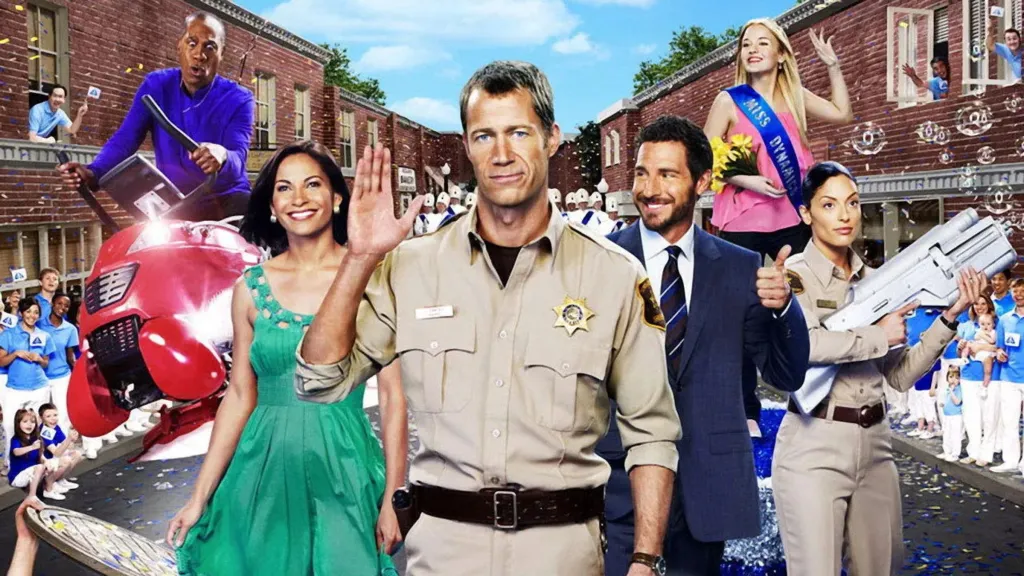
Eureka launched on Syfy in July 2006 with a premise anchored in absurdist comedy. The series kicks off when a US Marshal named Jack Carter (Colin Ferguson) stumbles into a classified Pacific Northwest town populated entirely by government-funded geniuses, and is promptly appointed its sheriff. The show’s tone is consistently lighter than anything else on this list, prioritizing warmth and inventive weekly problem-solving over serialized mythology. Still, Eureka understands that comedy can only work with genuine emotional investment, especially as sci-fi elements can push away the average audience. Carter’s everyman perspective gives the audience a stable entry point into a community where experimental physics and malfunctioning robotics are as banal as local weather, and the ensemble around him developed real chemistry across five seasons. As a result, Eureka holds up as a demonstration that science fiction does not require relentless darkness, and a confident comic framework generates its own kind of staying power.
6) The 4400
Image courtesy of USA Network
USA Network’s The 4400‘s most provocative element was never the 4,400 people who reappeared without aging after vanishing across decades. The show’s actual subject was the institutional machinery that activates when a government encounters a population it cannot categorize, and federal agents Tom Baldwin (Joel Gretsch) and Diana Skouris (Jacqueline McKenzie) spent four seasons operating uncomfortably inside that machinery. That framework gave the post-9/11 surveillance parallels room to develop into a full social movement narrative, built with a serialized patience that procedural television rarely allowed itself at the time. The show’s political intelligence was never incidental to its sci-fi mechanics but inseparable from them, which is what separates The 4400 from the wave of ability-based dramas that followed its success. Sadly, USA Network cancelled the series on a cliffhanger in 2007, and a CW reboot that arrived in 2021 lasted one season, which only confirmed how precisely the original had been calibrated.
5) Terminator: The Sarah Connor Chronicles
Image courtesy of Fox
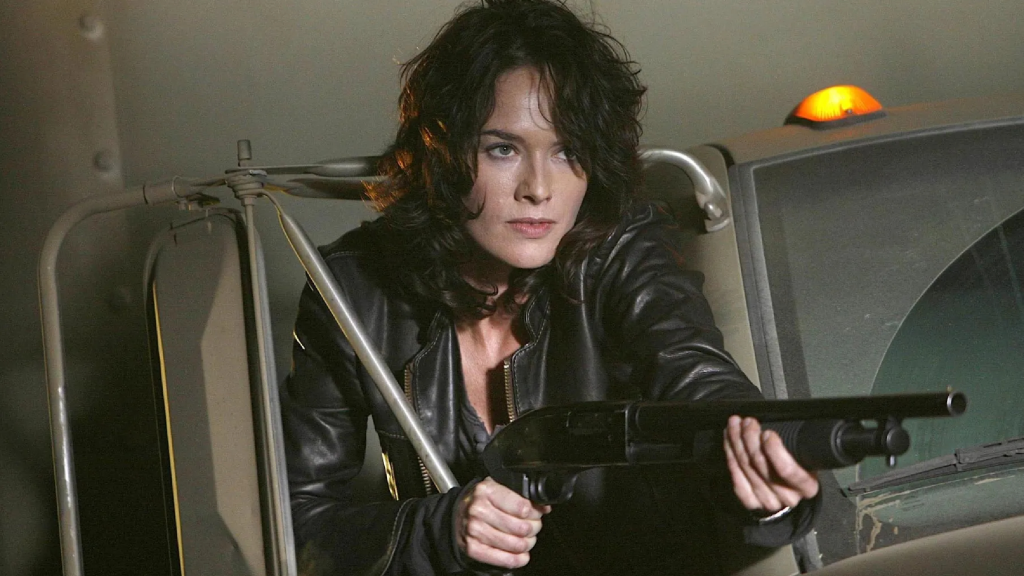
The Terminator films were built around momentum, and Fox’s The Sarah Connor Chronicles made the counterintuitive decision to slow everything down when it premiered in 2008. Picking up after Terminator 2: Judgment Day, the series followed Sarah (Lena Headey) and her son John (Thomas Dekker) as they jump forward to 2007 alongside Cameron (Summer Glau), a reprogrammed Terminator assigned to protect John. Over two seasons, Headey built a portrait of a woman consumed by a future she could never fully prevent, carrying a physical and emotional exhaustion that Glau’s mechanical precision consistently counterbalanced to powerful effect. The series also traced Skynet’s origins with a procedural rigor the films never attempted, treating the mythology as a serious subject rather than an action backdrop. Fox cancelled The Sarah Connor Chronicles on a cliffhanger in 2009, and every subsequent Terminator feature has since demonstrated how difficult this material is to handle well, and how the series deserved more screen time.
4) Firefly
Image via Fox
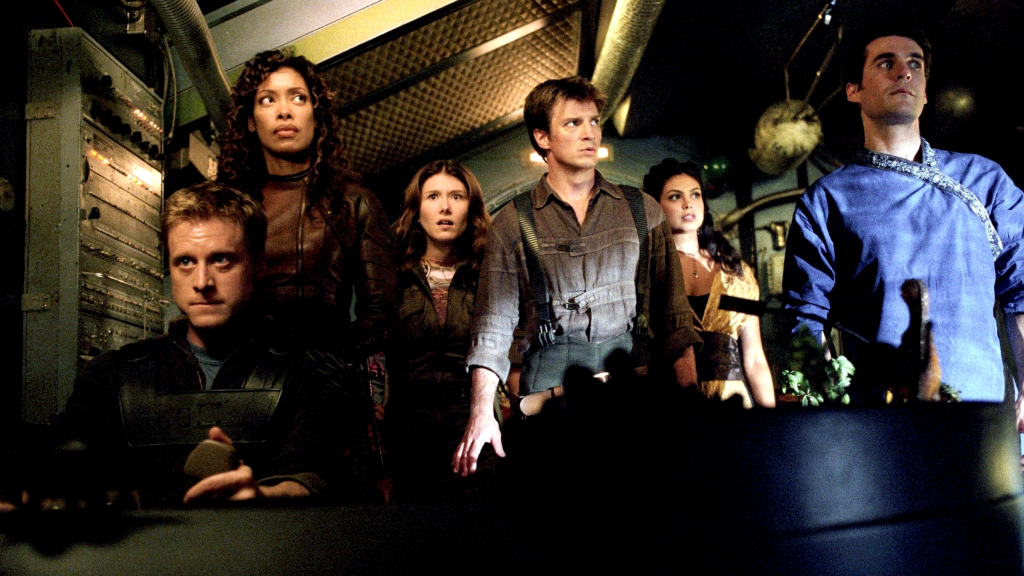
Joss Whedon’s Firefly became one of the most discussed sci-fi series ever since Fox cancelled the project after a single season and 11 episodes. The space western placed Malcolm Reynolds (Nathan Fillion), a veteran of a failed galactic civil war, at the helm of a transport ship navigating the fringes of a solar system controlled by the authoritarian Alliance, building its world around class economics and institutional distrust rather than technological utopianism. That foundation, combined with a tonal range that moved between political cynicism, ensemble comedy, and genuine grief within a single episode, explains why the show’s absence became an injustice for sci-fi fans. Fortunately, an animated revival of Firefly was recently announced at Awesome Con, with showrunners Marc Guggenheim and Tara Butters developing the project through Fillion’s Collision33 and 20th Television Animation. The original cast is returning to their roles, though a network buyer has not yet been confirmed, which makes us slightly apprehensive about the franchise’s future.
3) Fringe
Image courtesy of Fox
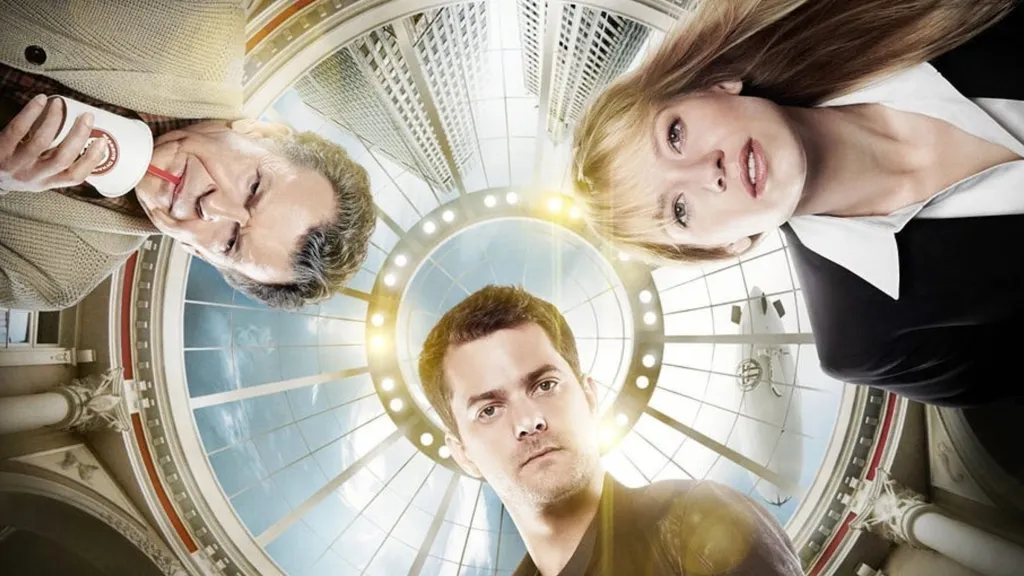
Fringe spent its first season on Fox as a procedural, following FBI agent Olivia Dunham (Anna Torv) and the institutionalized scientist Walter Bishop (John Noble) through standalone cases involving experimental technology. Then, for its second season, Fringe committed to a parallel universe mythology that transformed the procedural scaffolding into something far more formally ambitious. Walter became the series’s most enduring achievement, a portrayal of cognitive decay and guilty conscience whose emotional weight elevated the series well beyond its sci-fi context and anchored every twist the writers introduced. The fifth and final season of Fringe even rebuilt the entire premise in a dystopian future rather than coast on an established formula, a gamble that reflected genuine creative confidence. Fringe ran on Fox until 2013, and its structural influence on the prestige science fiction drama that followed is traceable even if its own reputation has never matched the actual quality of its output.
2) Lost
Image Courtesy of ABC
No network science fiction series before Lost had asked a mass audience to sustain the level of engagement that J.J. Abrams, Damon Lindelof, and Carlton Cuse demanded starting in September 2004. In the series, the survivors of Oceanic Flight 815 crash on an island with a history predating their arrival by centuries, and the show structured itself around the deliberate withholding of answers, trusting the audience to remain invested in characters whose motivations grew progressively more complicated with each passing season. John Locke (Terry O’Quinn) and Benjamin Linus (Michael Emerson) became two of television’s most psychologically complex figures, each embodying different dimensions of faith weaponized against reason, and the weekly critical analysis the show generated at its peak was unprecedented for network television. The finale of Lost remains one of the most debated conclusions in American television history, but the controversy surrounding the series’ final stretch has not diminished the quality of the seasons preceding it, nor the structural influence it had on every prestige serialized drama that followed, sci-fi or not.
1) Battlestar Galactica
Image courtesy of Syfy
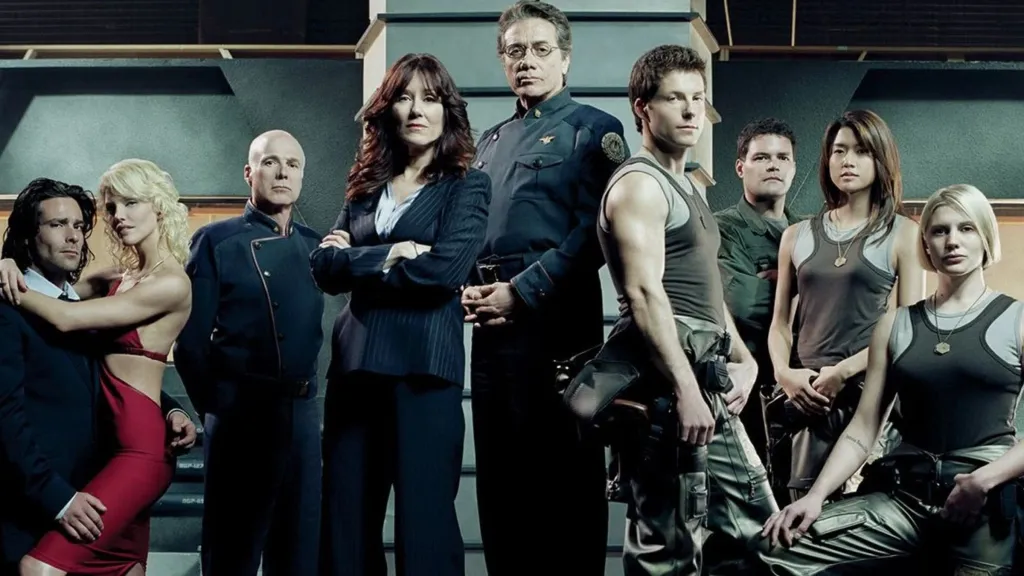
Ronald D. Moore’s reimagining of Battlestar Galactica reframed what science fiction television could accomplish as a political medium from its very first episode in 2004. The original 1978 series was a straightforward space adventure, but Moore’s version opened with the Cylons destroying most of human civilization, and the survivors fleeing aboard a ragtag fleet under Commander William Adama (Edward James Olmos) and civilian President Laura Roslin (Mary McDonnell), a power structure under constant pressure from the catastrophe surrounding it. That framework gave Moore the tools to interrogate democracy under existential threat, torture policy, and the ethics of survival with a directness rarely attempted in television. Furthermore, Katee Sackhoff’s Starbuck and James Callis’s Gaius Baltar gave the series two of the decade’s most psychologically complex characters, each embodying different dimensions of self-destruction and institutional complicity. The 2009 finale of Battlestar Galactica is genuinely divisive, and that division is legitimate, but the series remains one of the best sci-fi stories ever, and it’s well-worth revisiting today.
Which 2000s sci-fi series do you consider the most essential to revisit? Leave a comment below and join the conversation now in the ComicBook Forum!