Twenty-two years ago today, though, one of the best HBO shows of all-time made its debut, with the first episode of the western drama, Deadwood, premiering on March 21, 2004. Set against the backdrop of the 1870s and the expansion into the Dakota Territory, the series from creator David Milch quickly became one of the most unique shows on HBO, thanks to its period setting, but largely thanks to the writing and characters at the heart of it all. What remains so impressive about Deadwood all these years later, though, is just how perfect that first episode really was, setting the stage for what would become a short-lived but beloved show that still gets talked about fondly over two decades later. Full spoilers for Deadwood follow.
Deadwood’s Pilot Episode Perfectly Sets Up Every Character and Story
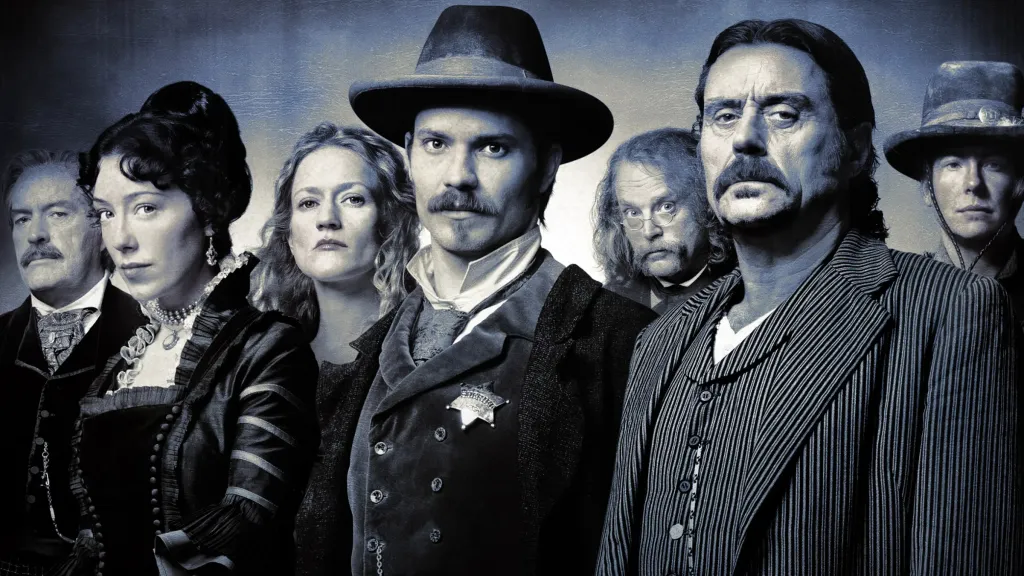
Directed by Walter Hill, who won the Emmy Award for Outstanding Directing for the episode, and, naturally, written by creator David Milch, Deadwood‘s first episode quickly sets the stage for almost everything that will happen over the course of its three seasons. Though the first season is one of the few across the whole series not set in the titular town, it reveals Timothy Olyphant’s Seth Bullock, a lawman who is turning in his badge for a new leaf but who cannot outgrow his penchant for frontier justice. Even as he works with his partner Sol Star (John Hawkes) to establish their business in Deadwood, he cannot break his mentality of trying to maintain law and order in an environment that rejects it on principle; it’s the defining arc for his character, and one he still hasn’t fully tamed by the time of Deadwood: The Movie.
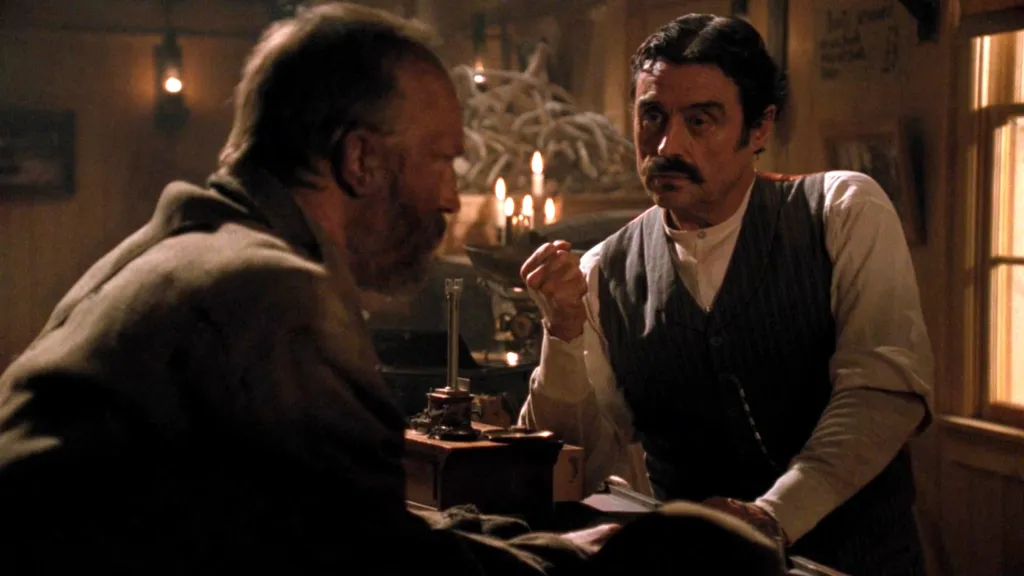
On the flipside of Bullock’s first scene, illuminating his character completely, the Deadwood pilot is also quick to reveal Ian McShane as Al Swearengen, whose influence and dominion over the “camp” of Deadwood is made crystal clear. Swearengen has positioned himself as one of the foremost authorities in Deadwood, creating a space for himself in a place that has no traditional hierarchy but where countless characters pledge fealty to him. In fact, almost every major plot thread that springs forth from Deadwood‘s first episode arrives because of Swearengen. He’s at the center of the scam to trick Brom Garret into buying a gold claim that is barren (a thread that will carry on for the entire series after his death just two episodes later), but also the man whom Bullock and Star have to negotiate to get a space for their eventual business. About the only storyline in the pilot that doesn’t directly hail from Swearengen’s influence is the arrival of Wild Bill Hicock, but even that has some crossover as the final minutes of the episode give way to the mob formed over the death of the Metz family, allegedly at the hands of the Sioux.
This element of the episode is yet another piece of the Deadwood puzzle that would influence the entire series, one that was not only present from the start but ties itself, once again, to Swearengen. The massacre of the Metz family not only brings Bullock and Wild Bill together, but it concludes with the discovery that their youngest daughter, Sofia, survived. Though Swearengen didn’t order the attack on the Metz family, he did employ the ones who attacked them, prompting a conspiracy by Al to kill Sofia later in the series to keep the connection from coming out. Once again, though, it’s an impressive feat of storytelling, as Deadwood‘s first episode clocks in at just over an hour, but lays the groundwork for everything that flows out of it.
Deadwood Remains One of HBO’s Complete Masterpieces
The element about Deadwood that continues to be a source of inspiration for fans is the poetic cadence found within its dialogue. Though the series is perhaps best known for the profane tirades that its characters go on, generating some controversy over “accuracy” given the time period, the dialogue perfected by Milch is one of its defining elements that sets it apart from any other TV drama. Not only does the dialogue have a Shakespearean quality that rewards viewers actively participating in watching the show, but each word tells a complete story about the scenes themselves and all the characters present, like this exchange in the first episode:
JACK MCCALL: “Jesus Christ, can we shake hands or something? — relieve the atmosphere? I mean how stupid do you think I am?”
WILD BILL HICKOK: “I don’t know, I just met you.”
This trend continued across the entire show’s run, with three seasons of near-perfect episodes. The lowest-rated Deadwood episode by IMDB standards holds a 7.9 out of 10, far from terrible itself, but that episode has major highlights for the series as well, as Ian McShane has to facilitate an almost silent performance as Swearengen battles kidney stones. Falling 36 out of 36 for the series may sound bad, but it points to the quality of Deadwood as a whole, that even its “worst-rated” episode is a masterclass in performing and writing, with McShane forced to act without his greatest asset in the entire series: Milch’s dialogue.
Despite its high quality and frequent Emmy Award nominations, Deadwood was cancelled after its third season, leaving behind multiple plot threads that demanded answers and a rabid fan base eager to see more of their favorite characters. Time would remain on the show’s side, as the series continued to age like fine wine, and the hope to see it continued, or even concluded, remained a hot topic for its cast and creators (who still talk to this day about their fondness for the series). Eventually, the series got its closing chapter, with Deadwood: The Movie in 2019, finally offering a sense of closure. The premiere of that final story served as the ending of the series, but also a solemn reminder of what fans had fallen in love with years before. Today officially becomes another one of those days, as it shows that even two decades later, one of HBO’s best shows remains a high bar for them to clear.