Videos by ComicBook.com
Released in 1997, the movie is known for diving into themes like faith, science, and the search for something bigger. But what also lands it on lists of iconic movie moments is a scene right at the start, involving the younger version of the main character. Young Ellie (Jena Malone) runs up the stairs to get her father’s medicine, and everything seems to be shot normally – until her hand reaches a cabinet and, in a blink, we realize we were seeing it all through a “mirror” – or so we thought. Turns out, there is no mirror. What looked like a reflection was actually a super clever visual trick. The effect is so perfect that even after you find out how it was done, the weird, mind-bending feeling still hits you.
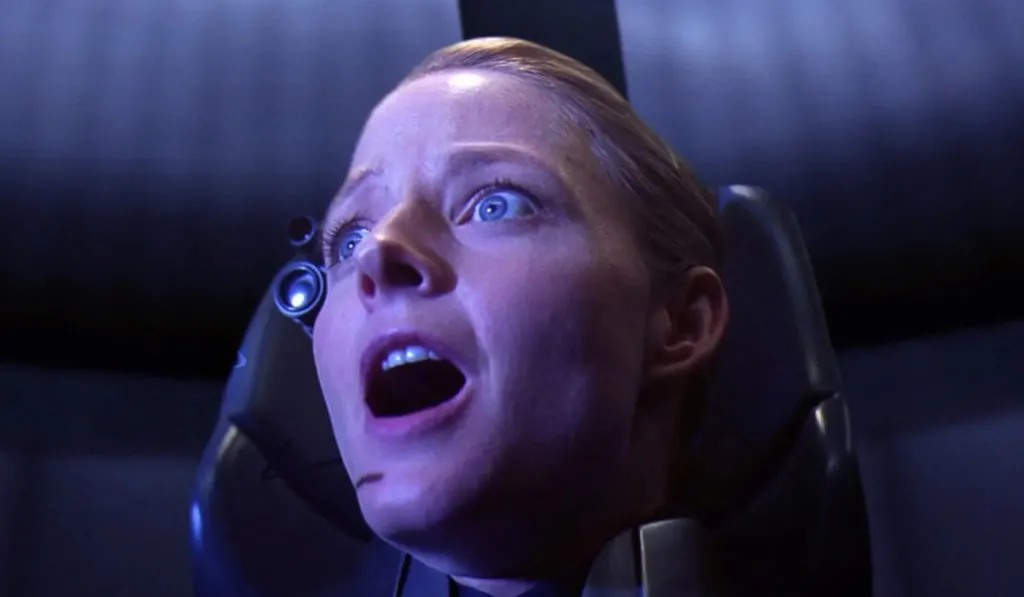
However, it’s not that hard to explain: the scene was made by layering three different shots – one of Ellie running up the stairs with the camera moving with her, another of the cabinet door without the mirror (but with a blue screen), and a third with a still image that acts like a fake reflection. All of it was lined up with crazy precision so the transition would look seamless. According to the effects team, the camera operator had to do the run over and over again until the timing and emotion matched perfectly. The focus, the actress’s fingers, the lighting – everything had to be totally in sync. Besides, since technology wasn’t nearly as advanced as it is today, they even had to remove the focus-puller frame by frame afterward.
It looks like a sequence shot, but it’s just a montage that is so well done that it totally passes as one. Even filmmakers like James Wan have admitted that, even though they know the technique, they still find themselves trying to figure out how it was pulled off when they watch the scene.
The movie’s compositing supervisor, Sheena Duggal, said in interviews that this scene demanded a level of precision that, for the ’90s, was tough even by Hollywood standards. Zemeckis came up with the idea as a kind of visual and emotional challenge: the camera would act like a mirror following the character, but without ever showing that it was reflecting anything. One of the coolest things about it is that your brain doesn’t have time to process what’s going on until the cabinet door swings open – and then the whole illusion snaps.

It’s a super smart trick, and because of that, it’s become unforgettable. Some outlets even called it one of the best movie moments of the ’90s. Visually, it blows your mind, and even now, people keep trying to figure out where the cut is, how it works, and why it still feels so real even after you know the secret. It’s one of those effects that gets you every single time – no matter how closely you watch it, you still can’t quite catch it. It’s clean, sharp, and seriously impressive.