Videos by ComicBook.com
Not to mention, there’s a blink and you’ll miss it cameo from Dana Carvey in the scene where Annie’s body is removed. That’s more of a fun fact than a reason why Halloween II is such an underrated slasher minor classic, but it’s a fun thing to notice, nonetheless. As for the actual factors that make Halloween II so fantastic, let’s go through them now.
A Thorough Replication of Carpenter’s Style
One of the best parts of Carpenter’s Halloween was the way Michael Myers would just stand behind a character as they were going about their business. It makes the audience feel as unsafe as Myers’ stalked prey. This was most notably seen when he’s peering in on Annie, as she spills hot popcorn butter on her clothing and changes. We see her from his point of view, but we also see him as she’s in the foreground of the shot.
Then, of course, there’s the scene where Laurie is sitting in the classroom and gets distracted by Michael, who is standing behind his stolen vehicle staring at her from across the street. She looks back down at her desk, looks up again, and he’s still there. However, the next time she looks up, he’s gone.
Halloween II continues the former example more than it does the latter. The latter classroom example wouldn’t work as well the second go-round, because if someone is looking straight at Michael during the events of the sequel, they’re going to know who he is, as the news about the murders has been all over the radio.
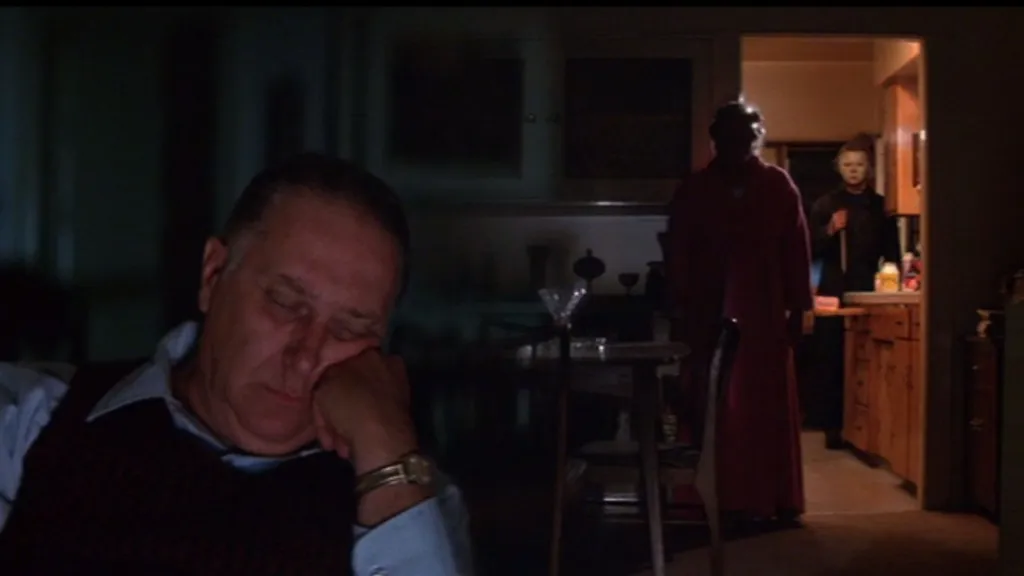
The former example however, still works. And much to its credit, Halloween II does just as great a job with the whole “Look, he’s right there in the background” technique. The best example is towards the very beginning of the film. Michael has evaded police and continues to creep around the once-peaceful suburban setting, at which point he goes into the home of the elderly Elrod couple. The news about the evening’s murder is playing on the television, which brings Mrs. Elrod out of the kitchen. Then, with the kitchen lights on, we see Michael standing in the kitchen, at which point he picks up a knife. When Mrs. Elrod goes back to reach for the knife, she instead finds only a small pool of blood, which elicits an understandable scream.
This scene works very well for several reasons. For one, there’s something viscerally engrossing about seeing Michael continue to slink around on this particular night, going from home to home as the various residents learn about the killings that have occurred just down the street. Then there’s the fact Michael stands in the middle of a brightly lit kitchen. It continues to shine a light (literally in this case) on Michael’s seeming lack of concern with being caught. On one hand this is because he knows he could take out anyone who approaches him, but it also conveys the notion that Michael is essentially a void. He has a one-track mind and that one track is distinctly inhuman.
On top of Carpenter’s Michael in the background technique, which continues to do a wonderful job building tension, there’s also the fact that Halloween II had a fair amount of direct involvement on the part of Carpenter himself. He didn’t direct it (that would be Rick Rosenthal, who eventually directed the nadir of the series, Halloween: Resurrection), but he did once again co-write the script with his longtime collaborator Debra Hill.
Carpenter also delivered a charmingly altered variation of his original score, this time played on a synthesizer organ as opposed to the piano tune of his ’78 film. This time, Carpenter composed the theme alongside Alan Howarth, with whom he worked on the same year’s Escape from New York (they would collaborate six more times after this, as well).
Carpenter wasn’t the only individual who made Halloween a perfect film, though. When it comes to its haunting yet rather simple Fall-coated visual aura, Dean Cundey made for the perfect cinematographer. And who served as cinematographer on Halloween II? Dean Cundey.
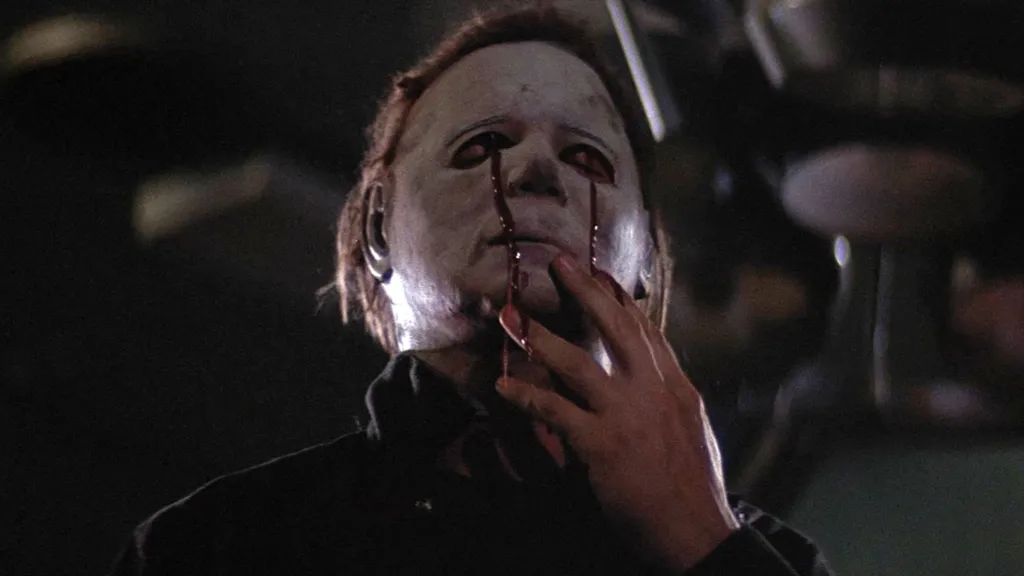
Cundey’s contribution is particularly noticeable in one scene. Like in the original Halloween, there is a hair-raising shot of Michael’s face materializing in a dark background as he’s revealed to be standing just behind a character. In the original film it was behind Laurie, just after she has discovered her friends murdered. In Halloween II, he appears behind Nurse Marshall just after she has discovered Dr. Mixter with a needle in his eye. Is the technique as jolting the second time? Not quite, but it does remain effective and endearing.
A Pair of Overarching Narrative Choices That Really Work
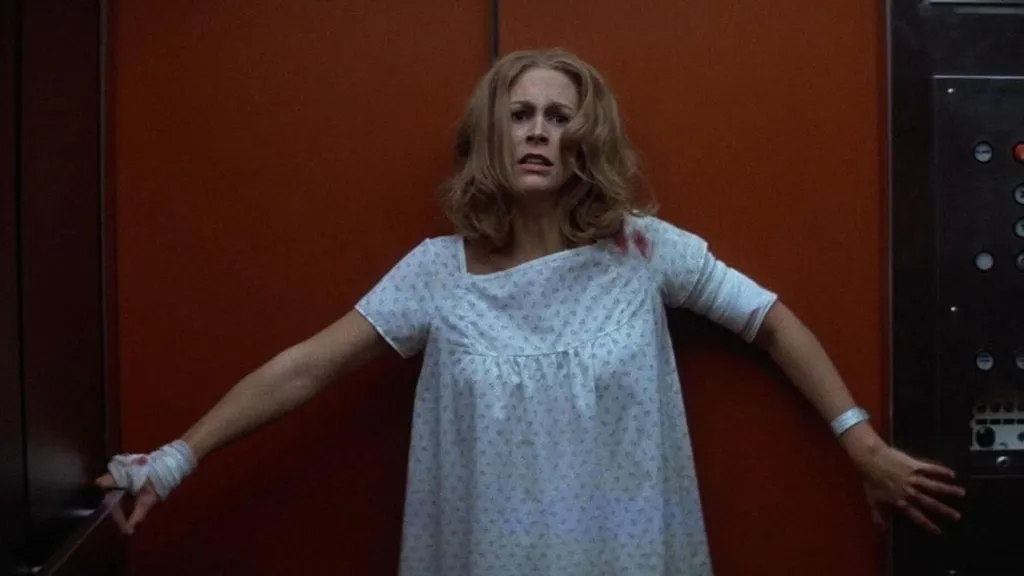
Plenty of Halloween fans will point to the revelation that Laurie is Michael’s sister as a notable weak point in the franchise’s lore, hence it being retconned in David Gordon Green’s 2018 movie. I don’t particularly hate it, and it’s a somewhat iconic twist in its own right, but it was undoubtedly unnecessary.
In the ’78 movie, the first time Michael sees Laurie is when she approaches the Myers house, which her father is going to try to sell. He sees her through the screen door and that’s it. That was all he needed to select her as his target now that he’s out of the hospital. There’s something distinctly unsettling about that wrong place wrong time targeting that makes the original film so powerful.
However, what most fans don’t debate about when it comes to Halloween II is a pair of its overarching narrative choices. For one, while the Laurie is Michael’s sister twist is only a semi-iconic piece of horror film history (given its controversial nature), the choice to have Michael stalk Laurie throughout a hospital is flat-out iconic. It’s so iconic, in fact, that 2025’s The Strangers – Chapter 2 full-on copies it.
The other choice has already been mentioned, which is Halloween II‘s direct continuation of Halloween‘s story. The first film cuts out with Dr. Loomis discovering Michael has survived his six shots to the chest and walked off. That is where we pick up with Halloween II, which is really the definitive reason why this film, not Halloween (2018), is the number one choice to pop in the Blu-ray player as soon as the credits have finished rolling on Carpenter’s classic.