Navigating Tolkien’s expansive bibliography can be intimidating for newcomers. The crown jewel of this sprawling continuity remains The Lord of the Rings, a monumental literary achievement that reached unparalleled heights of global popularity following its universally acclaimed cinematic adaptation. However, that saga represents only a fraction of Tolkien’s overarching legendarium, the vast majority of which was published posthumously through the painstaking editorial work of Christopher Tolkien. These dense volumes chart the evolution of Middle-Earth across thousands of years, eventually serving as the foundational material for more polarizing adaptations like The Hobbit trilogy and The Lord of the Rings: The Rings of Power. Still, despite the heavily academic formatting of these expanded histories and the divisive nature of some on-screen counterparts, navigating the wider Tolkien bibliography remains incredibly rewarding.
10) Bilbo’s Last Song
Image courtesy of Alfred A. Knopf Books for Young Readers
Bilbo’s Last Song functions as a brief epilogue to the primary events of the Third Age, serving as a poetic footnote to the overarching narrative of The Lord of the Rings. Tolkien originally wrote this poem as a gift for his secretary, Joy Hill, who later facilitated its publication as a standalone illustrated volume. The text details the inner thoughts of Bilbo Baggins as he boards the Elven ship at the Grey Havens, preparing to leave Middle-earth for the Undying Lands. This departure marks the definitive conclusion of the magic-infused eras of the world, transitioning the historical timeline into the dominion of men. The brevity of the work naturally limits its essentiality, specifically because the emotional weight of Bilbo’s farewell receives a thorough exploration in the final chapters of the main novels. The primary value of the publication lies in its atmospheric illustrations by Pauline Baynes, which visually enrich the melancholic tone of the verses.
9) The Adventures of Tom Bombadil and Other Verses from the Red Book
Image courtesy of HarperCollins
The Adventures of Tom Bombadil and Other Verses from the Red Book serves as an in-universe anthology of Hobbit folklore, operating as a cultural companion piece for the wider legendarium. Tolkien published this collection in 1962 under the conceit that the verses were compiled by Bilbo and Frodo Baggins within the margins of the Red Book of Westmarch. This framing device allowed the author to explore the traditions, legends, and nursery rhymes of the Shire in a highly concentrated format. Despite the prominence of the titular forest dweller on the cover, only two of the 16 included poems actually feature Tom Bombadil. The broader text provides charming insights into the mythic beliefs of the smallfolk, completely abandoning the historical momentum found in the primary novels. Several of these poems also appear directly within the pages of The Lord of the Rings, making this standalone release somewhat redundant for readers focused strictly on the overarching narrative.
8) The History of Middle-earth
Image courtesy of William Morrow
The History of Middle-earth comprises an intimidating twelve-volume series that functions as an exhaustive academic autopsy of Tolkien’s creative process. Christopher Tolkien compiled and edited these books from decades of his father’s unpublished manuscripts, early drafts, and linguistic experiments. The massive collection traces the literal evolution of the legendarium, showcasing how core concepts and character names shifted drastically over the course of the author’s lifetime. Within the collection, readers encounter multiple contradictory versions of foundational myths, including early iterations of the Valar and drastically different outlines for the War of the Ring. This structural density makes the series completely inaccessible for casual fans seeking a straightforward narrative experience, as the text operates strictly as a scholarly resource, demanding a high level of patience and prior knowledge to decipher the countless footnotes and fragmented timelines.
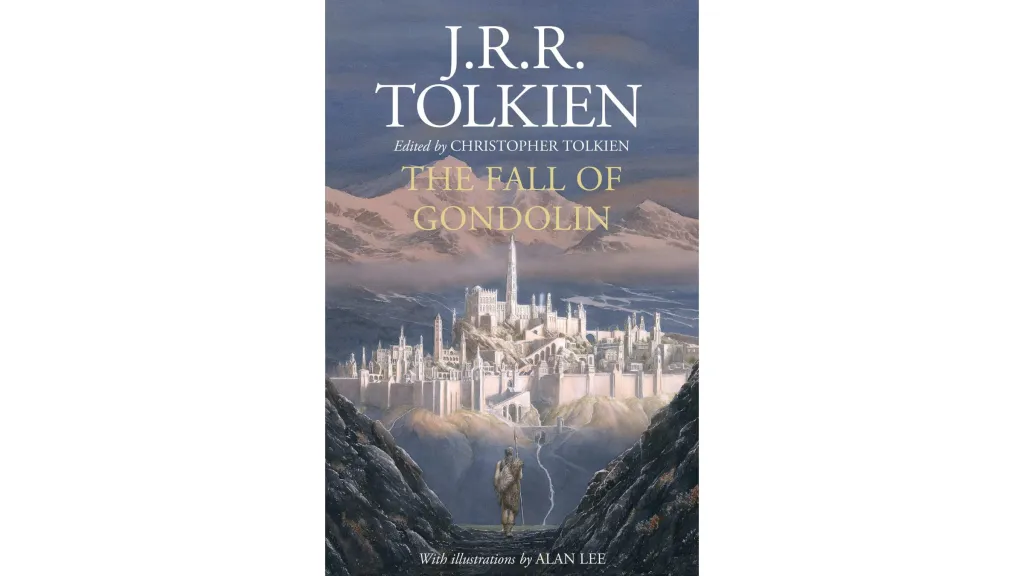
7) The Fall of Gondolin
Image courtesy of HarperCollins
The Fall of Gondolin details the tragic destruction of the greatest Elven stronghold in the First Age, functioning as the final entry in the thematic “Great Tales” trilogy. Christopher Tolkien structured this 2018 publication to showcase the developmental history of the story, presenting multiple versions of the narrative ranging from a brief 1917 sketch to a highly detailed uncompleted draft. The core plot follows the human hero Tuor as he receives a divine warning from the sea god Ulmo and journeys to the hidden city of Gondolin, eventually witnessing its catastrophic siege by the forces of Morgoth. This climactic battle features balrogs and dragons, delivering some of the most visceral combat sequences in the entire mythos. However, the fragmented presentation requires readers to piece together the definitive version of the event across several disjointed chapters. This academic formatting disrupts the narrative flow, making the book highly informative regarding the drafting process while sacrificing the momentum of a cohesive novel.
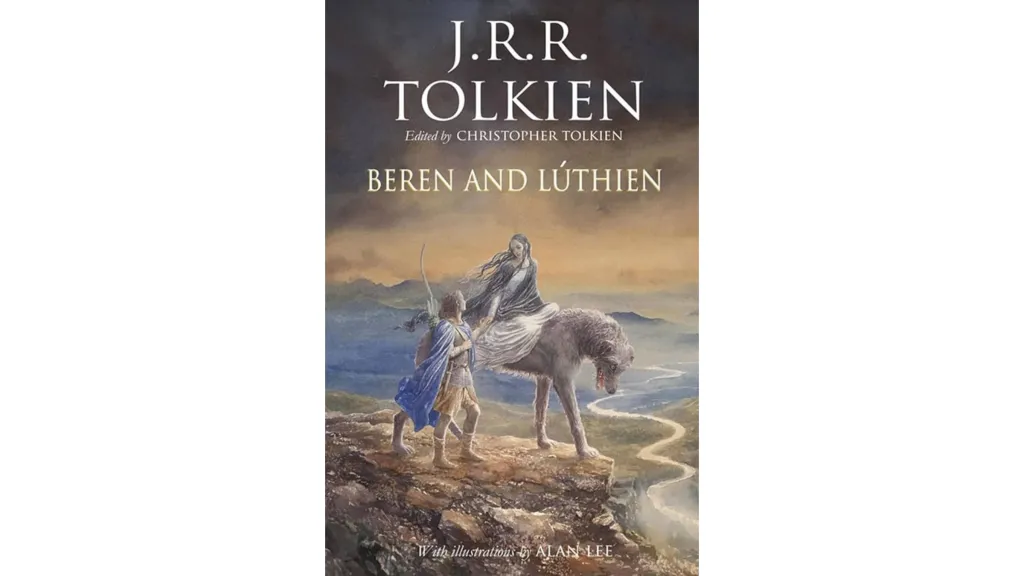
6) Beren and Lúthien
Image courtesy of HarperCollins
Beren and Lúthien explores the defining romance of the First Age, acting as a crucial thematic cornerstone for the entire mythological framework of Middle-earth. The story chronicles the impossible quest of a mortal man, Beren, and an immortal Elf maiden, Lúthien, as they attempt to steal a Silmaril from the iron crown of Morgoth. Christopher Tolkien compiled this standalone volume in 2017, placing early rhyming versions alongside later prose manuscripts. This editorial decision highlights the personal significance of the story to Tolkien, whose own gravestone bears the name Lúthien alongside his wife’s name. Still, the constant shifting between poetic fragments and uncompleted drafts creates a disjointed reading experience that frequently breaks narrative immersion, even if the central love story remains a vital piece of the historical puzzle, establishing the ancestral lineage for future Middle-Earth kings.
5) Unfinished Tales of Númenor and Middle-earth
Image courtesy of HarperCollins
Unfinished Tales of Númenor and Middle-earth provides vital connective tissue for the broader universe by detailing crucial events that the primary novels only reference in passing. Published in 1980, this collection bridges the massive temporal gaps between the First, Second, and Third Ages through a series of essays and fragmented narratives. The text offers deep expansions on the organization of the Istari (the wizards), the military structure of Rohan, and the tragic history of the island kingdom of Númenor. The major drawback of the collection stems from its inherent incompleteness, with many stories ending abruptly. This lack of resolution can frustrate readers accustomed to traditional story structures. Nevertheless, the sheer volume of essential lore regarding the Palantíri and the origins of the Ringwraiths makes the compilation a necessary stepping stone for anyone looking to understand the full mechanical workings of the world.
4) The Children of Húrin
Image courtesy of HarperCollins
The Children of Húrin stands as the only standalone release from the First Age that reads like a complete, traditional novel rather than an academic study. Christopher Tolkien spent decades assembling this 2007 publication, successfully weaving various manuscripts into a cohesive tragedy without injecting his own original prose. The narrative follows the cursed life of Túrin Turambar as he battles the forces of Morgoth and the terrifying dragon Glaurung. This specific tale represents the darkest material in the entire legendarium, exploring themes of betrayal, manipulation, and inescapable fate with a bleak intensity that sharply contrasts the triumphant heroism of later eras. The linear structure of The Children of Húrin allows readers to fully immerse themselves in the despair of Beleriand without navigating endless footnotes or contradictory drafts. This accessibility makes the book the perfect entry point for fans looking to explore the ancient history of Middle-earth before attempting to tackle the denser encyclopedic texts.
3) The Silmarillion
Image courtesy of HarperCollins
The Silmarillion functions as the foundational bible of the Tolkien universe, detailing the creation of the cosmos and the catastrophic wars of the First Age. Published in 1977, the book traces the rebellion of the Elves, the theft of the titular glowing jewels, and the relentless malice of the original dark lord. The narrative scale is genuinely staggering, covering thousands of years of shifting alliances and the physical reshaping of continents. This vast temporal scope demands immense concentration, as Tolkien introduces hundreds of similarly named characters and locations in rapid succession. On top of that, the prose sometimes adopts a mythic tone reminiscent of religious texts, entirely abandoning the conversational warmth found in the adventures of the Baggins family. Navigating this dense historical record is a formidable challenge for new readers, but mastering the text unlocks a profound understanding of the ancient grudges and divine interventions that dictate the events of Middle-Earth.
2) The Hobbit
Image courtesy of HarperCollins
The Hobbit introduced the defining elements of Middle-earth through a tightly focused, fast-paced quest that established the standard blueprint for modern fantasy. Originally published in 1937, the novel follows Bilbo Baggins as he accompanies a company of Dwarves and the wizard Gandalf to reclaim the Lonely Mountain from the dragon Smaug. The narrative adopts a significantly lighter tone than its successors, originating from its initial conception as a children’s story. This accessible framework allows Tolkien to steadily introduce complex creatures like Gollum, giant spiders, and shape-shifting bears without overwhelming the reader with ancient history. In addition, the discovery of the One Ring in the goblin tunnels serves as the primary catalyst for the entire overarching saga, anchoring the colossal stakes of the later wars to a simple game of riddles in the dark. The Hobbit remains universally beloved for its charming simplicity and relentless adventurous spirit, serving as the mandatory gateway text for anyone entering Tolkien’s universe.
1) The Lord of the Rings
Image courtesy of Mariner Books
The Lord of the Rings represents the undisputed pinnacle of the fantasy genre, delivering a sprawling epic of survival and the burden of absolute power. Published in three volumes between 1954 and 1955, the narrative tracks the desperate journey of the Fellowship to destroy the One Ring in the fires of Mount Doom. The text perfects the concept of the reluctant hero through the suffering of Frodo Baggins, exploring the psychological toll of carrying a sentient evil artifact. Plus, Tolkien balances intimate character drama with massive tactical engagements, detailing the sieges of Helm’s Deep and Minas Tirith with a meticulous understanding of medieval warfare and logistics. The environmental storytelling is equally precise, ensuring that every ruined statue and ancient forest adds a tangible sense of decay to the fading Third Age. Reading the defining masterpiece of the legendarium is an absolute necessity for anyone engaging with the medium of fantasy.
Which book from Tolkien’s expansive legendarium do you consider the most rewarding to reread today? Leave a comment below and join the conversation now in the ComicBook Forum!