And the funniest part is that these failures aren’t random forgettable movies. They’re the ones that tried to reinvent genres, build brand-new universes, change the language of cinema, or get bold enough to adapt something that was basically considered impossible. The thing is that when ambition comes without control, it turns into excess, right? Here are 7 perfect examples.
7) The Fountain
image courtesy of warner bros.
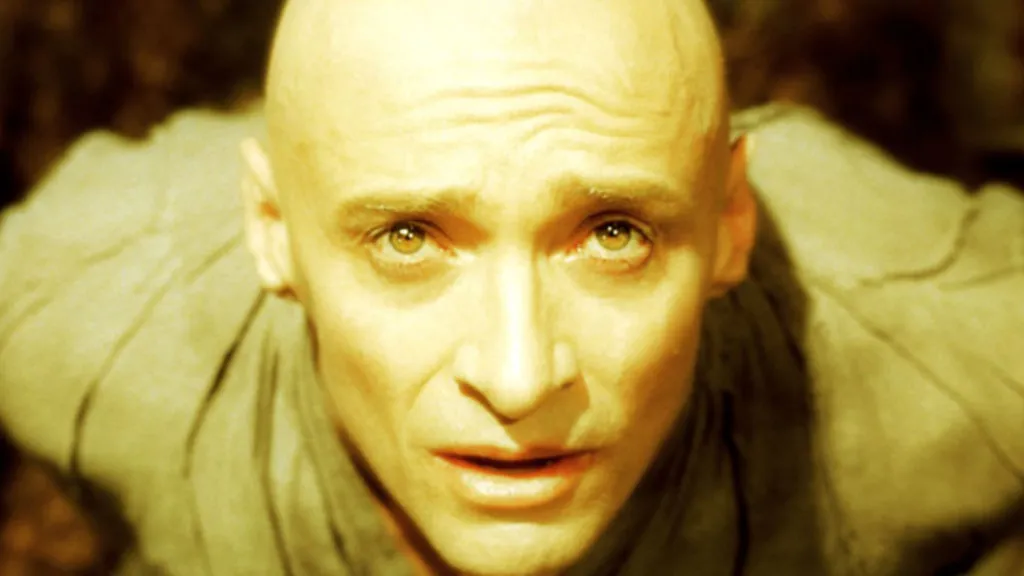
This is the kind of movie that shows up and immediately makes it clear it’s not going to be simple, and it has zero interest in trying to be. The Fountain tries to tell a story about love, loss, and mortality with the scale of a sci-fi epic, but with the heart of an existential drama. And that alone is a pretty risky bet. The plot is basically about Tomás Creo (Hugh Jackman), a man trying to save his wife from cancer, while the film jumps between three different timelines: a Spanish conquistador, a modern-day scientist, and a journey through space. In other words, it’s a movie that emotionally wrecks you and still asks you to think about spirituality along the way.
It’s a complex film, and yes, that’s obvious. But the ambition to be that complex turns into a trap: there’s so much symbolism and this whole “high art” mindset in The Fountain that it ends up not being emotionally accessible at all unless you’re willing to decode everything. So a lot of people walked away feeling like they’d watched an unfinished puzzle instead of an actual story. And worse: it feels like it’s about to hit you with something devastating, but it keeps spinning around its own metaphor. Is it admirable? Absolutely. But it’s also a perfect example of how being different doesn’t automatically mean being engaging.
6) Beau Is Afraid
image courtesy of a24
Not many people have heard of Beau Is Afraid, and honestly, because the trailer already makes it look like it’s one of those super experimental movies. And yes, this one is pure madness, not just because it’s ambitious, but because it’s aggressively ambitious. Basically, it wants to be a dark comedy, a psychological horror film, a guilt-driven parable, a Freudian nightmare, and a nearly three-hour existential epic all at once. In it, we follow Beau (Joaquin Phoenix), an insanely anxious man who tries to get back home after his mother’s death, only to get trapped in an endless chain of situations that feel like punishments sent straight from the universe.
To really enjoy this movie, you have to fully commit. But the problem is that as it goes on, it starts feeling less like a story and more like an endurance test. At some point, you realize you’re not even following the plot anymore, you’re just waiting for it to end. Beau Is Afraid has great ideas, a few brilliant scenes, and Phoenix gives an incredible performance, but the script has no sense of limits. It almost feels like the movie thinks it’s smarter than it needs to be, so it stretches itself out as if every single scene is essential, when it clearly isn’t. It’s bold, but it’s also the kind of bold that doesn’t exactly inspire people to recommend it.
5) Babylon
image courtesy of paramount pictures
Babylon is a movie about Hollywood that basically tries to scream at the audience about how amazing cinema is (and you can definitely feel that). But the issue is that, at the same time, the script seems so in love with its own idea of showcasing the over-the-top side of filmmaking that it forgets to tell a story that doesn’t feel like a runaway rollercoaster. Here, we follow actors, producers, and hopeful newcomers during the transition from silent films to talkies in the 1920s, as careers explode or completely collapse in the process. It’s the perfect setup for a tragic epic about fame and decadence, especially with all the glamour, wild parties, drugs, and excess.
But it’s also a movie that confuses noise with impact. It has huge scenes, nonstop energy, and a maximalist vibe that almost feels calculated, but that doesn’t always translate into real emotion. Babylon has moments where you can tell it’s desperate to shock you, impress you, and position itself as “the next controversial classic.” But that desperation becomes obvious, and that’s when it starts losing people, because the audience disconnects. You can tell it was meant to be a love letter to cinema, but it ends up feeling more like a love letter to its own ego.
4) Megalopolis
image courtesy of lionsgate
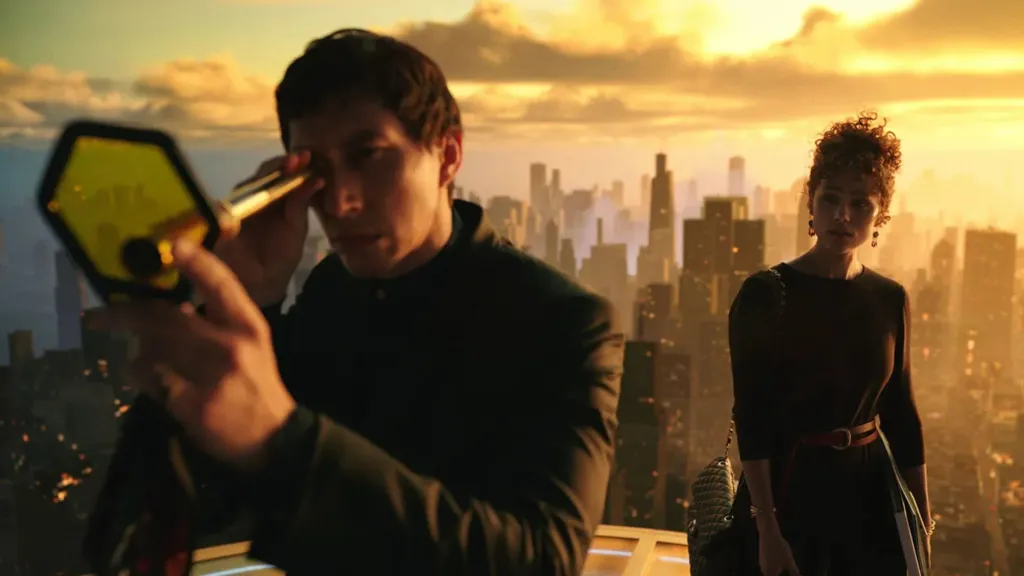
This might be one of the most ambitious movies ever made, but it still ended up as a massive failure. Megalopolis feels like the kind of personal manifesto you can’t help but respect, because only someone with Francis Ford Coppola’s level of career status (and stubbornness) would spend decades fighting to make something like this happen. The story follows Cesar Catilina (Adam Driver), a visionary architect trying to rebuild a futuristic version of New York while clashing with political figures who would rather keep the old system intact. It plays like a tale about utopia, power, and corruption.
But then reality hits: the movie feels more interested in looking important than actually being good. Instead of pulling you in, it often comes across like a collection of speeches and scenes that desperately want to feel grand, without ever building a strong, dramatic foundation underneath. And naturally, that kills the pacing. In a weird way, it’s still fascinating, but it also feels like Megalopolis was aiming to be some kind of philosophical sci-fi Ben-Hur and ended up as a movie that demands a lot of patience while giving very little back. Ambition definitely wasn’t the issue; the real problem is that nobody stopped to ask whether this vision would actually work as a movie, or only inside Coppola’s head.
3) Jupiter Ascending
image courtesy of warner bros.
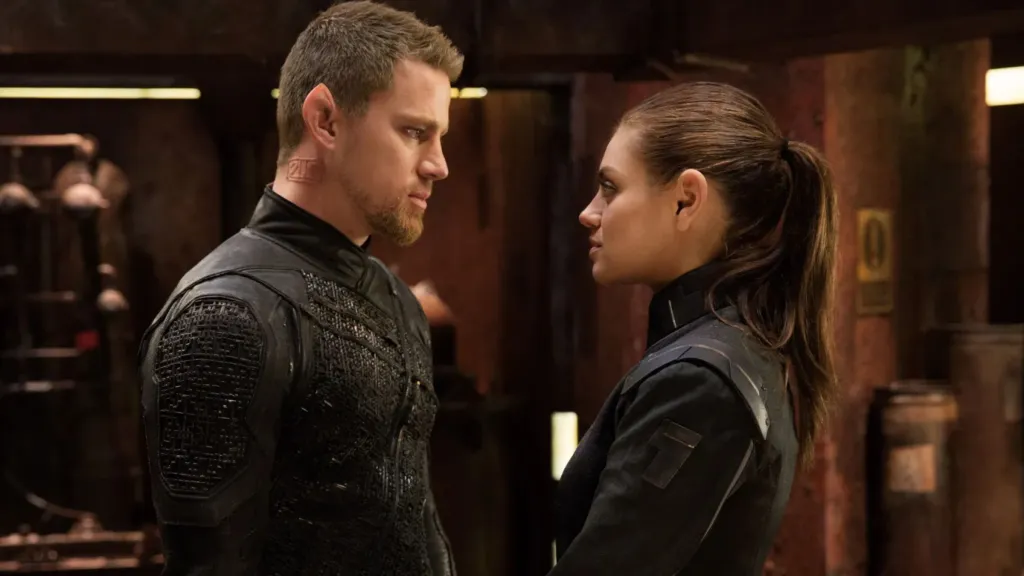
If you watch Jupiter Ascending, it’s obvious the goal was to build a new universe packed with its own mythology, a very specific aesthetic, and a set of complex rules. It was meant to be a huge sci-fi epic — part fairy tale, part intergalactic political drama. Pure ambition, the kind of production that wanted to feel like a big surprise. The story is basically a “space Cinderella,” following Jupiter (Mila Kunis), an ordinary girl who discovers she’s the heir to something big and suddenly becomes a target for alien families who pretty much treat entire planets like luxury real estate. But what’s the point of having a concept that huge if the actual movie can’t live up to it?
Here, there’s way too much world and not enough story. Jupiter Ascending constantly dumps information, names, concepts, and plot twists on you, but it never manages to make the audience actually care about what they’re watching. The world-building is gorgeous, but the characters are too shallow for you to get invested in the movie as a whole. Besides, the tone doesn’t help either, since deep down it wants to be epic, but at times it feels like an unintentional parody. The ambition was there in theory, but in practice, the movie never convinces you that this universe is worth sticking around for.
2) Godzilla (1998)
image courtesy of tristar pictures
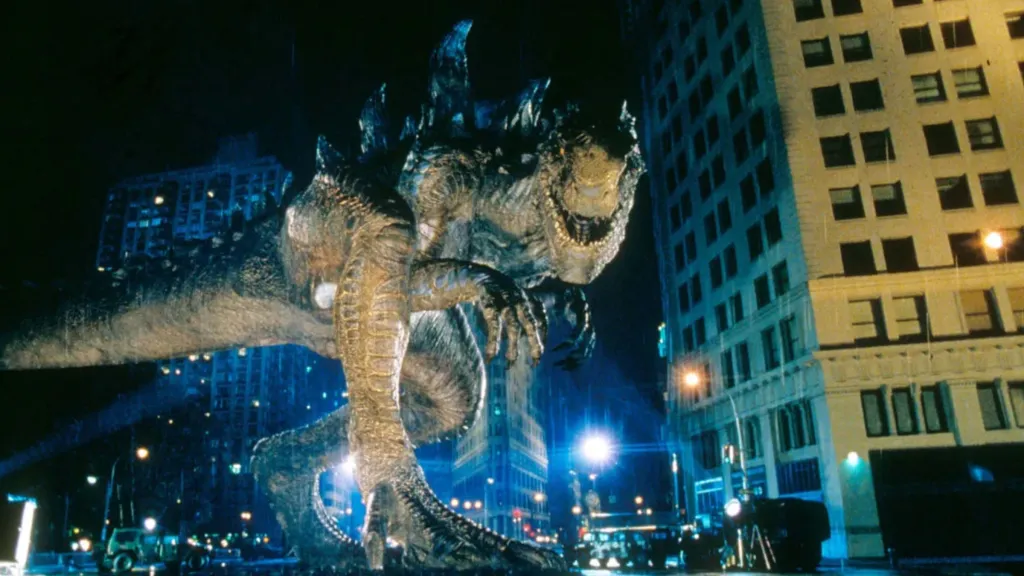
A lot of people love the Godzilla franchise, but back in 1998, when the first Hollywood reboot happened, it really felt like the studio assumed that “bigger” automatically meant “better.” The idea was obvious: take a legendary monster and turn it into a modern blockbuster with destruction, special effects, and nonstop chaos. The story follows scientists and the military trying to contain a massive creature that shows up in New York and turns the city into a full-on war zone, complete with chases, explosions, and widespread panic. It’s literally the kind of premise that should’ve printed money, right?
But the movie commits the biggest sin possible: it doesn’t understand what the creature is actually supposed to represent. Godzilla is all about presence, terror, and metaphor, but here he’s basically reduced to a giant dinosaur sprinting through Manhattan as he belongs in some generic monster movie. Of course, that pissed off longtime fans, and it didn’t exactly win over casual audiences either, since it also fails as a great disaster film. Plus, the script keeps trying to balance the action with this awkward, goofy humor, which only makes everything feel cheaper. The ’90s Godzilla looks big on the outside, but it’s strangely hollow on the inside. It tried to reinvent an icon, and it failed because it reinvented him the wrong way.
1) Cats
image courtesy of universal pictures
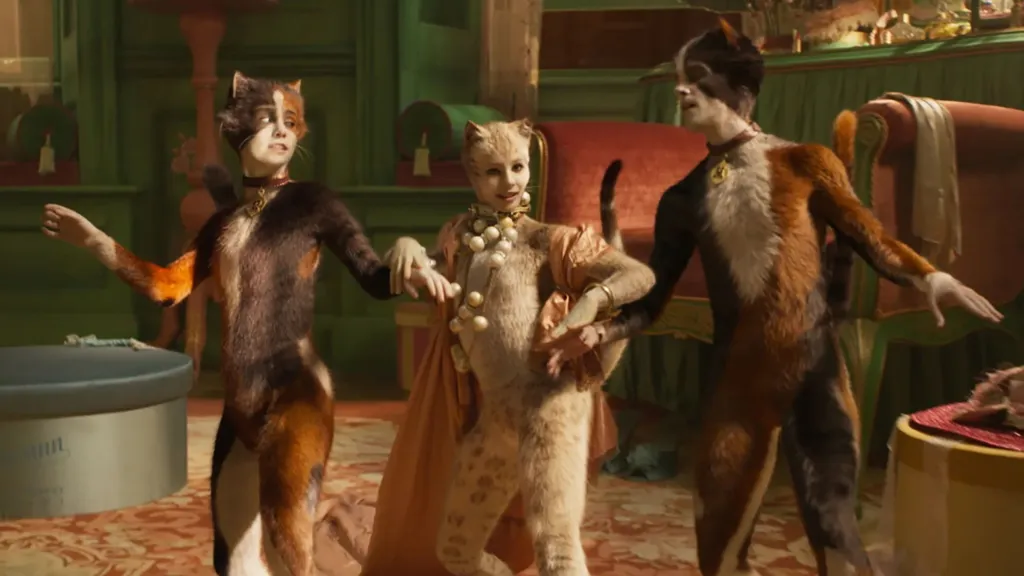
A Broadway landmark, Cats eventually got a big-screen adaptation, and it’s probably the perfect example of a project that went through countless meetings without anyone ever stopping to question whether it should exist in the first place. It was ambitious not just because it came from one of the biggest long-running musicals of all time, but also because of its stacked celebrity cast and the very obvious desire to turn it into something prestigious. But the most important question never got answered: Does this even have enough story to work as a movie? The plot is basically nonexistent, following a group of cats who sing and dance while their “tribe” decides which one of them will be chosen to be reborn into a new life.
It’s more of a parade of performances than a traditional narrative. But here’s where the real disaster hits: the movie went with hyper-realistic human-cat hybrid CGI and basically destroyed any chance of the audience connecting with it. Not only did the result become a joke, but it was weird on a level that distracted viewers. You can’t even focus on the songs because your brain is too busy trying to process what you’re looking at. And since Cats depends entirely on charm, charisma, and fantasy, the visuals needed to feel inviting, not unsettling. It’s one of the biggest reminders that technology can’t save an adaptation if it doesn’t understand its own material first.
What do you think of these movies? Leave a comment below and join the conversation now in the ComicBook Forum!