The Backrooms creepypasta itself originated from a 2019 thread on 4chan, where a photograph of a large, yellow-carpeted room prompted users to describe what it would feel like to be trapped inside it. That description, circulating across forums as a piece of internet urban legend, became one of the most recognizable pieces of online horror mythology of the decade. Parsons’ YouTube series turned the concept into a sprawling found-footage lore universe, and the video game Escape the Backrooms further cemented the property as a cross-platform cultural phenomenon. The trailer is genuinely unsettling, leaning into liminal dread and the horror of mundane architecture rather than conventional jump scares. That said, horror audiences familiar with the genre’s track record have reason to be skeptical. Creepypasta properties have a long history of losing their power when translated into traditional narrative formats, despite incredibly rare exceptions.
3) Marble Hornets
Image courtesy of YouTube @MarbleHornets
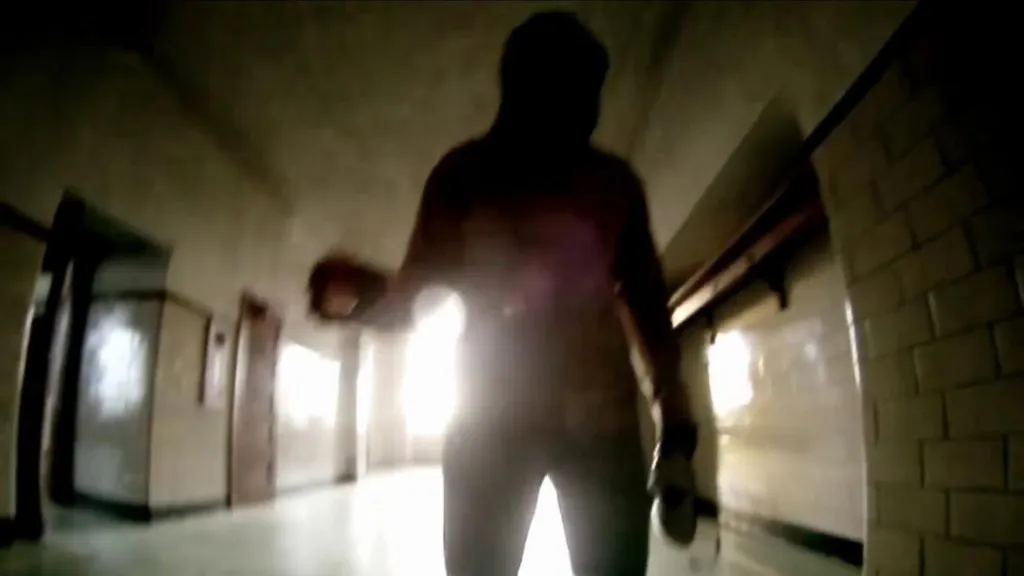
Marble Hornets is the YouTube ARG series that established the visual and narrative grammar that Kane Parsons’ own Backrooms universe directly borrowed from. Created by Troy Wagner, Joseph DeLage, and Tim Sutton and launched in June 2009, the series presents itself as the uploaded video logs of Jay Merrick (Wagner), a film student investigating why his friend Alex Kralie (DeLage) abruptly abandoned his student film after encountering a tall, faceless entity in a suit referred to only as The Operator. The series ran for 92 episodes across five years and accumulated over 125 million views, establishing the Slender Man symbol that subsequently appeared in dozens of spinoff ARGs and games.
What made Marble Hornets work where its theatrical adaptation failed was its complete commitment to the found-footage conceit, deploying corrupted video, cryptic secondary uploads, and deliberately incomplete information to generate a mounting paranoia that no conventional horror production could replicate. The series also established the Slender Man symbol, which subsequently appeared in dozens of spin-off ARGs and games. For anyone looking to understand how internet horror builds sustained dread through fragmentary storytelling, Marble Hornets remains the definitive example of the creepypasta form.
2) Beware the Slenderman
Image courtesy of HBO
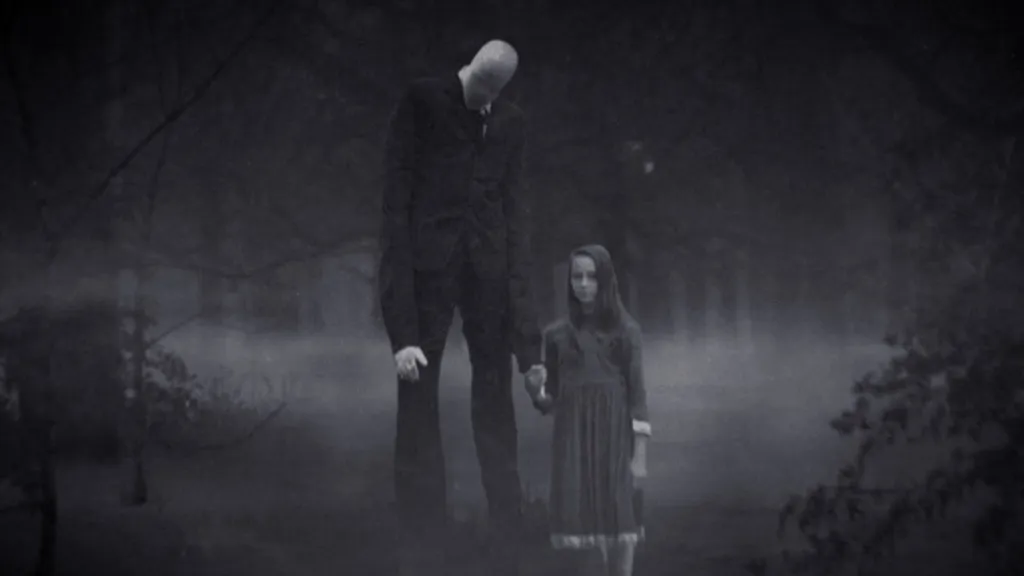
Directed by Irene Taylor Brodsky and broadcast on HBO in 2017, Beware the Slenderman is a documentary built around one of the most disturbing case studies of creepypasta’s real-world consequences. In May 2014, two 12-year-old girls in Waukesha, Wisconsin, stabbed their classmate 19 times in a wooded area, claiming they were acting to appease Slenderman, a faceless figure in a black suit who originated from a 2009 Photoshop competition on the Something Awful forums. Brodsky shot the film over 18 months and conducted interviews with the families of both perpetrators, producing a portrait of adolescent mental illness, internet mythology, and the collapse of the boundary between fiction and reality.
Beware the Slenderman draws from Marble Hornets footage extensively and engages academics in discussions of how digital storytelling generates its own contemporary folklore. It avoids sensationalism, which is what makes it a genuinely valuable piece of context for understanding how creepypasta mythology operates on its audience’s psychology. The film is not a horror production, but its subject matter can be more disturbing than most theatrical horror releases.
1) Channel Zero
Image courtesy of SyFy
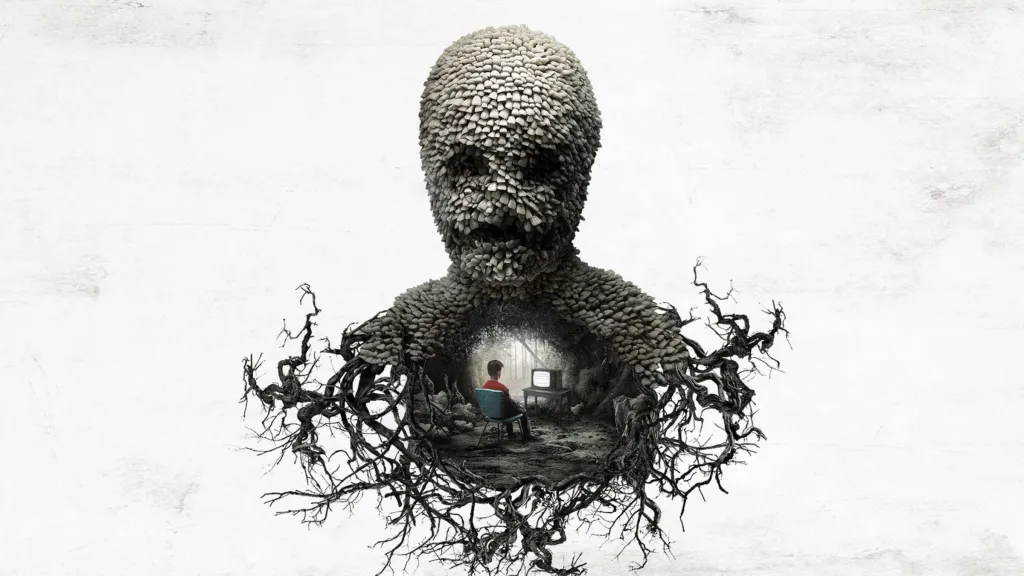
Channel Zero is a four-season anthology series created by Nick Antosca that aired on SyFy between 2016 and 2018 and remains the most rigorous attempt to translate creepypasta into serialized television. Each six-episode season adapts a different internet horror story. The first, Candle Cove, follows child psychologist Mike Painter (Paul Schneider) as he returns to his Ohio hometown and discovers that a skeleton-pirate children’s television program from the 1980s has resumed broadcasting. Subsequent seasons tackle the traveling haunted house of “The No-End House,” the disappearances linked to staircases appearing in urban forests in “Butcher’s Block,” and a mysterious door in a newlywed couple’s basement in “The Dream Door.”
Antosca’s approach across all four seasons is to extract the emotional and atmospheric essence of each creepypasta and construct an entirely original world around it, with creature designs and narrative logic that carry the dread of the source material without being constrained by its brevity. Channel Zero stands as the clearest template for what a creepypasta adaptation can accomplish when the creative team treats the material seriously, which makes it the most essential viewing before Backrooms arrives.
Backrooms opens in theaters on May 29, 2026.
Which creepypasta movie or TV show is your favorite? Leave a comment below and join the conversation now in the ComicBook Forum!