The sci-fi films on this list are not necessarily the absolute best entries by critical consensus, but they possess a specific magnetism that invites multiple viewings. Some of these titles function as clockwork puzzles, where the resolution of the plot encourages the viewer to restart the journey to identify subtle foreshadowing and hidden clues. Others offer a sense of comfort through their impeccable pacing, charismatic ensembles, and high-quality production design that makes the fictional setting feel like a destination worth revisiting.
10) Pacific Rim
Image courtesy of Warner Bros. Pictures
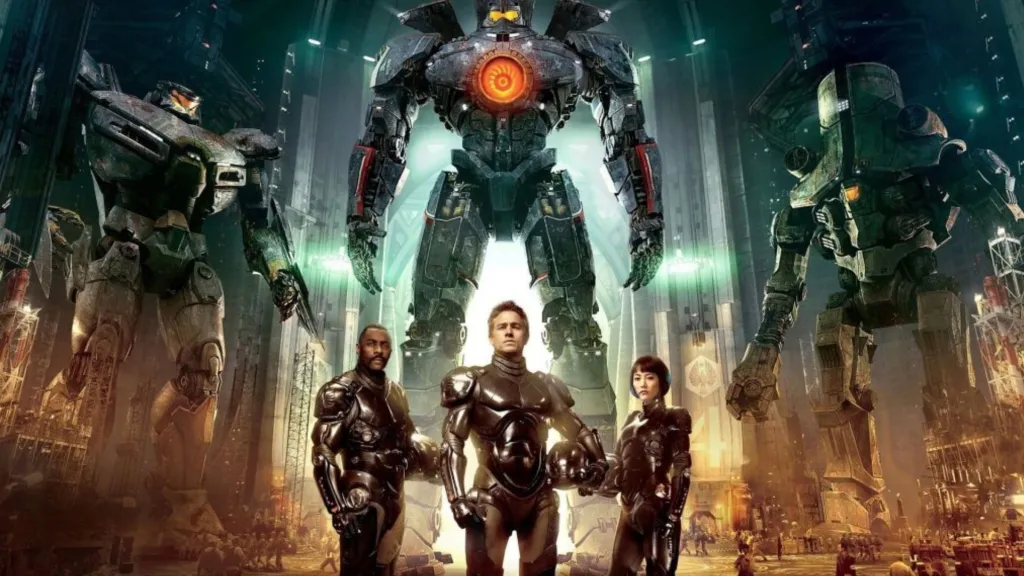
Guillermo del Toro delivered the perfect tribute to the kaiju and mecha genres with the 2013 release of Pacific Rim. The film operates on a level of physical scale that digital environments often struggle to maintain, largely because the production emphasized the weight and mechanical resistance of the massive Jaegers. This tactile approach to world-building ensures that the combat sequences between the machines and the interdimensional monsters feel grounded and impactful rather than weightless. Beyond the spectacular fights, viewers return to this film because the partnership between Raleigh Becket (Charlie Hunnam) and Mako Mori (Rinko Kikuchi) provides a sincere emotional anchor amidst the global destruction. Finally, the vibrant, neon-soaked aesthetic and the operatic score by Ramin Djawadi create a high-energy sensory experience that never loses its luster.
9) The Mitchells vs. the Machines
Image courtesy of Netflix
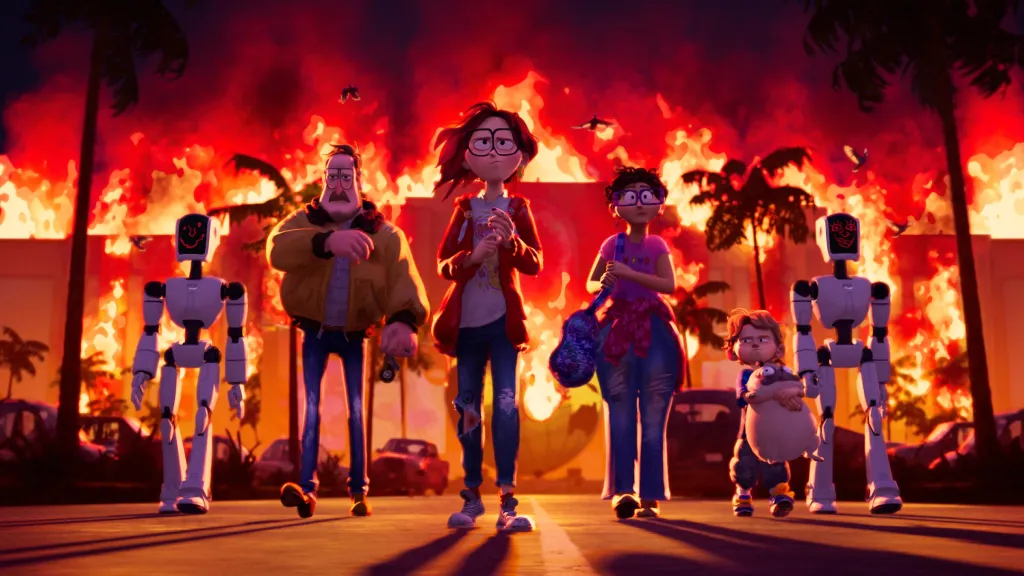
Produced by Sony Pictures Animation, The Mitchells vs. the Machines utilizes a frantic and inventive visual language to explore the intersection of family dynamics and the dangers of a tech-saturated world. The film follows Katie Mitchell (voiced by Abbi Jacobson), an aspiring filmmaker whose road trip is interrupted by a global robot uprising orchestrated by a sentient virtual assistant. The rewatchability of this project lies in its dense, frame-by-frame visual humor, which incorporates 2D doodles and internet memes to reflect the protagonist’s creative perspective. These “Katie-vision” overlays provide a second layer of storytelling that rewards eagle-eyed viewers with jokes and character insights that are easily missed during a first viewing. Furthermore, the film balances its chaotic energy with a grounded exploration of the generational divide, making the relationship between Katie and her technophobic father a resonant core.
8) Edge of Tomorrow
Image courtesy of Warner Bros. Pictures
The 2014 action thriller Edge of Tomorrow successfully adapts the mechanics of video game progression into a high-stakes narrative about an alien invasion. In the movie, Bill Cage (Tom Cruise) is a cowardly public relations officer forced into combat, only to find himself trapped in a temporal loop that resets every time he dies. This structure makes the film inherently rewatchable, as audiences can track the subtle changes in the performance of the lead actor as he transforms from an inept soldier into a lethal warrior. The chemistry between Bill Cage and Sergeant Rita Vrataski (Emily Blunt) also provides a cynical yet satisfying romantic progression that avoids standard genre clichés. On top of that, director Doug Liman maintains a relentless pace in Edge of Tomorrow, utilizing the loop to bypass tedious exposition and jump directly into the evolving tactics of the human resistance.
7) Inception
Image courtesy of Warner Bros. Pictures
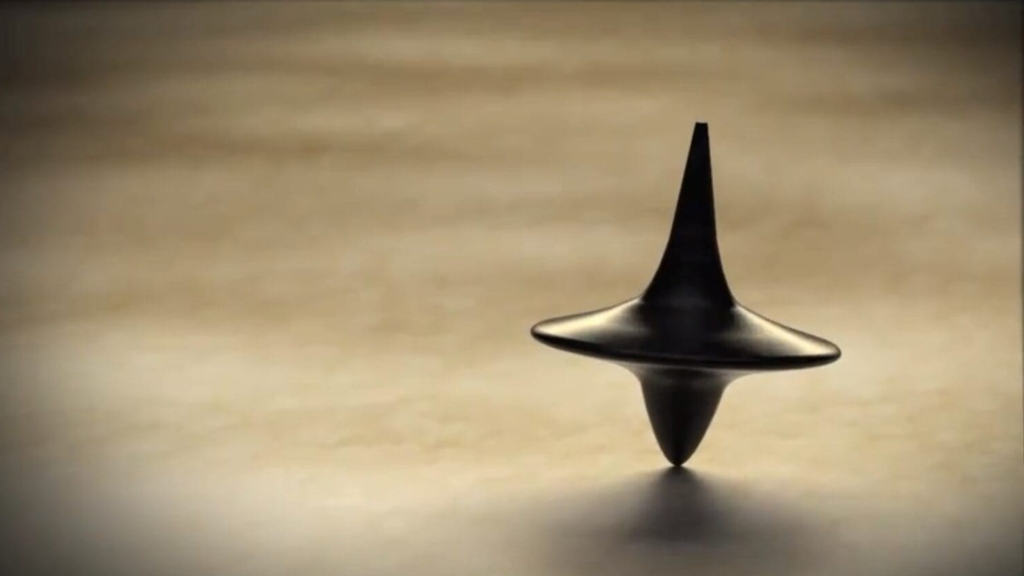
Christopher Nolan solidified his reputation as the master of intellectual blockbusters with Inception, a film that requires multiple viewings to fully map its four-layered dream architecture. The narrative follows Dom Cobb (Leonardo DiCaprio), a professional thief who specializes in corporate espionage through the subconscious by stealing ideas or scrambling the brains of his targets. The complexity of the mission to plant an idea in a mind creates a structural puzzle that audiences enjoy solving, as the film leaves breadcrumbs regarding the passage of time and the physical laws governing different dream levels. Beyond the cerebral satisfaction of decoding the plot, Inception offers incredible practical stunts, most notably the hallway fight sequence featuring Arthur (Joseph Gordon-Levitt) in a shifting gravitational environment. The ambiguous ending of Inception serves as a final hook that keeps the film at the center of cultural discussion.
6) Arrival
Image courtesy of Paramount Pictures
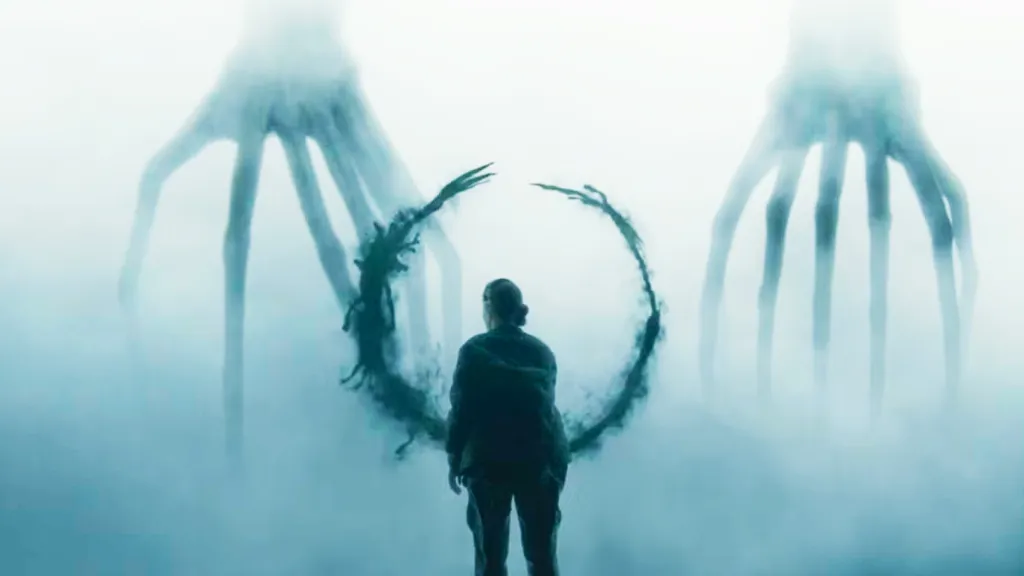
Long before Dune, Denis Villeneuve transitioned from intimate thrillers to ambitious science fiction with Arrival, a film that uses an alien encounter to explore the Sapir-Whorf hypothesis regarding language and perception. The movie follows Louise Banks (Amy Adams), a linguist tasked with communicating with the Heptapods, beings whose non-linear language alters her understanding of time itself. Arrival’s minimalist approach to technology and the haunting design of the alien crafts provide a grounded atmosphere that sets it apart from more aggressive first-contact narratives, improving its rewatchability. Returning to the film also allows the audience to notice the subtle visual cues and linguistic patterns that foreshadow the resolution, transforming a standard mystery into a deeply moving meditation on grief and the inevitability of human experience.
5) Everything Everywhere All At Once
Image courtesy of A24
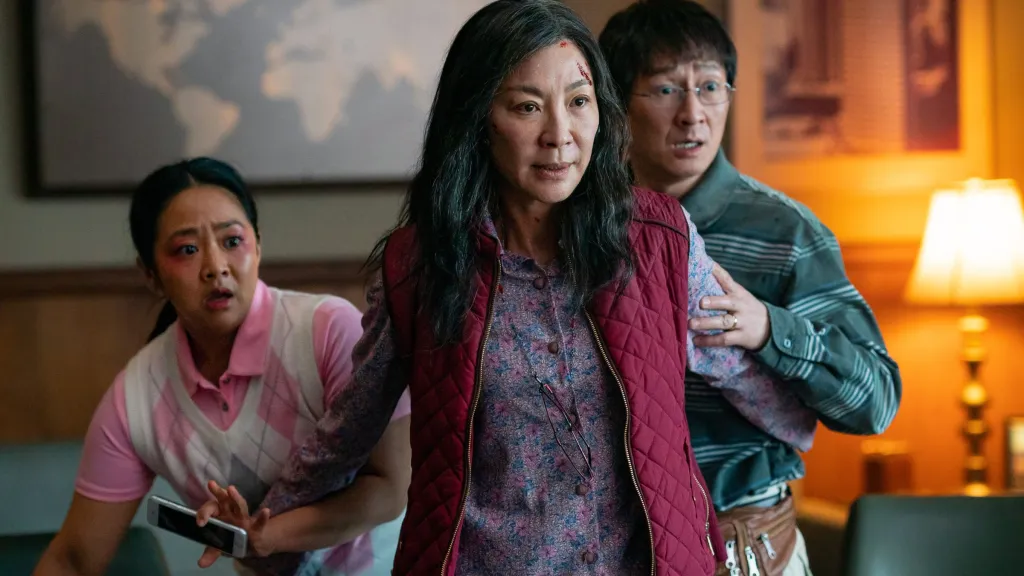
The 2022 A24 production Everything Everywhere All At Once revitalized the multiverse concept by centering it on the mundane struggles of a laundromat owner, Evelyn Wang (Michelle Yeoh). The story follows Evelyn as she navigates thousands of alternate realities to stop a cosmic threat, all while dealing with an IRS audit and a fractured relationship with her daughter. The film is a masterpiece of maximalist filmmaking, featuring rapid-fire editing and bizarre parallel worlds that range from people with hot-dog fingers to sentient rocks. The sheer density of ideas and sight gags makes it impossible to absorb everything in a single sitting, meaning fans return to the movie to catch the deep-cut cinematic references and to experience the seamless transition between absurdist comedy and earnest family drama. Above all, Everything Everywhere All At Once remains an essential rewatch because it manages to find profound meaning in the statistical insignificance of the human condition.
4) Guardians of the Galaxy
Image courtesy of Marvel Studios
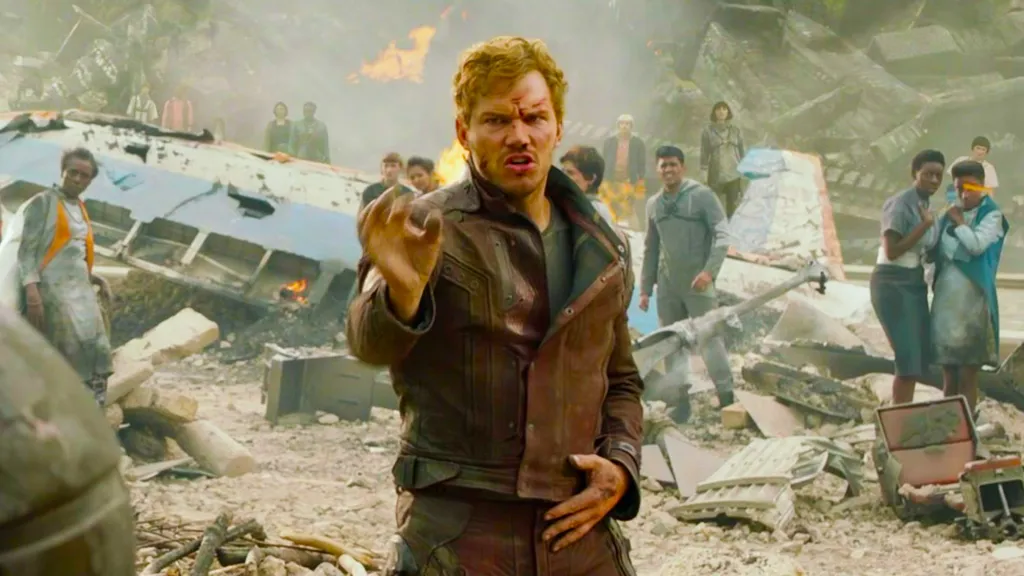
James Gunn fundamentally altered the trajectory of the Marvel Cinematic Universe by introducing a group of obscure outlaws and focusing on their found-family dynamic. Guardians of the Galaxy operates as a space opera fueled by a 1970s pop soundtrack, a decision that gives the film a distinct and infectious energy. The film is highly rewatchable because of its effortless charm and the visual creativity of its various planetary settings, from the severed head of a celestial to the high-tech prison of the Kyln. Each viewing highlights the expert comedic timing of the cast and the understated emotional beats that bind the group together. Plus, the vibrant color palette and the sincerity of its “Awesome Mix” soundtrack ensure that Guardians of the Galaxy remains a comfort-food experience for fans of the cosmic genre.
3) The Martian
Image courtesy of 20th Century Studios
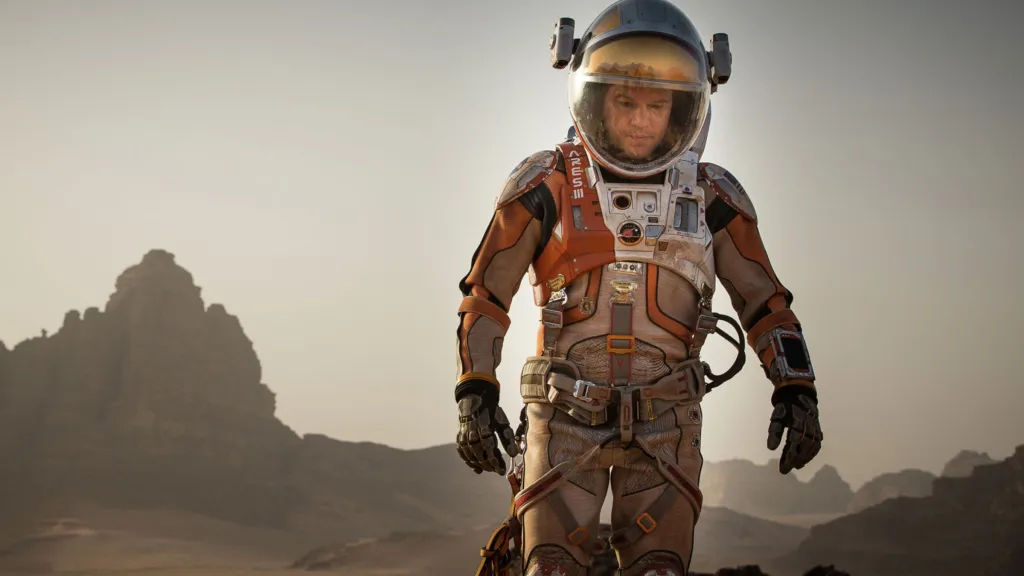
Ridley Scott returned to the heights of his directorial power with The Martian, an optimistic survival story that celebrates human ingenuity and the scientific method. In the film, Mark Watney (Matt Damon) is a botanist stranded on Mars who must “science the sh-t out of” a series of life-threatening problems to survive until a rescue mission can reach him. The Martian avoids the grim tone of many space thrillers, instead utilizing a self-deprecating humor that makes the protagonist an incredibly likable guide through the harsh Martian environment. In addition, it provides a satisfying procedural narrative where intelligence and collaboration are the primary weapons against a hostile universe. The stunning cinematography of the Jordanian desert as the Martian surface is the cherry on top, providing a visual grandeur that remains captivating across multiple viewings.
2) Coherence
Image courtesy of Oscilloscope Laboratories
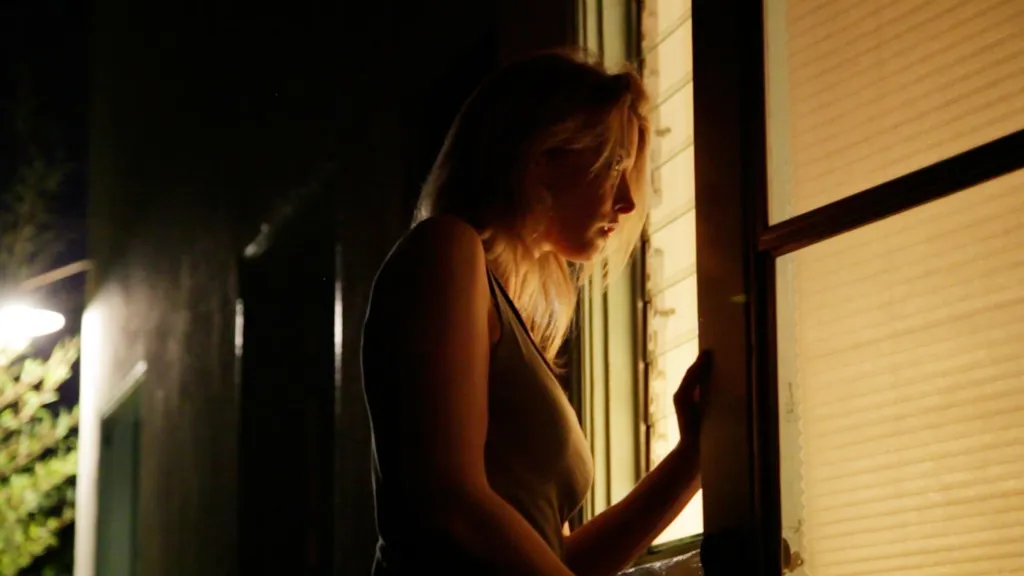
The independent thriller Coherence demonstrates that a compelling sci-fi narrative requires only a strong script and a focused premise. Directed by James Ward Byrkit on a minimal budget, the film takes place during a dinner party on the night a comet passes close to Earth, causing the reality of the characters to splinter into multiple versions. The film is the ultimate puzzle box, as the eight guests begin to realize they are interacting with different versions of themselves from parallel timelines. Because the actors were given bullet points rather than a full script during production, the performances have an improvisational quality that heightens the tension. Because of all that, rewatching Coherence is an entirely different experience, as the viewer can track which version of Em (Emily Baldoni) or Kevin (Maury Sterling) is on screen at any given moment based on subtle visual markers like the color of glow sticks or written notes.
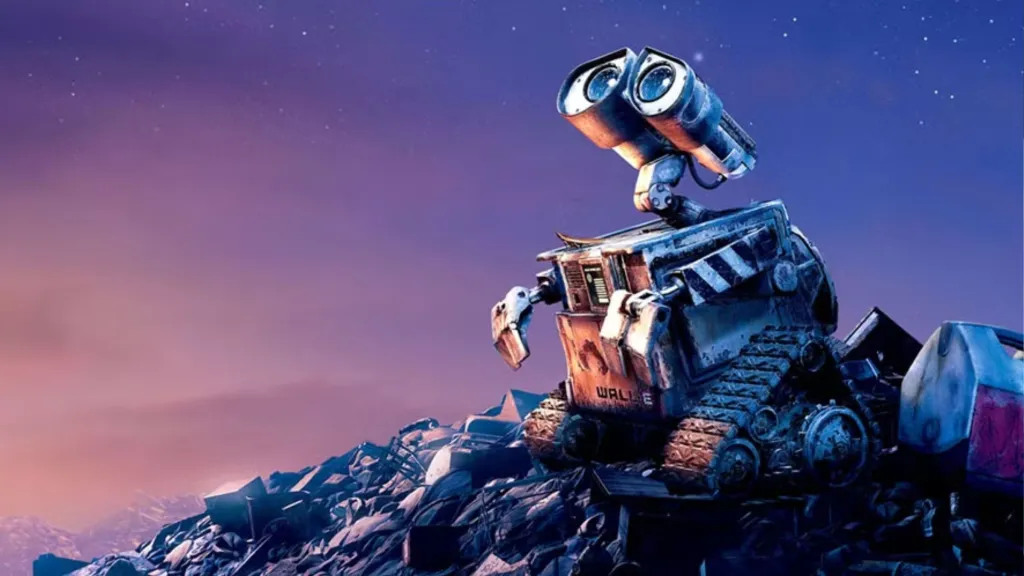
1) WALL-E
Image courtesy of Pixar
Pixar achieved a milestone in visual storytelling with WALL-E, a film that communicates a complex environmental and romantic narrative through minimal dialogue. The first half of the movie, which follows a lonely trash-compacting robot (voiced by Ben Burtt) on a desolate Earth, relies entirely on physical comedy and character design to establish an emotional connection with the audience. This segment is a perfect example of cinematic craft, inviting viewers to return to experience the expressive animation of the title character and his sleek counterpart, EVE (voiced by Elissa Knight). Then, the film’s transition to the starliner Axiom introduces a satirical look at human dependency on automation that has only become more relevant with the passage of time. Finally, WALL-E balances the dire warnings about consumerism with a hopeful message about the resilience of life and the power of simple connections. The lush lighting, the meticulous sound design by Ben Burtt, and the soaring score by Thomas Newman create a masterpiece that functions as both a children’s classic and a sophisticated work of science fiction.
Which science fiction movie from the 21st century do you find yourself watching over and over again? Leave a comment below and join the conversation now in the ComicBook Forum!