Forget about box office-driven hits or movies that play it safe, because this list is about the ones that genuinely took risks — whether in how they tell their story, the scale of their production, or the decisions made behind the scenes. Here are 10 movies from the 21st century that were completely fearless in what they set out to bring to audiences.
10) Oppenheimer
image courtesy of universal pictures
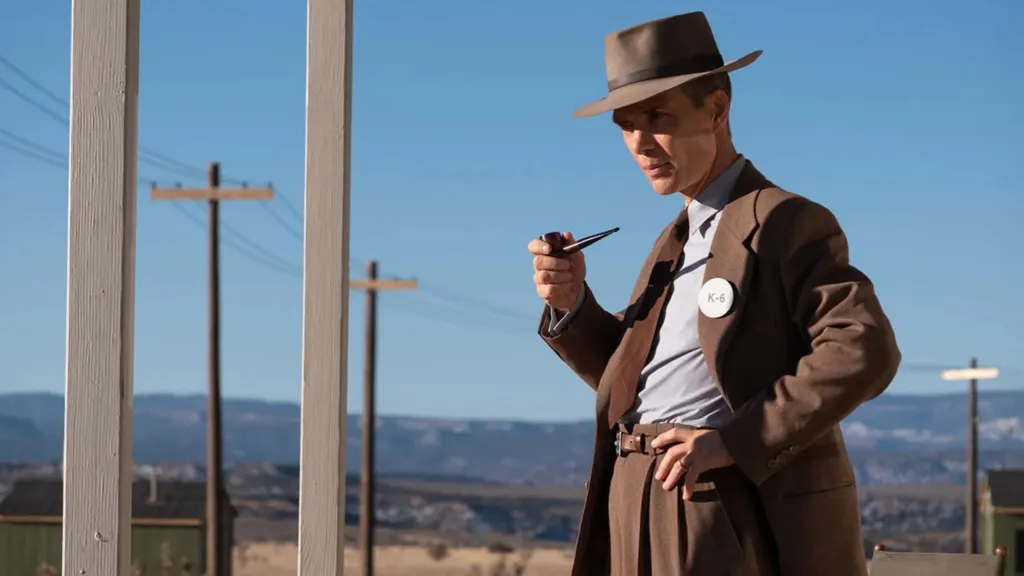
When you think of a movie that completely breaks away from the standard mold, Oppenheimer is a strong example because it does so on pretty much every level. Christopher Nolan takes the story of the physicist behind the atomic bomb and builds a film centered on political conflict, moral crises, and power struggles, following Oppenheimer before, during, and after the Manhattan Project as his reputation comes under scrutiny. And the film doesn’t really try to be anything other than a nearly three-hour stretch of intense dialogue and a fragmented structure (which already pushes it far away from what Hollywood usually considers safe).
So, the narrative is already a massive creative gamble, but what makes Oppenheimer even more impressive is everything behind the camera: it was shot on analog IMAX, with new black-and-white IMAX film stock, and avoided CGI whenever possible (including in the recreation of the nuclear explosion). These are complicated, expensive, and logistically demanding decisions that most studios would actively avoid. This movie is not just ambitious on paper; it’s a production that refuses to take the easy route at any stage.
9) Avatar
image courtesy of 20th century fox
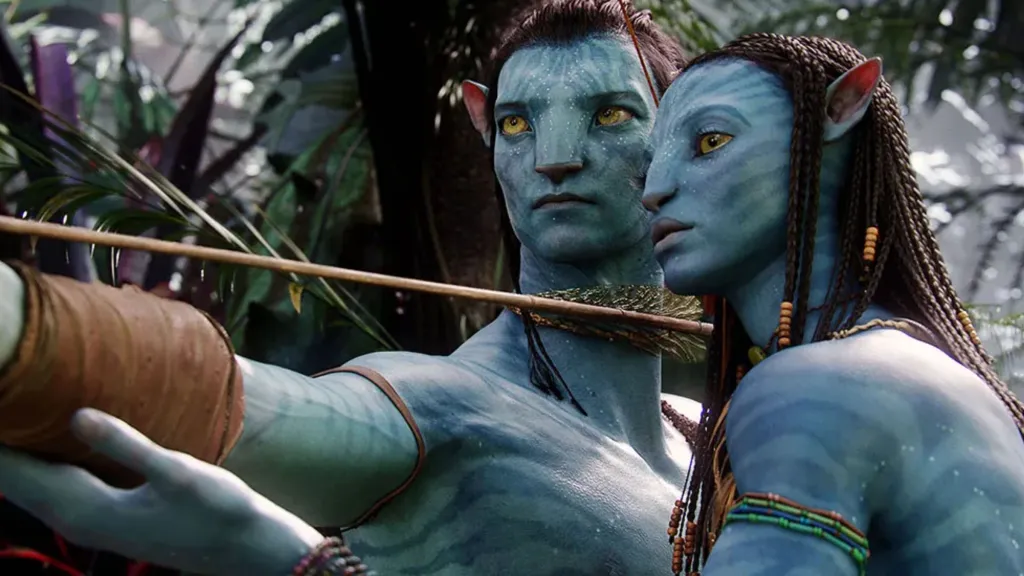
Today, Avatar remains a major franchise, but that only happened because the first movie was a big gamble. James Cameron essentially bet everything on something that could easily have turned into a disaster. The story, as everyone knows, follows a human soldier who travels to Pandora, infiltrates the Na’vi, and eventually switches sides. But the real focus was never just the plot — it was the full experience. The film was built as a high-stakes experiment from a director trying to create something based on technology that was still being developed at the time, trusting that people would completely buy it.
Today, that might feel obvious or even expected, but back then it absolutely wasn’t. In fact, the production itself became part of the conversation because of how far it pushed things — new 3D camera systems, advanced motion-capture technology, and real-time digital previews, plus large-scale CGI tightly integrated with performance capture in a way that hadn’t been done at that scale before. Avatar was an extremely expensive project with a real chance of failing, balanced on the same level of confidence that ultimately made it work.
8) Dune: Part Two
image courtesy of warner bros.
What defines the success of the Dune franchise today if not everything Dune: Part Two managed to accomplish? Here, Denis Villeneuve doesn’t rely on the standard blockbuster formula to continue Paul Atreides’ journey, as he moves closer to a messianic role that is supposed to feel inspiring but becomes something more unsettling. The film is already ambitious because it refuses to simplify anything, committing to the political and religious density of the books while still delivering large-scale, powerful action sequences. But of course, to pull that off, everything behind the scenes had to be operating at the same level.
Dune: Part Two is a production built on real locations, practical effects blended with tightly controlled VFX, and a visual scale that avoids the kind of overly digital look that often makes modern blockbusters feel generic. It’s a very expensive film, written with real intelligence (especially considering how difficult the novel is to adapt in the first place), and executed in a way that is designed to impress, but also to serve the weight of the story itself. You can feel it’s not just a spectacle for its own sake, but a movie trying to turn its story’s weight into something real on screen.
7) Mad Max: Fury Road
image courtesy of warner bros.
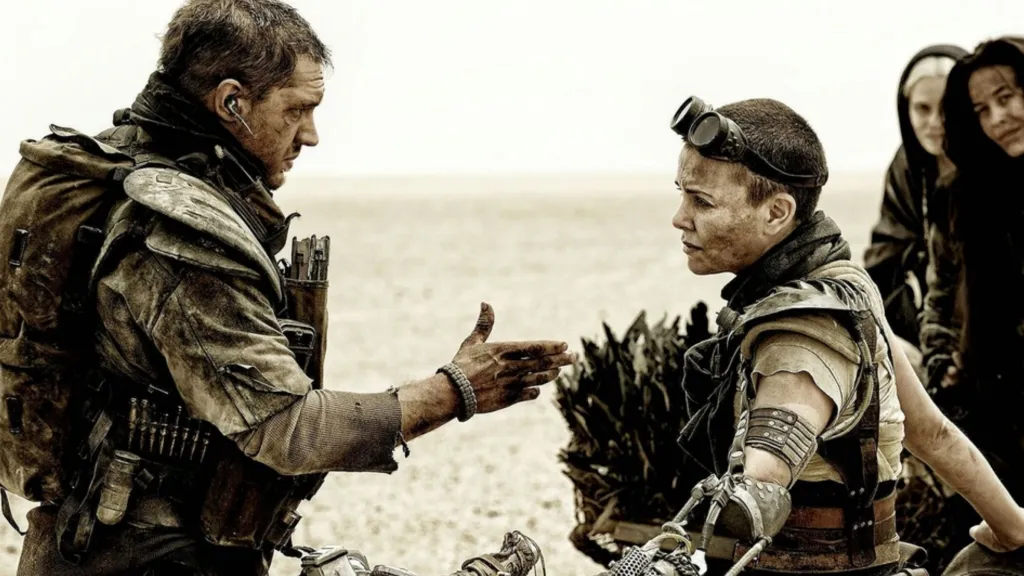
Here, you’re looking at something that feels almost like an anomaly within modern action cinema. Mad Max is already a heavyweight saga, but with Mad Max: Fury Road, George Miller pushes it to another level entirely by building a full-length film around a continuous chase sequence, with minimal exposition and almost no interest in slowing down to explain itself. The story is straightforward on purpose: Max and Furiosa are trying to escape a tyrant in a post-apocalyptic wasteland. And to make that work, most of what you see on screen is real: practical stunts, real vehicles, real stunt work, and as little CGI as possible.
On paper, that already sounds risky, but in execution, it’s even more extreme. This is one of the most logistically intense action movies ever made, with a production that put itself in danger of repetition, mechanical failure, and complex stunt coordination. There’s also the narrative choice that makes it stand out, because Mad Max: Fury Road doesn’t stop to over-explain its world. It throws you straight into it and expects you to understand everything through movement, imagery, and rhythm. In a genre where being didactic for a mainstream audience is often necessary, that’s a gamble.
6) Everything Everywhere All at Once
image courtesy of a24
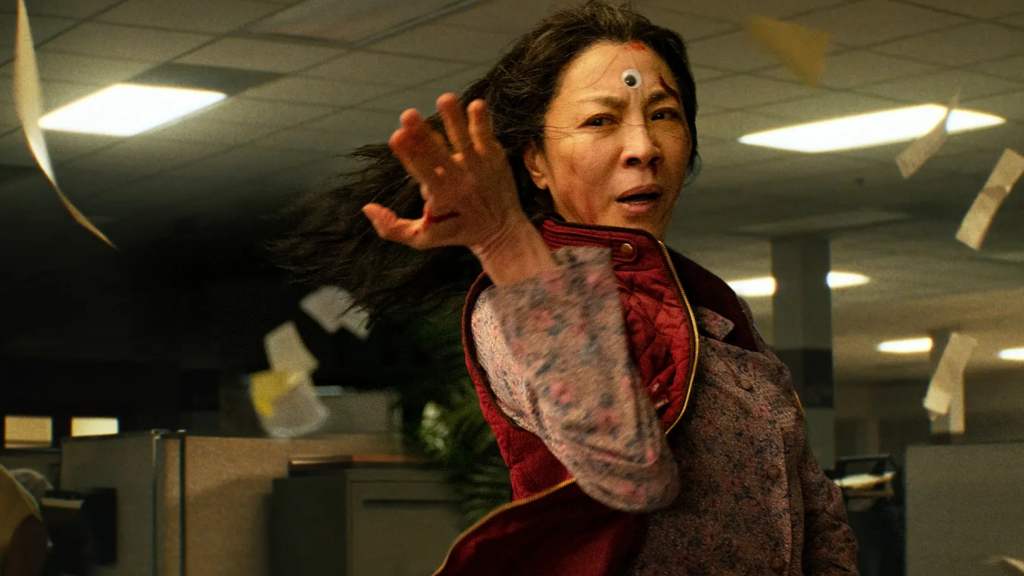
At first, Everything Everywhere All at Once looks chaotic in a way that almost feels uncontrolled. But the more you watch it, the more you realize the opposite is true. The movie follows Evelyn Wang, a seemingly ordinary woman dealing with family tension and financial pressure, who suddenly discovers she can access alternate versions of herself across several universes. And the ambition here isn’t just the multiverse concept itself, but how aggressively the film refuses to separate its ideas into neat layers. Everything happens at once (genres, tones, and visual styles) often within the same scene, instead of being structured in a sequence.
The real risk comes in cohesion. And what makes it impressive is how small the production actually was compared to its scope. It’s a film that could have collapsed under its own weight, especially with how much it shifts between absurd comedy, sci-fi action, drama, and existential philosophy without warning. But it works because there’s a very clear emotional spine holding everything together. Everything Everywhere All at Once knows exactly what it’s about, and it never loses sight of that. It’s controlled excess, actually, and that balance is exactly why it stands out.
5) Boyhood
image courtesy of universal pictures
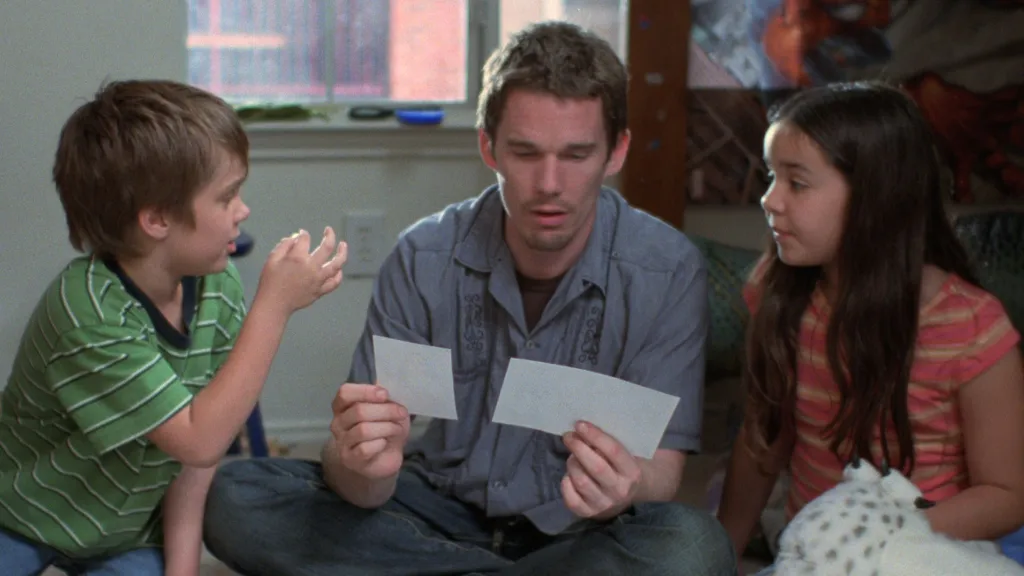
Do you have any idea what it means to make a movie over twelve years with the same cast? It’s an interesting idea in theory, but in practice, the chances of it not working out were huge. The goal of Boyhood was for the audience to actually watch the real growth and evolution of the cast, while telling the story of a boy moving from childhood into adulthood. The plot itself isn’t anything huge, but the long-term filming approach is exactly what makes it compelling to follow in the first place. It’s a bold, unconventional idea, and completely out of the box.
So Boyhood could have run into a lot of problems: actors dropping out, unexpected physical changes, and production issues. And the worst part? There’s no fixing it. This isn’t the kind of movie where you can just reshoot something in post-production if you notice a mistake. So in general, it ends up being one of the most ambitious projects ever made because it’s built entirely on long-term commitment. On top of that, it rejects the traditional dramatic payoff structure; it’s a film that depends completely on the accumulation of small moments, which is also a risky choice when it comes to audience engagement.
4) Cloud Atlas
image courtesy of warner bros.
Cloud Atlas is the kind of movie that would be extremely difficult to even get made today. And that’s because its ambition is radical in a very specific way: it doesn’t simplify itself at any point, which is also one of the reasons it struggled to get financing in the first place. Directed by the Wachowskis and Tom Tykwer, the film moves across multiple timelines and storylines, all connected by the idea of continuity between lives. It sounds intriguing (and it is), but out of everything on this list, it might also be the one most likely to completely fall apart under its own structure, because it always forces the audience to mentally assemble the film as it unfolds.
It’s not that Cloud Atlas is trying to be “hard to follow” for the sake of it, but it also doesn’t slow down to explain itself. It repeatedly casts the same actors in different roles across different eras, and you’re expected to track those connections on your own. That’s part of what makes it engaging, because it pulls you into the logic of the story rather than guiding you through it — but it also makes it very easy to lose the thread (and a lot of viewers did). It’s a film that doesn’t adapt to the audience; it demands the audience adapt to it. Very few studios would feel comfortable greenlighting a project like this today.
3) The Lord of the Rings
image courtesy of new line cinema
One of the greatest epics ever made (if not the greatest), The Lord of the Rings built an entire franchise that is still being explored today. And much like Dune, it was never considered an easy story to adapt, mainly because it’s high fantasy built on extremely dense source material that doesn’t really bend itself for simplification. On top of that, it commits to its own seriousness, following Frodo’s journey to destroy the One Ring while a massive war happens across Middle-earth. At the time, just looking at the scale of the story and the level of detail involved, adapting it faithfully already felt like a bold, borderline risky decision.
And what makes it even more extreme is the way Peter Jackson chose to shoot it: instead of testing the waters with a single film, he filmed the entire original trilogy at once, without even knowing if the first one would actually work. That level of confidence is almost unheard of. Besides, The Lord of the Rings pushed technology forward in a major way, with Weta Digital helping shape early modern visual effects, alongside extensive use of practical sets, costumes, and extensive world-building to bring this universe to life from the ground up.
2) The Tree of Life
image courtesy of fox searchlight pictures
Here you have another film that’s incredibly bold in its structure. The Tree of Life definitely wasn’t made to appeal to everyone, and it feels very aware of that from the start. The story blends the childhood of a boy in Texas with reflections on existence, creation, and the universe — all in a non-linear way that doesn’t follow traditional narrative rules. So, in simple terms, the subject matter is already niche, and the script has no interest in smoothing things out or making itself more accessible just to attract a wider audience. What you get instead is something closer to a sequence of images, impressions, and emotions loosely connected rather than a conventional plot.
The Tree of Life is ambitious because the screenplay is anything but straightforward. It depends on the individual experience of the viewer, which is what makes it unique, but also what makes it risky, since rejection tends to be immediate for a lot of people. Just imagine sitting down to watch a movie where you might not understand what you’re seeing at any given moment. Everything is open to pure interpretation. Overall, it feels like a project designed for a very specific kind of audience, and its level of abstraction is why it required so much creative and financial courage to exist in the first place.
1) Megalopolis
image courtesy of lionsgate
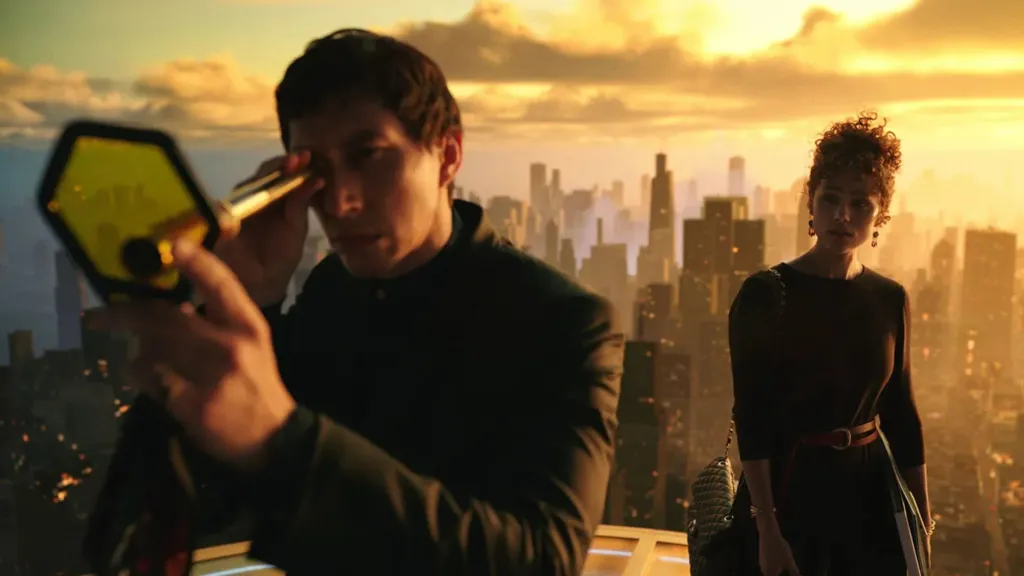
Megalopolis is a movie that feels like it exists outside of modern Hollywood entirely, almost in direct opposition to the system itself. Francis Ford Coppola essentially financed his own vision, building a story around an architect trying to rebuild an entire city based on utopian ideals, as he clashes with the political system surrounding him. This is arguably the most extreme case of ambition and creative risk on this entire list when it comes to cinema. The stakes here aren’t just narrative — they’re financial, critical, and deeply tied to legacy.
It’s a film where an established director puts his own money into something that may never see a proper return, and more importantly, doesn’t seem interested in compromise at any level. And the reason for that is simple: it’s about making a film because it needs to exist, not because the market demands it — and that’s a rare position in today’s industry. It’s big, strange, overloaded with ideas, and completely unconcerned with being easy to sell or universally liked. Megalopolis, in the end, isn’t about perfection, but about pure audacity that very few filmmakers today are willing to risk in that way.
What do you think of these movies? Leave a comment below and join the conversation now in the ComicBook Forum!