Here are the 10 best female characters in the MCU, ranked from worst to best based on the quality of their character arcs. Some of them started out on shaky ground and improved over time, and others came in strong but still need to prove their long-term staying power. Let’s see who comes out on top.
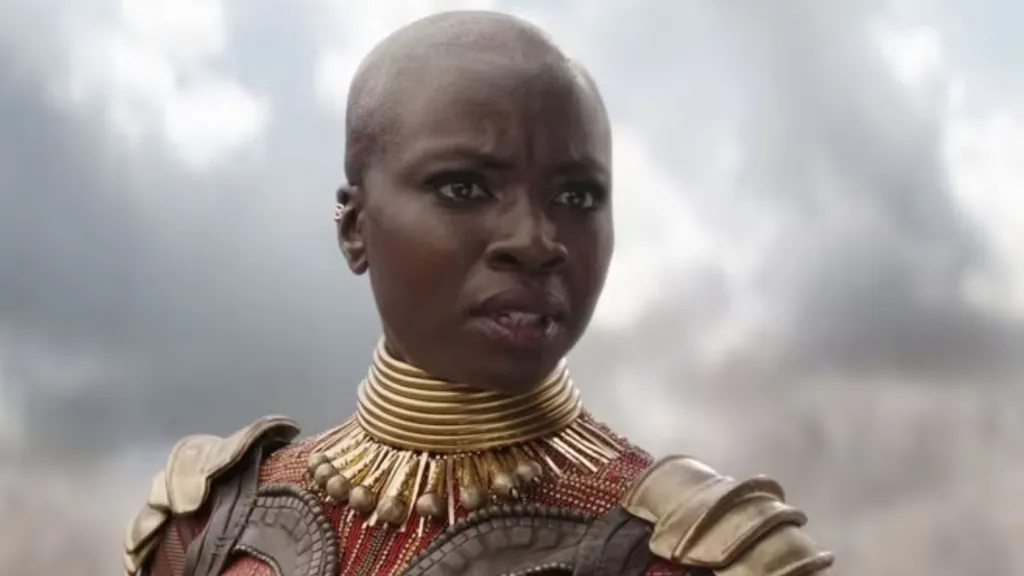
Even in Black Panther: Wakanda Forever, where she’s given more screen time and narrative weight, Okoye still functions more as an institutional symbol of Wakanda than as a character undergoing meaningful internal change. She’s rarely pushed into dilemmas that fundamentally challenge or reshape who she is. The result is a character who is consistent, respectable, and well-performed, but ultimately static. And in a ranking focused on writing and character arcs, that lack of transformation matters.
9) Carol Danvers
image courtesy of marvel studios
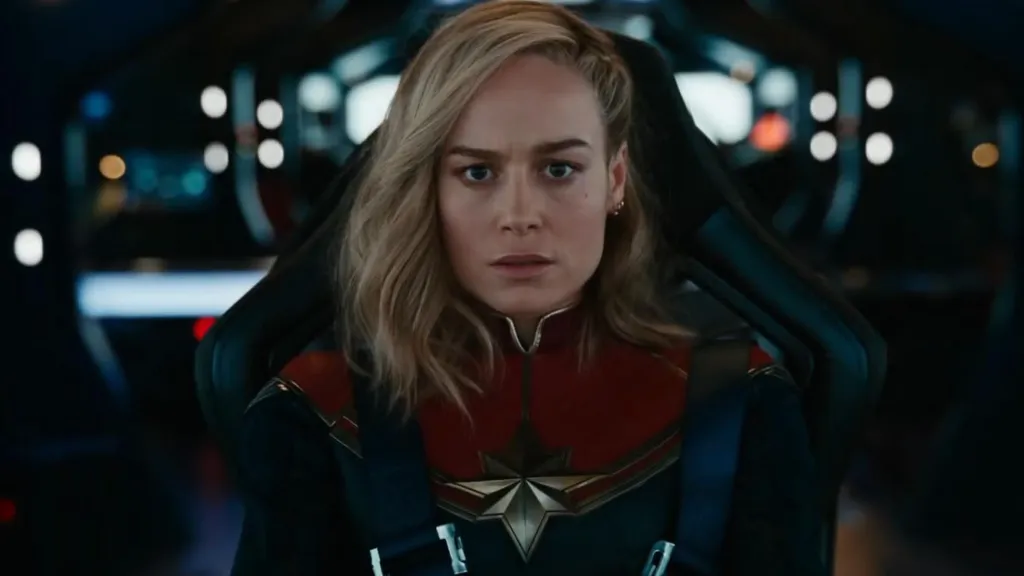
When Captain Marvel was released, Carol Danvers genuinely stood out in terms of character construction. Within the expectations set by her origin story, she worked well. But when you zoom out and compare her to other female characters in the MCU, the picture becomes less flattering. Carol doesn’t suffer from a lack of potential as much as from questionable creative decisions, especially once you look at the direction her story takes afterward, including The Marvels.
On paper, her arc (centered on memory loss, manipulation, and reclaiming her identity) is compelling. The problem is that the MCU always treats Carol more like a force of nature than a person in conflict. As a result, she’s written as too powerful to be meaningfully vulnerable on a regular basis, which significantly weakens her characterization. She works best when the script allows her to fail, doubt herself, or face real limitations — moments that are still rare. That imbalance keeps her ranked below characters whose arcs feel more grounded.
8) Gamora
image courtesy of marvel studios
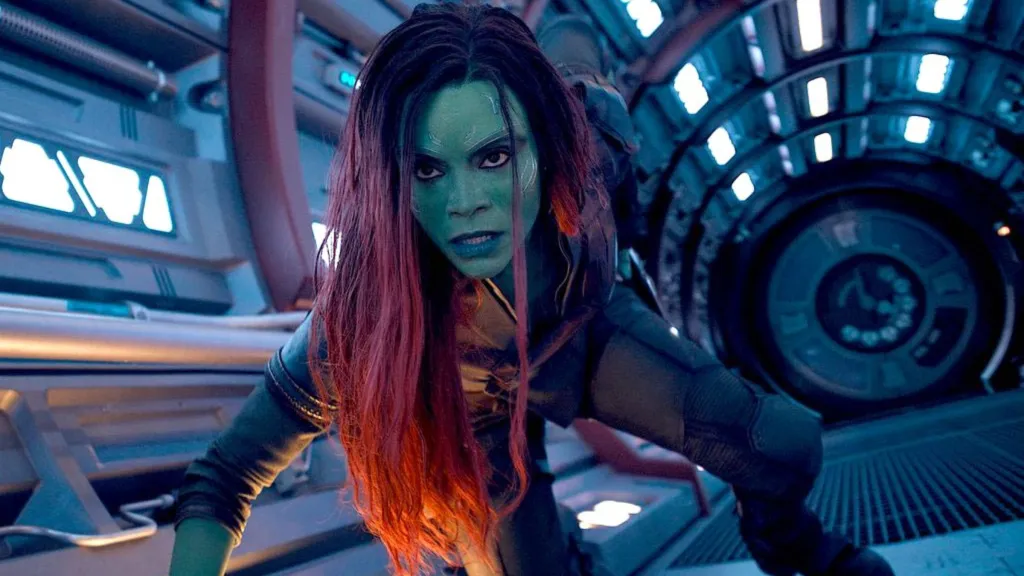
Gamora is one of the MCU’s strongest examples of a redemption arc, especially throughout the first two Guardians of the Galaxy films, with Avengers: Infinity War serving as a powerful culmination of that journey. Her relationship with Thanos, defined by abuse, control, and rooted guilt, adds real emotional weight to her decisions and gives her arc a grounded sense of consequence: Gamora isn’t just rebelling against a villain; she’s actively trying to reclaim agency from someone who shaped her entire life.
The problem begins once the MCU essentially chooses to “reset” her after Avengers: Endgame. The alternate version introduced later in Guardians of the Galaxy Vol. 3 is, by design, not the same character audiences followed for years, and she never receives the same level of emotional care or narrative investment. While this choice makes sense on a conceptual level, it dilutes the impact of the original Gamora’s journey. At its core, she is still a well-written character, but her arc loses momentum when it should have reached its most meaningful and satisfying point.
What makes Kamala work is that the MCU never tries to force her into being something she’s not. Her writing embraces the enthusiasm, insecurity, and messiness of being a teenager, which makes her instantly relatable. And the series also deserves credit for placing family, culture, and identity at the center of her arc rather than treating them as surface-level flavor. In this ranking, Kamala lands squarely in the middle because her story is intentionally lighter and still in its early stages — and it succeeds at exactly what it sets out to do. However, so far, she hasn’t faced the kind of defining conflict that reshapes who she is as a character.
6) Agatha Harkness
image courtesy of marvel studios
A total fan favorite from the moment she stole the spotlight in WandaVision, Agatha Harkness is actually a character who could have been easily disposable. Fortunately, the MCU made a smart call by turning her into something memorable, leading to Agatha All Along— and that gamble paid off. Her construction strikes a careful balance between humor, cruelty, and ambition, and, crucially, it never loses control of its tone.
More importantly, Agatha has never existed solely to serve Wanda. From her very first appearance, she’s defined by curiosity, a hunger for power, and a clear personal view of the magical world — elements that were further explored in her own series. So her emotional depth is no longer limited, which makes her far more compelling as a character. But much of Agatha’s impact still comes from performance and sheer charisma rather than a transformative arc. Her story has expanded, but it hasn’t changed anything.
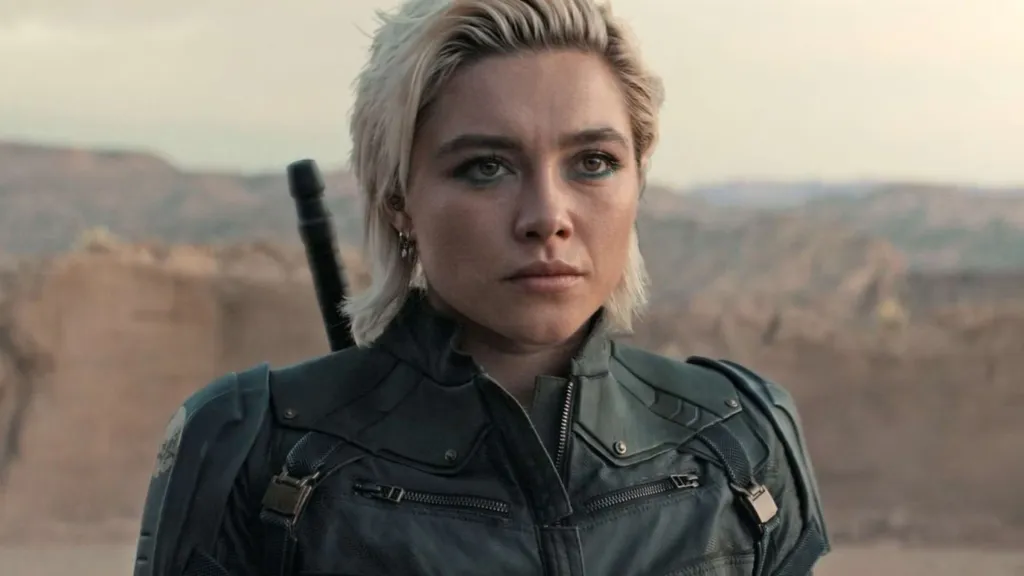
Besides, one of the smartest creative decisions was never forcing her into the role of “the new Black Widow” by default, which does a lot for her credibility. Still, despite being extremely well written, Yelena remains a character whose long-term trajectory depends on what comes next. In Thunderbolts*, she does evolve to a degree, but she’s used more as an external force within the story than as someone actively confronting and resolving her own internal conflicts. For now, her arc feels promising rather than complete.
4) Jessica Jones
image courtesy of netflix
It’s hard to overstate just how much Jessica Jones has remained a fan-favorite since Marvel’s Jessica Jones debuted in 2015. And that comes down to one thing: she’s written with a level of honesty the MCU rarely allows itself. Her story never softens trauma (if anything, it puts it front and center), and it refuses to romanticize suffering or offer easy, convenient solutions. That raw approach is exactly what creates such a strong connection with the audience.
Jessica is sarcastic, self-destructive, and often difficult, but she’s always consistent with what she’s been through — and that consistency is why she ranks so high here. Her character growth isn’t about “fixing” herself, but about learning how to live with the damage she carries, and that’s a sign of genuinely mature writing. Her main limitation has always been reach. With her return in Daredevil: Born Again, the hope is that she’ll be better integrated into the broader MCU. At this point, her evolution should come from a new context rather than further internal transformation.
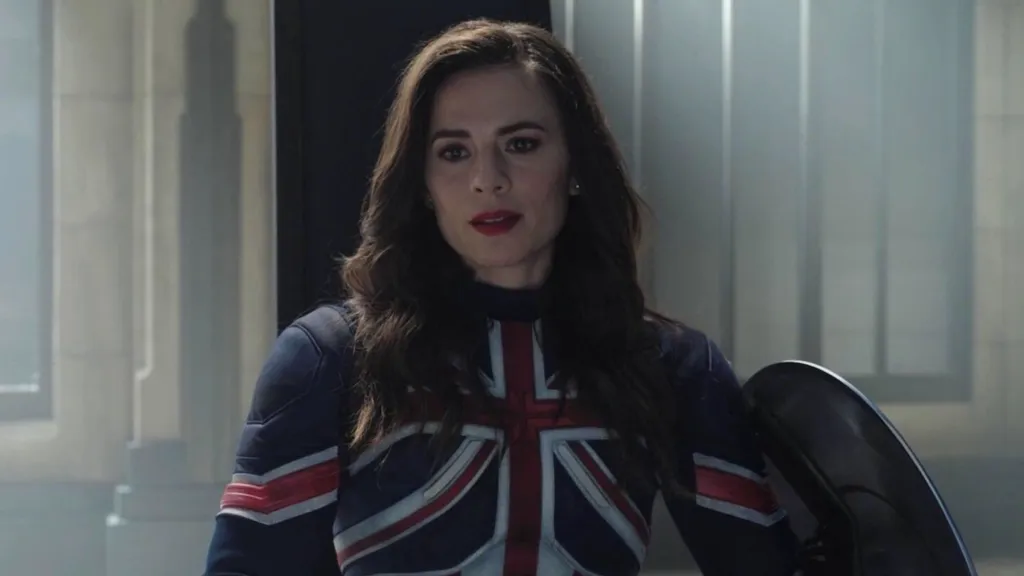
Her evolution is steady and carefully spread across her appearances (limited in number, but purposeful), which is why every return feels earned rather than obligatory. On top of that, she actively helps redefine Steve Rogers, one of the MCU’s most important protagonists. So Peggy doesn’t just grow; she causes growth in others. And even if you completely set her show aside, her arc remains cohesive, well-resolved, and consequential. Her only real weakness is that her journey isn’t emotionally explosive.
Starting with The Avengers and, more decisively, Captain America: The Winter Soldier, she is written as someone who consciously chooses to do something meaningful with the guilt she carries. But what really sets Natasha apart, though, is that she never tries to erase her past — she contextualizes it. Her final decision in Avengers: Endgame, as devastating as it is, doesn’t feel like a shock for shock’s sake. Narratively, it’s the logical conclusion of everything that came before. She only misses out on the top spot because it took the MCU far too long to actually treat her as the protagonist of her own story.
Wanda makes mistakes, hurts others, faces consequences without asking for forgiveness, and still fights fiercely for what she wants. She suffers, and the audience empathizes with her because her pain is understandable — but crucially, that pain isn’t just a motivation, it is the engine of the narrative. With Wanda, the MCU totally embraces the idea that power, grief, and identity can coexist to create a character who is unstable, contradictory, and deeply compelling. No other female character has been given a narrative treatment this complex or this sustained.
What do you think? Leave a comment below and join the conversation now in the ComicBook Forum!