Movies

This Is Still Star Wars’ Most Iconic Jedi Team-Up (And It Still Took 22 Years to Happen)

Videos by ComicBook.com

The subsequent chapters of the original trilogy, The Empire Strikes Back and Return of the Jedi, vastly changed the action dynamics. The duels between Luke Skywalker (Mark Hamill) and Vader were a significant improvement over the first film, offering a higher level of emotional intensity and complexity. Yet, it would take another couple of decades before Lucasfilm got the necessary filmmaking tools to depict the Jedi as truly powerful and agile warriors. Once the technology improved during the digital revolution of the late 1990s, the Star Wars movies turned Jedi team-ups into defining staples of the brand, leading to high marks such as Rey (Daisy Ridley) and Kylo Ren (Adam Driver) fighting in unison in The Last Jedi or the polished coordination of Obi-Wan Kenobi (Ewan McGregor) and Anakin Skywalker (Hayden Christensen) in Revenge of the Sith. The most iconic Jedi team-up, however, debuted 22 years after the original film in The Phantom Menace.

Obi-Wan and Qui-Gon Jin Fighting Against Maul Is Star Wars‘ Best Jedi Team-Up
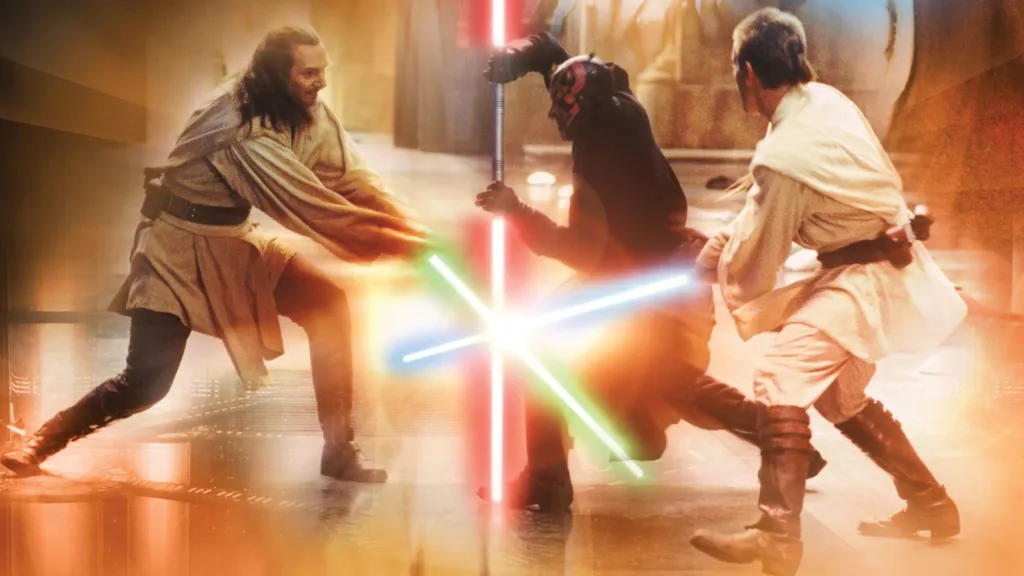
Liam Neeson as Qui-Gon Jinn and Ewan McGregor as Obi-Wan Kenobi fighting Ray Park as Darth Maul in Star Wars Episode 1 The Phantom Menace
Image courtesy of Lucasfilm

The battle for Naboo remains a pinnacle of the Star Wars franchise because it offered the first comprehensive look at the Jedi Order operating with absolute synchronicity against a high-level threat. Stunt coordinator Nick Gillard revolutionized the series’ combat by moving away from the more deliberate fencing styles of the 1970s in favor of a kinetic philosophy that prioritized speed and fluidity. In an interview with Tatooine Times, Gillard described this high-speed choreography as a “chess match” where the combatants were reading hits “three or four moves ahead” through their connection to the Force. This approach allowed Qui-Gon Jinn (Liam Neeson) and Obi-Wan Kenobi (Ewan McGregor) to demonstrate a tactical depth that highlighted years of shared training and philosophical alignment. Furthermore, by incorporating elements of kendo, gymnastics, and tennis, the production created a visual language where every parry and strike felt earned, establishing a benchmark for cooperative combat that is still influencing modern Star Wars productions.
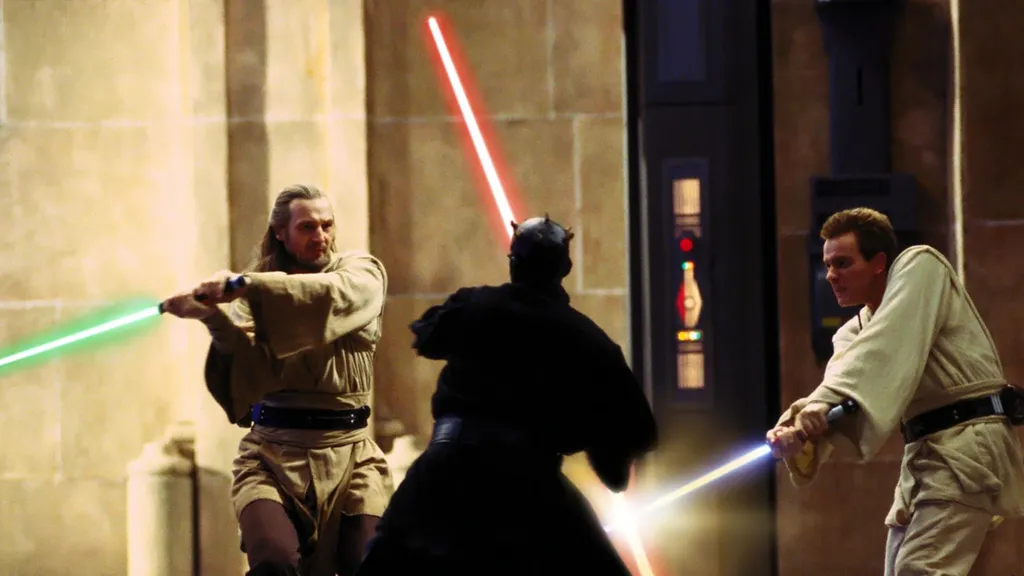

Liam Neeson as Qui-Gon Jinn and Ewan McGregor as Obi-Wan Kenobi fighting Ray Park as Darth Maul in Star Wars The Phantom Menace
Image courtesy of Lucasfilm

The introduction of Darth Maul (Ray Park) as a formidable enemy further elevated The Phantom Menace‘s climax. Armed with a double-bladed lightsaber, Maul functioned as a singular threat capable of challenging two knights simultaneously, which forced the Jedi to constantly shift their positioning and cover each other’s blind spots. This 2-on-1 dynamic asked a level of choreography that was fundamentally different from the isolated duels seen in 1977. The resulting sequence also utilized the multi-layered environment of the Theed power generator to create a sense of verticality and urgency, where the Jedi had to navigate catwalks and energy barriers while maintaining their offensive. Ultimately, the combat in this sequence proved that the Jedi were not just spiritual philosophers, but highly efficient soldiers capable of incredible physical feats when working in unison.

On top of the visual delight, the battle against Maul provided a vital thematic exploration of the bond between different generations of the Jedi, a dynamic that was largely missing from the original trilogy. Obi-Wan Kenobi’s early death in A New Hope and the swamp-bound retirement of Yoda (Frank Oz) prevented a demonstration of a functioning Master and Padawan unit, which The Phantom Menace finally showed. Seeing Qui-Gon and Obi-Wan fight as a singular unit illustrated the continuity of the Jedi tradition, and the synchronicity between the two, particularly in how they anticipated each other’s movements through the Force, remains a definitive portrayal of the Jedi’s history.

All Star Wars movies are available on Disney+.

What’s your favorite Jedi team-up in Star Wars history? Leave a comment below and join the conversation now in the ComicBook Forum!