Videos by ComicBook.com
More specifically, one of the biggest hurdles in following the story is the vocabulary. The plot follows Paul Atreides, heir of House Atreides, as his family moves to Arrakis, the desert planet that’s the only source of the spice Melange. So you’re thrown into a complex world without much time to catch your breath. It’s easy to immerse yourself, but to really understand what’s going on, you need to know the terminology, since the essence of the story is all about culture, religion, ecology, and politics. And to make the fictional world feel believable and deep, Herbert invented words, place names, titles, and specific concepts, drawing from real languages, history, and philosophy. So, Universal Studios decided to do something about it.
How Universal Studios Made Watching David Lynch’s Dune in the Cinema Easier

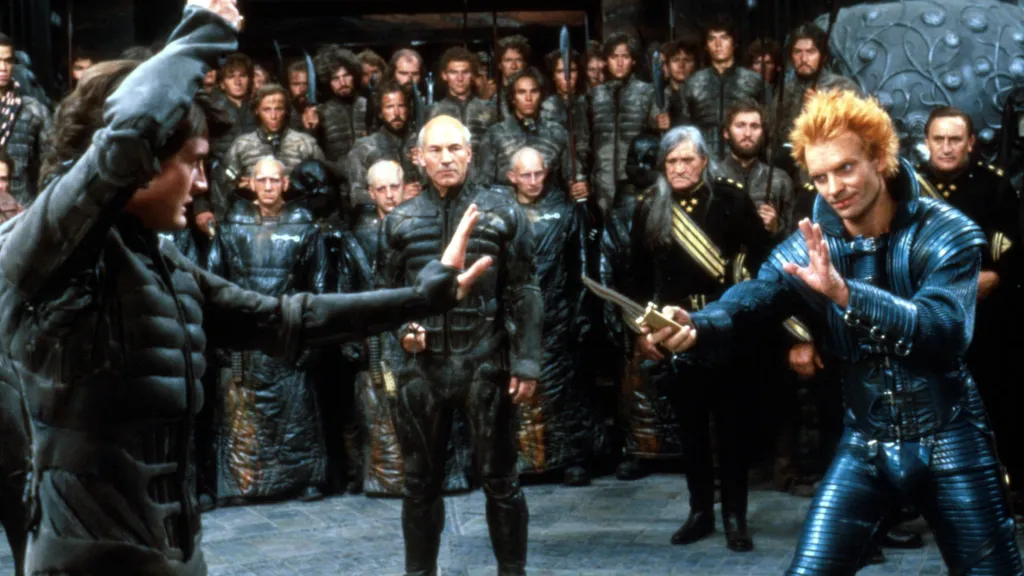
Just as it’s easy to get into Dune, it’s just as easy to get lost because of all these details. Before Dune: Part Two became a worldwide phenomenon, there was the first movie, which isn’t talked about as much partly because of this — there’s so much density that nothing feels immediately clear, which can be discouraging. But back in 1984, even though Lynch’s film wasn’t a massive hit, there was still something smart going on. You can’t underestimate the director and the studio: they knew exactly the story they were trying to bring to the screen. Knowing how complicated it could be for audiences, almost like a challenge, a brilliant idea emerged: the Dune terminology pamphlet.
Yes, to watch the movie, audiences were given a physical guide with definitions of everything essential to not get lost in the story. And this glossary is impressive because it shows something few movies today would dare to do: it treated the audience as people who could and should put in the effort to understand the world they were watching. Instead of simplifying concepts or dumping expositional dialogue, Lynch basically said, “Here it is, read it if you actually want to follow along.” For fans of ambitious sci-fi, this was kind of revolutionary; it was a film that demanded active participation, that didn’t underestimate viewers, and most importantly, didn’t hand-feed everything.