The result was not just a box office smash, but an entire cultural phenomenon. One film grew into an entire franchise and sparked a massive pop-culture shift that affected everything from fashion to music to filmmaking. It went even deeper than that: this one film penetrated the cultural consciousness like few others before it, sparking questions and debates that are still being had today. That’s exactly why it’s been so hard for that very same film franchise to make a comeback.
The Matrix Hit Theaters 27 Years Ago Today (& Changed Everything)
Warner Bros. & Village Roadshow
The Matrixwas first released in US theaters on March 31, 1999, on the back of a massive wave of hype. The Matrix had one of the most successful rollouts in cinematic history, baiting millions of viewers all over the world with the mystery of what the film (from an unknown sibling team, the Wachowskis) was even about. The trailers and TV spots were heavy on vibe over actual story details, simply asking viewers “What Is The Matrix?” and inviting them to the theater in order to find out.
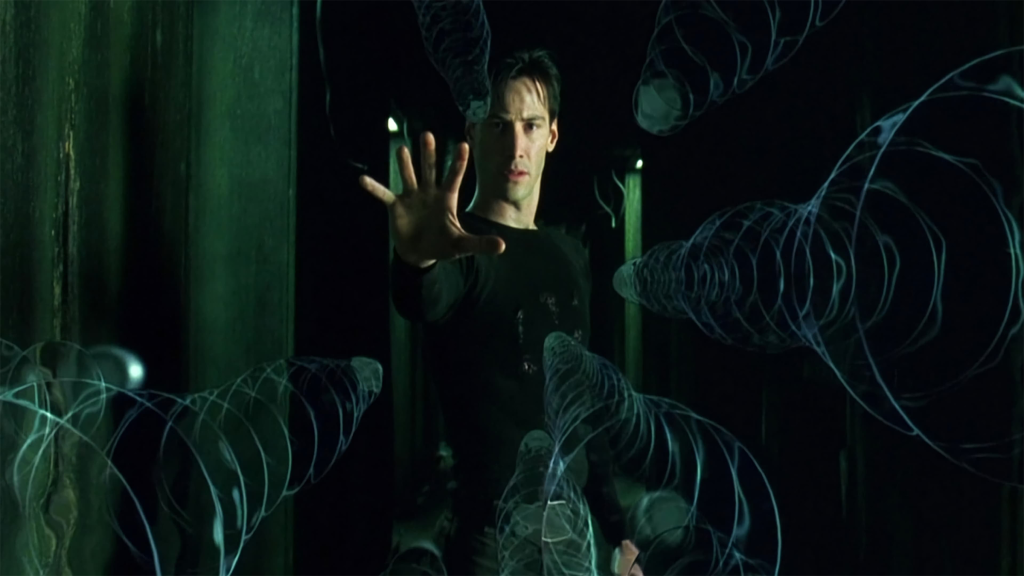
Then there was the legendary first TV spot that played during Super Bowl XXXIII in 1999; just 30 seconds of sizzle reel footage, teasing the groundbreaking visual effects and mind-blowing physics of the film, was enough to get the masses on board. Two months later, The Matrix hit theaters and raised the bar on what a springtime blockbuster could do at the box office.
By the end of its theatrical run, The Matrix earned $467.8 million at the worldwide box office, against a budget of $63 million. It sparked a massive franchise opportunity for Warner Bros. and the Wachowskis, including two sequels filmed back-to-back, and all kinds of merchandising from music and clothing inspired by the movie (black leather FTW!), to multimedia ventures like video games, anime, books, etc.; even the film’s signature green cascading lines of computer code became a major part of the cultural zeitgeist. But The Matrix‘s most enduring legacy has been the philosophical and societal themes the film wrestled with – questions we still haven’t full answered, today.
The Matrix Started Hollywood’s Era of “The Big Twist” & “Wire-Fu”
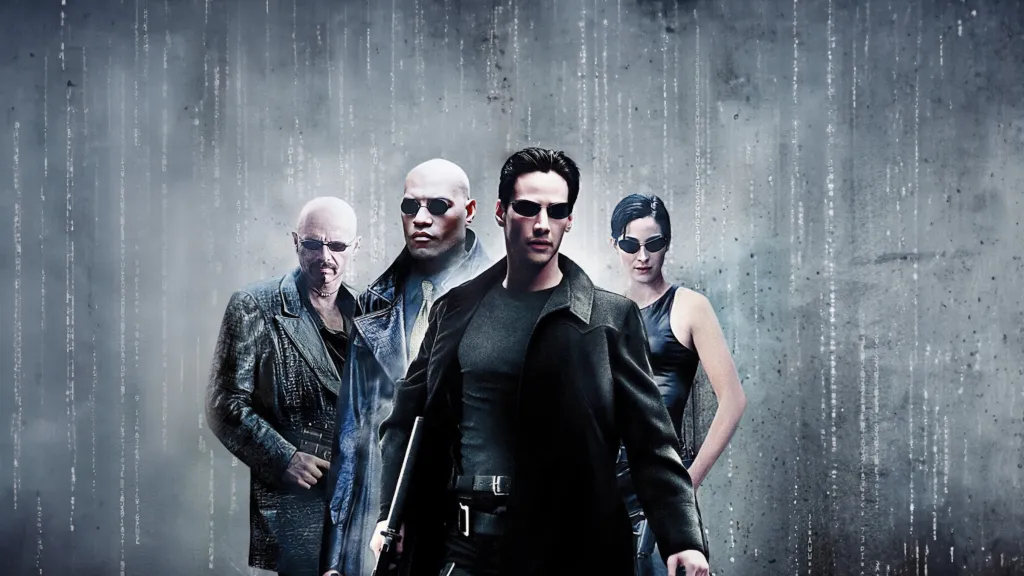
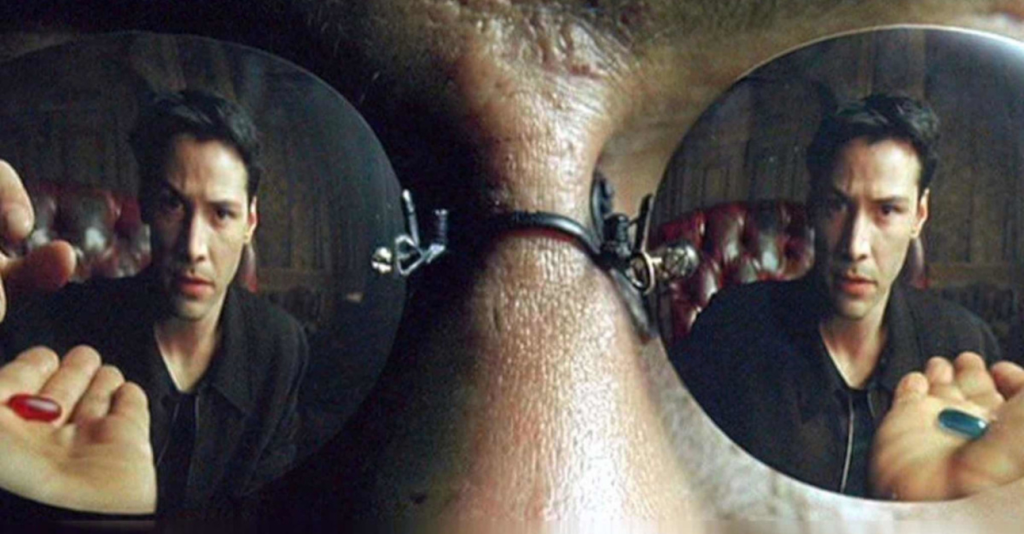
The Matrixtells the story of a corporate IT geek named Thomas Anderson (Keanu Reeves), who moonlights as the world-famous hacker known as “Neo.” Anderson gets recruited into a cabal of hackers by the mysterious “Trinity” (Carrie-Anne Moss), a group of people who are all asking the same question: “What is The Matrix?” Eventually, Tom is contacted by the cabal’s leader, Morpheus (Laurence Fishburne), and decides to join their ranks rather than face the strange government goons like “Agent Smith” (Hugo Weaving), who are hot on his heels. However, Thomas Anderson never could’ve predicted the truth: that “The Matrix” is the digital reality he’s living in, which was constructed as a ruse to keep humans thinking they are living out their lives when in fact they are prisoners in pods being used as bio-electric batteries. The “real world” had been conquered by advanced machines during the 21st century, and the Earth had been charred by nuclear holocaust for 200 years. Once Neo is free of the mental prison, the real war to take back the world begins.
It was one of the biggest twists in cinematic history, at the time. In fact, The Matrix hit theaters in the same span of months as M. Night Shyamalan’s milestone film, The Sixth Sense, and together, the two films ushered in an entire new era of cinema. “The twist” became the hook studios marketed to viewers for the next decade (or more), but unfortunately, The Matrix (and Sixth Sense) remain two of the greatest examples of the technique. Subsequent films are viewed as Matrix knock-offs for telling “twist” stories set in fake and/or digital realities, including The Cell, The Thirteenth Floor, and Existenz.
Warner Bros. & Village Roadshow
The Matrix arrived when the turn of the century was occuring, and anxiety about the emerging digital era coming in “Y2K” was at an all-tiime high. The Wachowskis tapped into deep theoretical science about the rapid evolution of machines and a society based around digital technology. The film was way ahead of its time in predicting a world where everyone has an online persona and/or avatar (like “Neo”); it had lore about hacking and immerson in virtual reality that now serves as metaphor for online and/or screen addicition. Then there was the entire notion of a populace being mentally controlled and codified while they are (literally) being fed on an drained, which sparked years of debate about society and where it was headed.
If all that wasn’t enough: the Wachowskis’ bold choice to bring in the finest martial art choreographers and stunt performers, kicked open the door for Eastern martial arts cinema to finally get mainstream Hollywood exposure. Wired harness stunt work (or “Wire fu”) became a major trend in blockbuster movies throughout the 2000s, including the two Matrix sequels, Reloaded and Revolutions, which raised the bar even higher than the original (at least in terms of action).
The Matrix‘s Brilliance Is Exactly Why It’s Been So Hard to Reboot
But all that revolutionary success (no pun) came at a cost. The Matrix Reloaded and The Matrix Revolutions (both released in 2003) made a combined total over $1.16 billion dollars, and were merchandising cash-cows, despite a steep drop-off in critical and audience reception to the sequels. Spinoff projects like the Enter the Matrix tie-in game or Animatrix anime anthology became solid cult hits, as did The Matrix Online MMORPG, which maintained a modest community of users from 2005 – 2009.
However, by the 2010s, The Matrix had been phased out and replaced by the resurging wave of comic book movies, and the new era of franhise universes being built by Marvel Studios and DC/Warner Bros. The Wachowskis also went through signifcant changes, as “Larry” and “Andy” both transitioned into “Lana” and “Lilly” Wachowski. Their directorial follow-up film, a Speed Racer adaptation (2008) is now a cult-classic, but was looked at as a flop at the time of release; their subseqent films Cloud Atlas (2012) and Jupiter Ascending (2015) both underpeformed at the box office, failing to recoup their $100+ million production budgets.
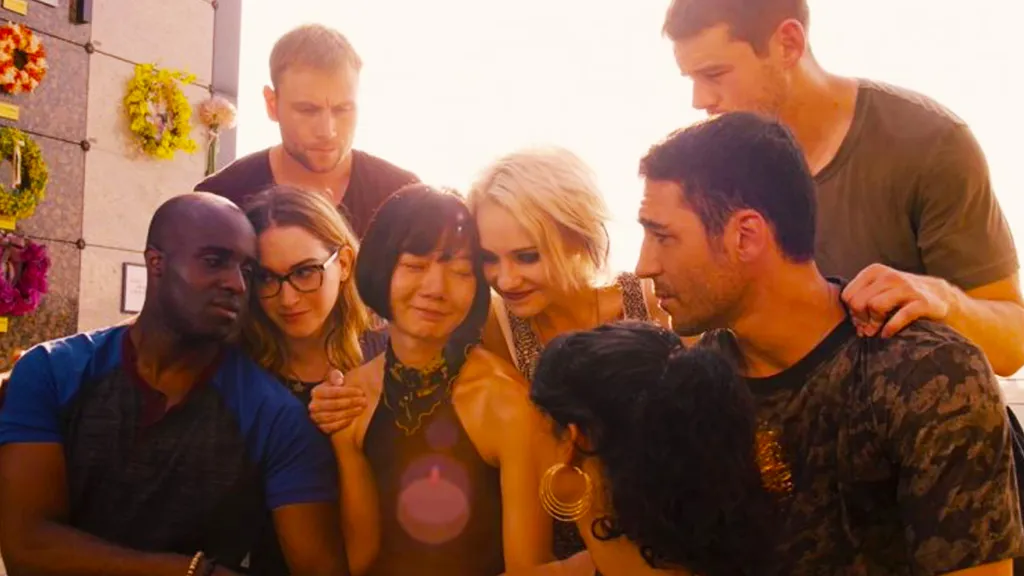
Only the adaptation of V for Vendetta that the Wachowskis wrote and produced did well on the big screen; meanwhile, they partnered with DC/Marvel comic writer J. Michael Straczynski to create the LGBTQ-themed superhero series Sense8 for Netflix, which became a new pioneering success for the Wachowskis, and ran for 2 seasons from 2015 through 2017.
Sense8 / Netflix
The new film projects and Sense8 kept the Wachowskis busy enough throughout the 2010s to avoid much need for revisiting The Matrix franchise. They both expressed in interviews that it was getting harder to even find new inroads to the franchise, given how deeply intertwined the world was with digital technology. Lana finally made a return to the franchise as the 2010s ended, writing and directing a legacy sequel, before the studio decided to reboot.
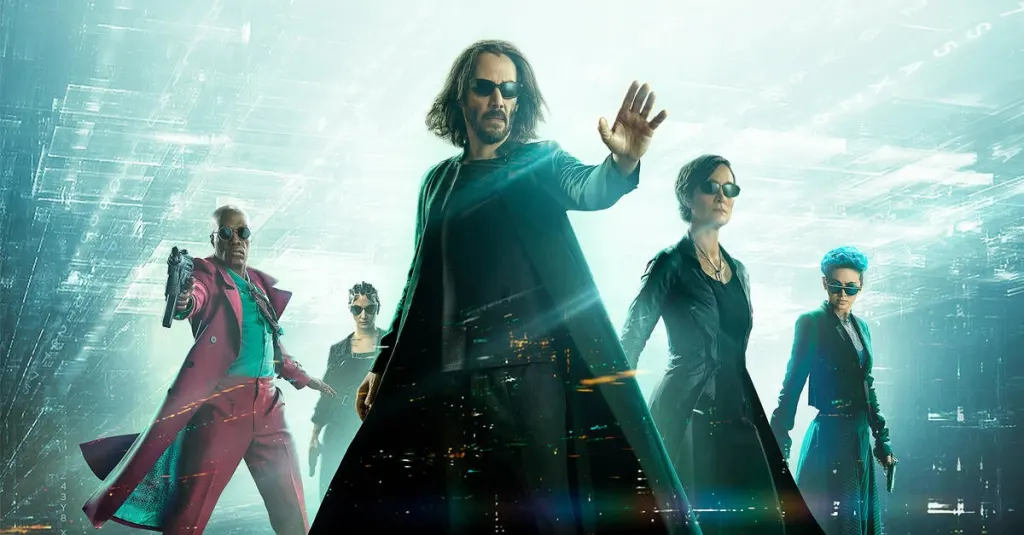
However, The Matrix Resurrectionswas viewed as a major misstep, and exhausted the last fumes of the original franchise. Now, writer/director Drew Goddard (Cloverfield, The Cabin in the Woods, World War Z, The Martian) is stepping into the director’s chair for TheMatrix 5. No word yet on what the story will be, but Goddard claims he’ll let us know when he’s finally done and ready to emerge from his “writing cave.”
You can stream The Matrix on HBO Max. Discuss the film with us on the ComicBook Forum!