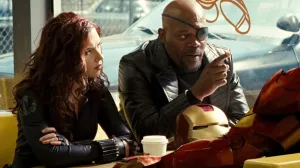
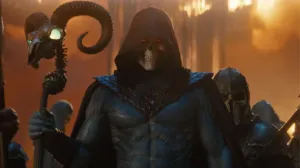
Amidst this expansion, BraveStarr debuted in syndication on September 14, 1987. Rather than adapting an existing toy line, Filmation developed the property and then offered it to Mattel as a partnership, reversing the typical creative dynamic that had governed toy-based animation throughout the decade. The series was set in the 23rd century on a desert frontier planet called New Texas, blending science fiction with Western storytelling. Its protagonist, Marshal BraveStarr (voiced by Pat Fraley), was a Native American lawman who channeled spirit animals to battle the skeletal outlaw Tex Hex and the demonic bull spirit Stampede. The series ran 65 half-hour episodes before concluding its original American broadcast run on February 24, 1988. Less than a month later, on March 18, 1988, Filmation and distributor Taurus Entertainment released BraveStarr: The Movie, a prequel to the series. Sadly, the movie flopped so hard that it killed both the franchise and Filmation.
Why BraveStarr Failed
Image Courtesy of Filmation
The critical response to BraveStarr: The Movie was, by the standards of late-1980s animated features, reasonably favorable. Reviewers acknowledged the film’s genre ambition and the technical novelty of its limited CGI integration. The series itself had earned a dedicated audience during its run, and the decision to structure the film as a prequel—rather than recycle series footage as Filmation had done with The Secret of the Sword—showed a genuine investment in the property’s long-term potential. Despite those positives, the theatrical release was a commercial failure.
For starters, the distribution of BraveStarr: The Movie was restricted to weekend matinee screenings in limited markets, never achieving the wide rollout that would have been necessary to turn a profit. The Mattel toy line, which had launched in 1986 ahead of the series itself, had similarly underperformed against initial projections, recording only moderate sales against expectations built on the extraordinary commercial performance of He-Man and She-Ra. Mattel subsequently cancelled a planned second wave of figures, a decision that further deflated the property’s retail momentum.
Looking back, it’s easy to understand the failure. By 1987, the syndicated animation landscape was oversaturated with toy-based properties competing for the same audience, the same shelf space, and the same after-school timeslots. BraveStarr also lacked the immediate brand recognition that had given He-Man its early commercial foothold, as Masters of the Universe had been a successful toy line before the cartoon existed. The series remains a cult property precisely because its qualities were out of step with what the audiences were used to in 1987 and 1988, but unfortunately, BraveStarr couldn’t pay for itself.
BraveStarr‘s Failure Led to the End of Filmation
Image courtesy of Filmation
The commercial disappointment of BraveStarr: The Movie was the final nail in the coffin of Filmation, the studio that had already given the world He-Man and the Masters of the Universe, She-Ra: Princess of Power, and the groundbreaking animated Star Trek. The 1987 Christmas release Pinocchio and the Emperor of the Night was a box office bomb, and BraveStarr: The Movie replicated that failure in March 1988. These results compounded a structural problem that Filmation’s founder and president, Lou Scheimer, had been managing for years. While competitors like DiC and Sunbow reduced their per-episode costs by outsourcing animation work to studios in South Korea and Japan, Scheimer maintained a policy of producing all animation domestically at the studio’s California facility. This commitment to American labor left Filmation with operating costs that significantly exceeded the industry average, just as the syndicated market was contracting.
Filmation’s parent company, Westinghouse, had grown impatient with the studio’s declining performance and, in late 1988, initiated sale negotiations with Paravision International, an investment consortium led by the French cosmetics company L’Oréal. Scheimer, according to his own account documented in his memoir Lou Scheimer: Creating the Filmation Generation, was assured that the sale would preserve the studio’s operations. Instead, on February 3, 1989, Westinghouse shuttered the Filmation studio, laying off 229 artists and staff members. L’Oréal, which had never had any interest in producing new programming, acquired only the animation library and the two series that were actively in production at the time of the closure, the BraveStarr spinoff Bravo! and an unrelated project called Bugzburg, were cancelled immediately.
BraveStarr: The Movie is currently available to stream on various digital platforms, including Prime Video.
Thirty-eight years after its release, does BraveStarr deserve a full franchise revival, or has its moment permanently passed? Leave a comment below and join the conversation now in the ComicBook Forum!