For a while, that expectation held. Developed by Focus Entertainment and published by Saber Interactive, Toxic Commando absolutely understands the basics of the genre, wasting little time throwing you into missions where teamwork and survival go hand in hand. Hordes pour in from every direction, and every moment feels like a race against being swallowed by the undead tide. Yet the longer I spent with it, the more its true ambitions began to reveal themselves. It became clear that Toxic Commando isn’t content to simply copy what came before it.
The result is a game that still feels instantly recognizable to fans of the genre, yet constantly nudges the experience in new directions. At times it feels like a traditional zombie shooter, and at other moments it resembles a cooperative action RPG disguised beneath layers of gore and gunfire. The best moments come when those ideas collide. That collision creates chaos, and Toxic Commando absolutely thrives in the chaos of zombie horde-dom.
Rating: 4/5
Pros
Cons
Deep class skill trees allow for meaningful build variety
Progression can feel grindy, especially when unlocking weapon attachments
Large open mission maps create chaotic, memorable moments with vehicles and massive hordes
Simplistic storyline that exists mainly to move gameplay
Extensive weapon and gear customization options
Visual presentation is solid but rarely impressive outside of the carnage
Visceral zombie destruction that feels satisfying
Mission objectives can feel repetitive after extended play sessions
Strong cooperative gameplay that rewards teamwork and class synergy
Limited endgame content reduces long-term replay value
There Is a Surprising Amount of Depth in Toxic Commando’s Classes
Courtesy of Saber Interactive
On the surface, Toxic Commando keeps things simple. You choose from four mercenaries, each carrying their own personality and style that adds to the overarching humour take on your standard zombie apocalypse. Cosmetic customization is reasonably plentiful, and it is nice to see a game that lets you unlock plenty of visual flair simply by playing. These cosmetics do not change gameplay, though, which means the real decisions come down to your class. That choice shapes everything about how you approach the gameplay.
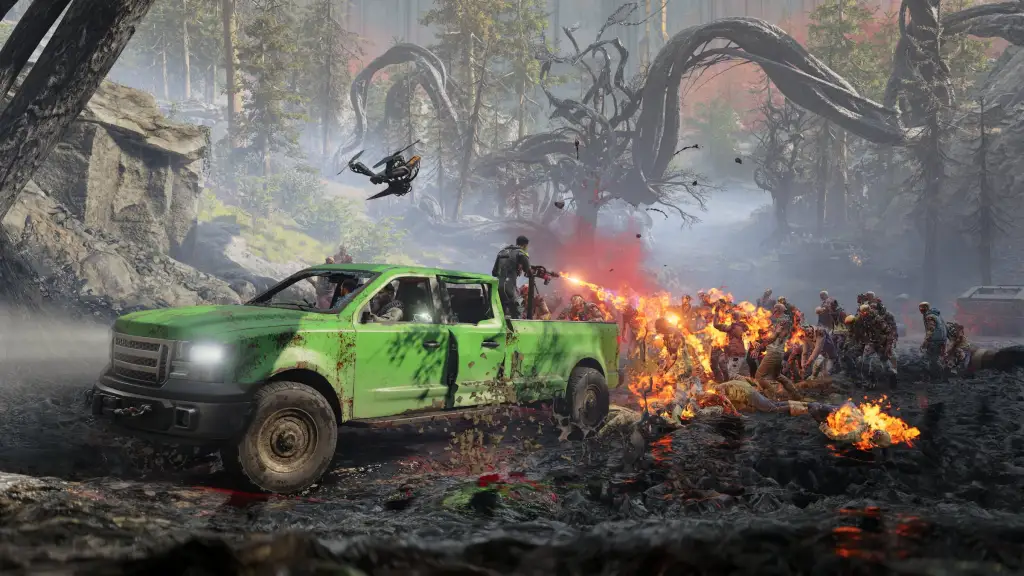
The four classes fill familiar roles, but the way they grow over time adds a surprising amount of depth. The Strike focuses on explosive crowd control, turning massive hordes into burning piles of limbs and debris. The Medic exists to keep the team standing when everything starts falling apart, which happens often when hundreds of zombies decide your group looks like lunch. The Operator functions like a battlefield engineer, deploying a drone that fights alongside you while also repairing vehicles that inevitably take a beating. The Defender steps into the role of the wall, the immovable object standing between the team and the endless sea of undead.
Courtesy of Saber Interactive
Where Toxic Commando really begins to flex its muscles is in the skill trees. Each class comes packed with upgrades that dramatically change how abilities behave, and those changes reshape your entire approach to combat. When I first started experimenting with the Strike class, its Fireball ability seemed straightforward enough. Launch it toward a horde and watch the explosion scatter bodies across the pavement. Then I unlocked a skill that transformed the Fireball into a proximity-style mine that waited patiently for enemies to wander too close before detonating.
That single upgrade turned my playstyle upside down in the best way. Instead of reacting to incoming zombies, I started setting traps and shaping the battlefield before the chaos even began. Every class contains similar moments where a small change unlocks entirely new strategies. The deeper you go into those skill trees, the more Toxic Commando begins to feel like a cooperative RPG that just happens to be drowning in zombies.
Open Field Missions Turn the Apocalypse Into a Sandbox
Courtesy of Saber Interactive
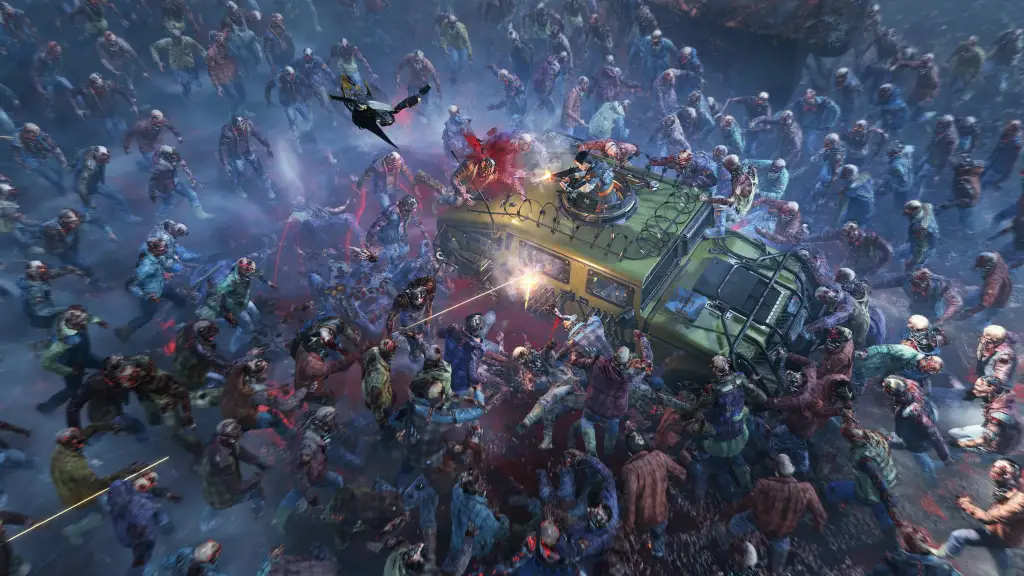
Most horde shooters thrive in tight spaces; narrow hallways and claustrophobic corridors where enemies close in like a tightening noose. Toxic Commando decides to take that idea and throw it out into the open. Its missions unfold across sprawling battlefields that stretch far beyond the usual limits of the genre. From the moment I stepped onto my first map, it became clear that this game wanted room to breathe.
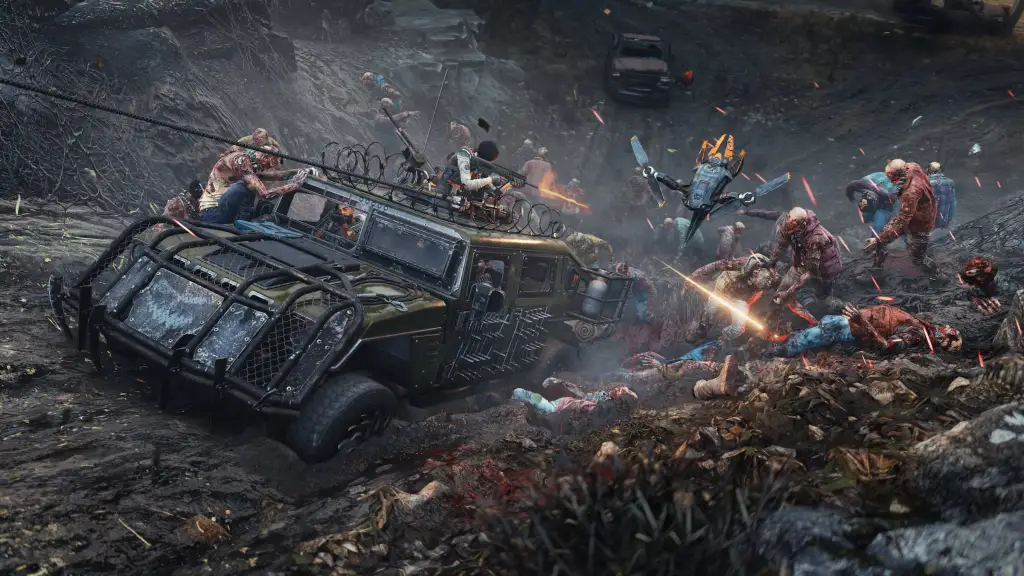
These environments are large, and they are absolutely crawling with undead. Traveling on foot is technically possible, but it quickly became clear to me that vehicles exist for a reason and are largely the ideal traveling method. Driving across a zombie-infested battlefield is pure chaos in motion. Hordes scatter like waves breaking against steel as your vehicle plows through them, sending bodies tumbling in every direction. The sheer scale of those moments creates a spectacle that traditional horde shooters rarely manage to deliver.
The open structure also changes how missions unfold. Objectives exist across the map, and while the path forward is typically straightforward, the journey between those goals can take many different shapes. Along the way, you will stumble across side activities, bonus objectives, and points of interest (POIs) waiting to be discovered. Some reward extra currency once the mission ends, while others grant valuable loot that can make the difference between survival and disaster. Sludge Seeds, in particular, grant skill points for your class tree, making them high-value loot to track down in each mission.
I personally found POIs particularly fun to hunt and explore, as they are randomly generated and shuffled each time you load up a mission. They appear on the map as question marks and only reveal themselves once you move close enough to investigate. It is a simple idea, but it injects a sense of curiosity into a genre that typically moves you in straight lines. Some of my best moments spawned from curiosity; wandering off the main road just to see what awaited me around the next hill.
I Loved Experimenting With Toxic Commando’s Weapons and Loadouts
Courtesy of Saber Interactive
The deeper you dive into Toxic Commando, the more it becomes clear that the game wants you to experiment. Progression feeds directly into that idea through a loop built around missions, experience, and currency. Completing objectives and missions earns you these rewards, which lead to levels, skill points, and weapons that all work in tandem to expand your build.
The loadout system itself will feel immediately familiar to anyone who has spent time with modern shooters. You select your weapons and gear before entering a mission, crafting a setup that matches your preferred style of chaos. Attachments add another layer of personalization, allowing you to refine your favorite guns until they behave exactly the way you want. Most weapons contain several attachment slots, which means unlocking everything can take some time, but it also creates a strong sense of long-term progression.
Courtesy of Saber Interactive
The gear options add even more variety to the mix. Grenades and Molotov cocktails bring the expected explosions and firestorms, but Toxic Commando also throws in tools like deployable turrets that can hold choke points while your team regroups. These tools often become lifelines when the undead tide grows too large to handle with bullets alone. The battlefield itself also hides powerful weapons waiting to be discovered.
During my time playing, I stumbled across everything from a devastating Railgun capable of tearing straight through entire lines of zombies to deployable mortars that rained destruction across distant hordes. These weapons turned already festive moments into something even more dramatic. Every new tool felt like another piece of a growing arsenal, and experimenting with them became one of my greatest joys.
Grinding and Limited Endgame Keep the Momentum From Lasting Forever
Courtesy of Saber Interactive
For all my excitement surrounding Toxic Commando’s progression systems, the grind eventually began to show its teeth to me as I progressed. Unlocking attachments and gear upgrades requires a steady stream of currency, and those costs add up quickly. Since many weapons feature multiple attachment slots, fully building out your favorite loadout can take a considerable amount of time. Repeating missions becomes part of the rhythm, and for players who enjoy that loop, it will feel perfectly natural. For me, I need a bit more than what Toxic Commando has on offer to bear the repetition for long.
Difficulty settings attempt to speed up the process by increasing the amount of currency earned during missions. Higher difficulties reward you more generously, but they also raise the stakes dramatically. Teams that lack coordination will quickly find themselves buried beneath waves of enemies that refuse to let up. Players who prefer a more relaxed experience may find themselves repeating the same missions several times before seeing meaningful progress.
The bigger issue comes from the lack of a truly robust endgame. Toxic Commando offers plenty to unlock and experiment with, but once you have completed the available missions and built out your preferred setups, the game begins to settle into a familiar tone. The customization systems carry the experience for quite a while, yet eventually the content loop stops evolving. For a game that encourages experimentation, a deeper endgame structure would have helped extend its life considerably.
The Narrative Mostly Exists Just to Move the Gameplay Forward
Courtesy of Saber Interactive
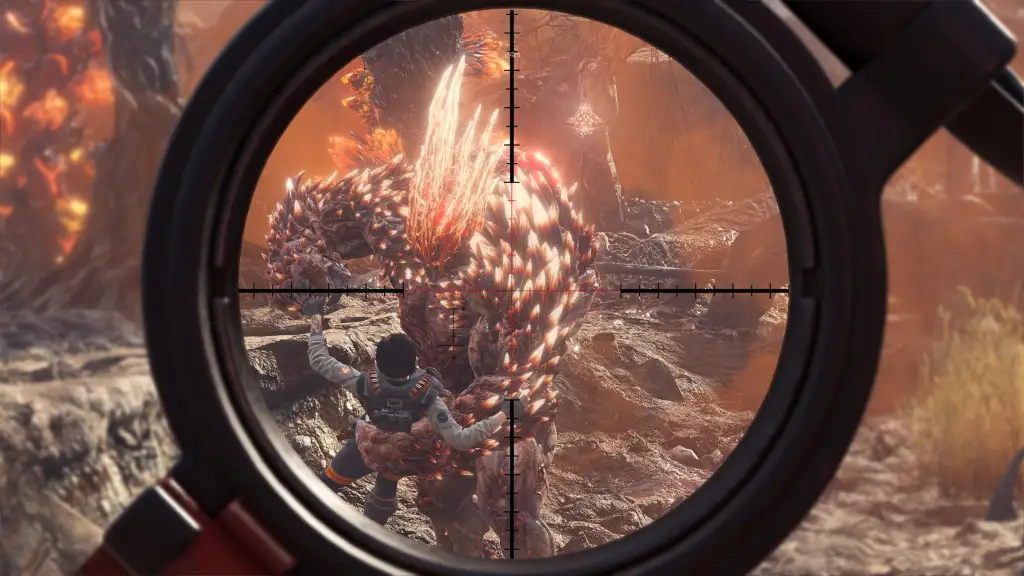
I actually found the narrative premise of Toxic Commando kind of intriguing at first. As previously mentioned, you play as one of four mercenaries sent in to aid Leon Dorsey, the CEO of Obsidian, after his project to harness the Earth’s core for power goes catastrophically wrong. The drilling accidentally unleashes a monstrous being called the Sludge God, which turns everyone near the site into the zombies hordes you face. Leon has a plan to fix the mess he caused, and he needs your team to carry it out. It’s enough context to justify why you’re running into hordes of undead, even if the story itself never steals the spotlight.
That said, it’s clear the narrative exists almost entirely to push the gameplay forward. There are a few moments of notable humorous dialogue and interesting plot beats that hint at stakes, but they rarely feel essential. The story provides a convenient backdrop, giving just enough reason to dive into the various missions the game offers. It doesn’t detract from the action, but it’s not the reason you will keep returning to Toxic Commando. The game is all about the action, and the story is simply along for the ride.
Zombie Carnage Looks and Sounds Wonderfully Brutal
Courtesy of Saber Interactive
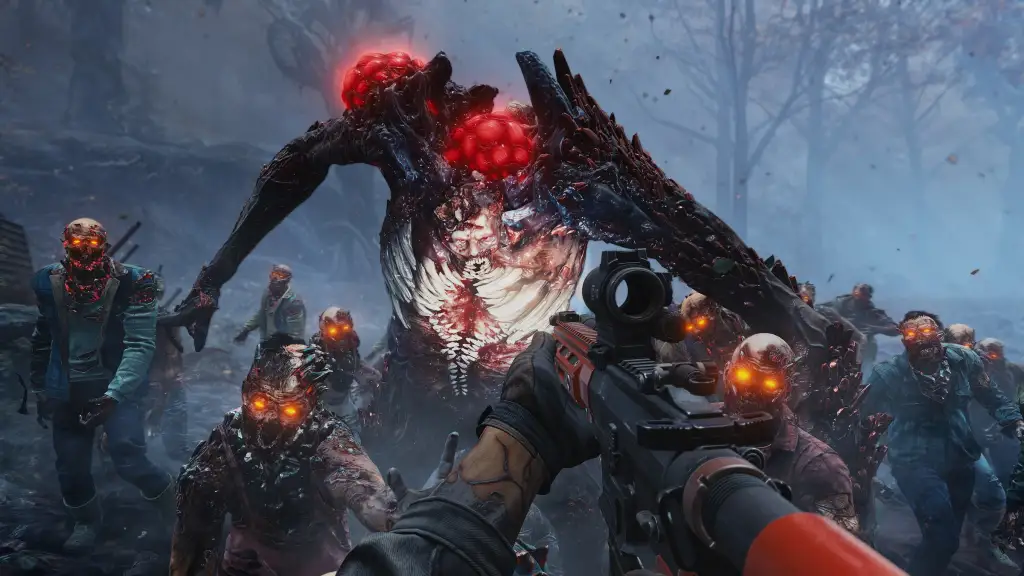
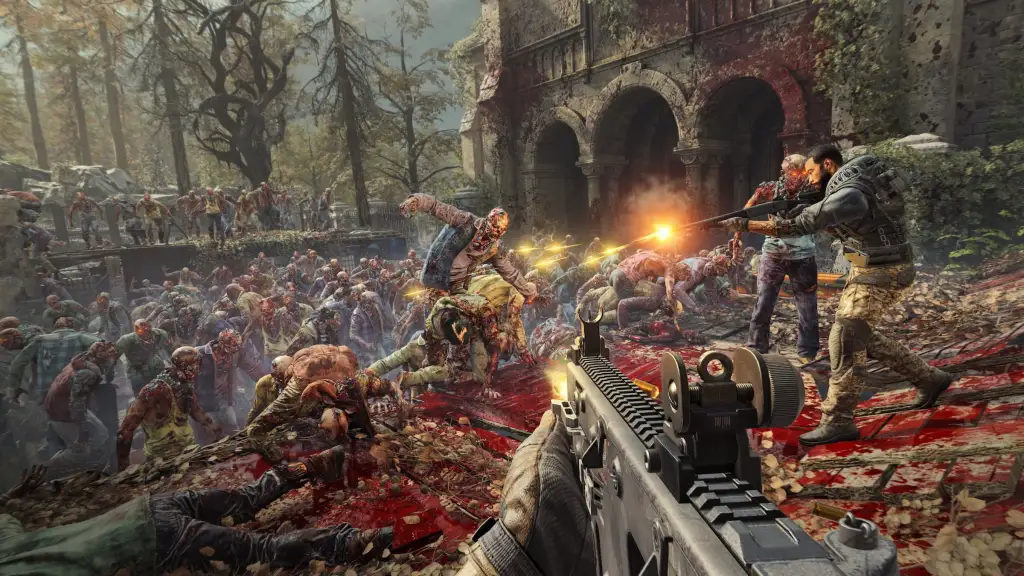
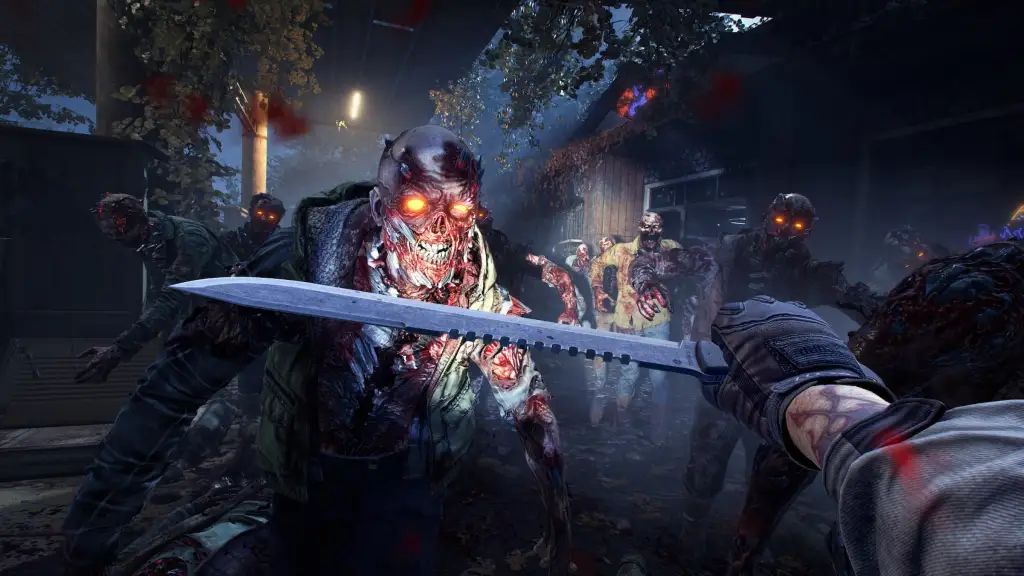
The game keeps visuals straightforward and performance steady, letting the action shine without distraction. The environments look good enough to sell the apocalypse, though they rarely push graphical boundaries in ways that demand attention. What truly stands out is the way the game handles the destruction, or rather, the carnage. The undead are not simply targets waiting to fall over. They break apart, scatter, and collapse into messy heaps as your weapons tear through them.
Charging into a crowd of zombies with a machete felt wonderfully brutal as bodies fell apart with each swing. Flames spread across entire hordes when a flamethrower roars to life, turning encounters into blazing infernos of collapsing limbs. These moments delivered the kind of visceral spectacle I crave in a zombie game. Toxic Commando understands that sometimes the best visual effect is simply watching a massive crowd of enemies fall apart all at once.
The sound design also reinforced every ounce of that destruction. Each weapon carries a satisfying punch that makes every hit feel powerful. A crowbar connects with a dull crack, while the Railgun unleashes thunder that cuts straight through the noise of the horde. The soundtrack does its job quietly in the background, but it is the symphony of carnage that truly defines the game’s audio landscape.
Courtesy of Saber Interactive
Overall, John Carpenter’s Toxic Commando delivers a wild ride through the undead apocalypse with just enough new to make it worth your time. It takes the familiar bones of the genre and wraps them in something bigger and louder. Sometimes that spills over into repetition, but when everything clicks, which it will for your first several hours of play, it feels like standing in the middle of a raging river (of zombies) and letting the current (of zombies) carry you straight through the storm.
ComicBook was provided a Steam code for the purposes of this review.
What do you think? Leave a comment below and join the conversation now in the ComicBook Forum!