Videos by ComicBook.com
Fishbowl is a visual novel game from indie developer imissmyfriends.studio. It’s being published by Wholesome Games Presents, who also brought us gems like Minami Lane and Is This Seat Taken? It tells a coming-of-age story centered on Alo, a young woman starting her first real job after losing her beloved grandmother. As that synopsis suggests, Fishbowl delivers an emotionally resonant and heartfelt story enhanced by solid interactive gameplay elements.
Rating: 4.5 out of 5
| Pros | Cons |
|---|---|
| Powerful, emotional story about grief and growing up | Gameplay can sometimes feel a bit repetitive with daily tasks |
| Engaging gameplay elements with varied immersive mini-games | A few minor translation issues in dialogue boxes |
| Charming pixel art style and character designs |
Fishbowl Might Be The Most Interactive Visual Novel I’ve Ever Played
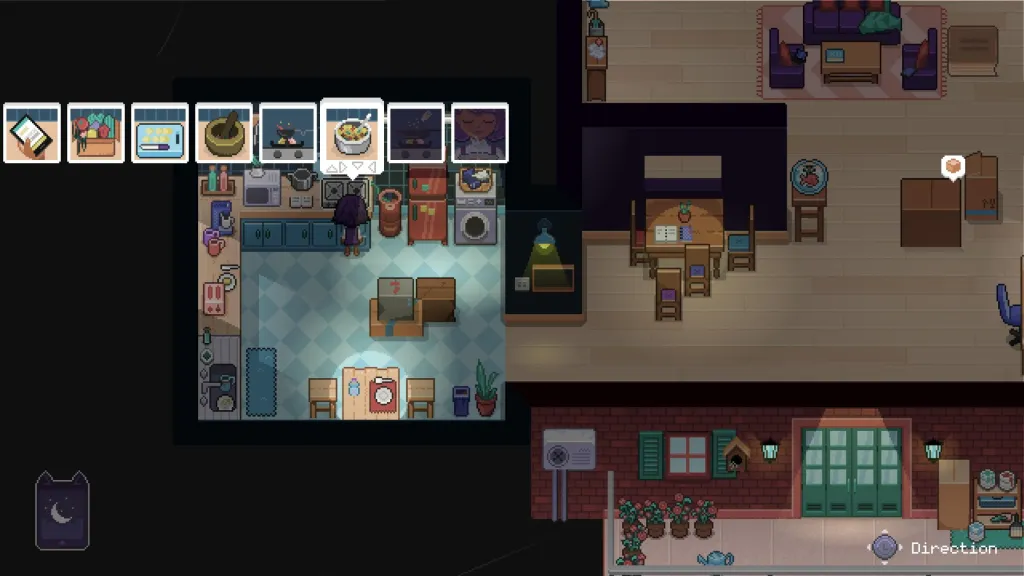
As someone who grew up loving both books and video games, visual novels should be an easy fit. And yet, I often struggle with the genre’s balance between storytelling and gameplay. If the mini-games and interactive elements don’t pull me in, I often get bored and wish I were just reading an actual book instead. I don’t mind a text-heavy game, but I do want to feel like I’m playing a game and that the story is worth my time. The balance between storytelling and gamification is a tough one to strike, but Fishbowl manages to knock it out of the park.
While the story is the focus of the game, it pulls in multiple mini-games and interactive moments to truly pull you in as a player. Given that the story takes place throughout a month of pandemic lockdown in Alo’s home, that’s all the more impressive. Fishbowl offers a varied loop of mini-games to keep you engaged. Daily tasks like making dinner or having coffee demand a sequence of button commands that often change depending on the dish or Alo’s mood. And as Alo receives and ships packages, you’ll need to complete unpacking puzzles to progress the story. Plus, her daily work tasks offer a fun (and surprisingly challenging) matching mini-game, as well.
The gameplay loop can get a bit repetitive, as many tasks repeat daily. But it’s also quite satisfying, ensuring that Fishbowl does put the interactive in interactive fiction. And each mini-game is linked to in-game progression, as well. Daily self-care tasks improve Alo’s mood, with a mood tracker that challenges the reader to keep Alo in good spirits even as grief and life pull her down into the depths. Different options are available or locked depending on how Alo is feeling, so that mood bar feels extra relevant. The unpacking mini-game often unlocks new story elements as Alo revisits memories of her beloved Jaja and sends care packages to friends. I’ve seldom played a visual novel game that smoothly incorporates such a great variety of straightforward yet entertaining gameplay elements, and Fishbowl left me impressed.
Fishbowl‘s Story Made Me Cry (And Yes, That’s a Good Thing)
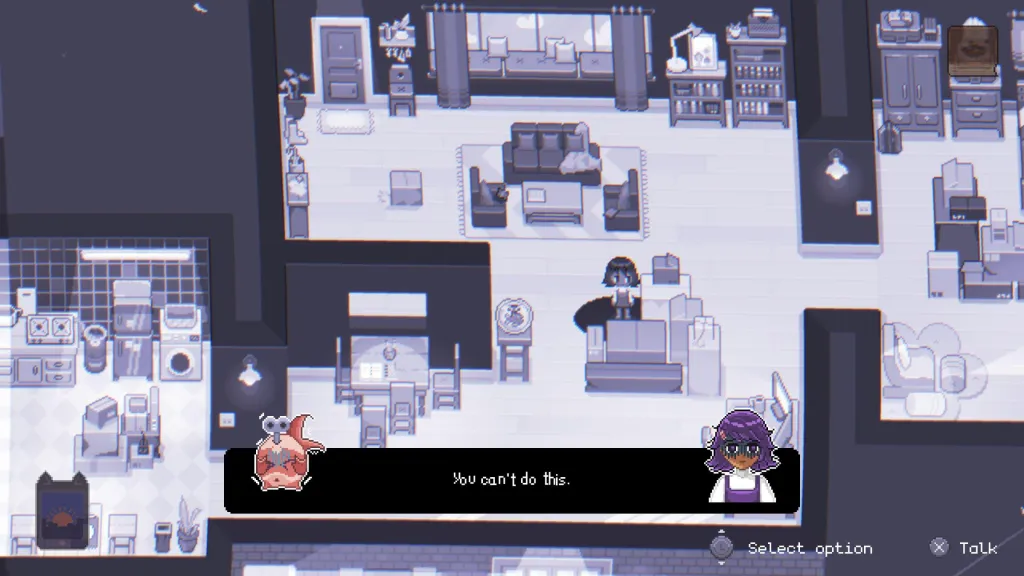
Given that Fishbowl is a visual novel, the story is a crucial component to consider. I’ll avoid getting into spoiler territory here, but I do want to touch on the themes and overall storytelling in the game. Fishbowl is, first and foremost, a story about grief. Alo has recently lost her Jaja, her beloved grandmother. She’s also starting her first adult job after many rejections, and is stuck at home due to lockdowns from what’s heavily hinted to be the COVID-19 pandemic. It’s an emotionally resonant story that will tug at your heartstrings and touch on some tough topics. I will fully admit that it did, in fact, make me cry. But in my book, that’s a pro.
As I mentioned earlier, the story is nicely woven in with the gameplay elements. Your choices impact Alo’s struggles with her mental health, and her interactions with friends and family. You choose what she does and says in different moments, shaping the story that unfolds. Alo and her friends and family are all well-crafted, interesting characters with nuanced personalities and lives. They add depth and breadth to the story even as Alo is stuck at home and connected only via her phone and video calls. Fishbowl masterfully tells a one-room story that still feels expansive, using creative elements like memories and dreams to take us to new times and places.
This is a story with an important message about self-care, mental health, and forgiving yourself and your loved ones. It really resonated with me and even inspired me to do a bit better with my own self-care routines. Fishbowl‘s story is compelling and well-written, and it’s one I’ll be thinking about for a long time. For just $10, it’s cheaper than most paperbacks these days and delivers a strong story served alongside entertaining gameplay elements that immerse you in the tale.
Fishbowl releases for PS5 and PC on April 2nd for $9.99 USD. A PS5 code for Fishbowl was provided by the publisher for the purpose of this review.