Videos by ComicBook.com
Developed by Light Brick Studio, which made the wonderful single-player puzzle game LEGO Builder’s Journey, LEGO Voyagers takes much of the same design and visual philosophy and applies it to a cooperative narrative. This co-op puzzle game captures that spirit of imagination and collaboration at the core of LEGO, while crafting a sweet and emotional story.
LEGO Voyagers also feels inspired by the mini-renaissance of cooperative video games led by It Takes Two and Split Fiction creator Hazelight Studios, and this title deserves to be mentioned in the same breath as those two acclaimed games. Despite some minor blemishes, LEGO Voyagers produces joy and nostalgia that anyone who loves co-op experiences — along with an affinity for plastic bricks — should play.
Rating: 4/5
| Pros | Cons |
| A gorgeous minimalist aesthetic with charming characters and environments | Occasional glitches, some of which required restarts |
| An emotionally resonant story | Controls for certain mechanics later in the game were a bit sloppy |
| A set of co-op puzzles that become more elaborate and test communication |
LEGO Voyagers Lets You Build Your Own Narrative (Somewhat)
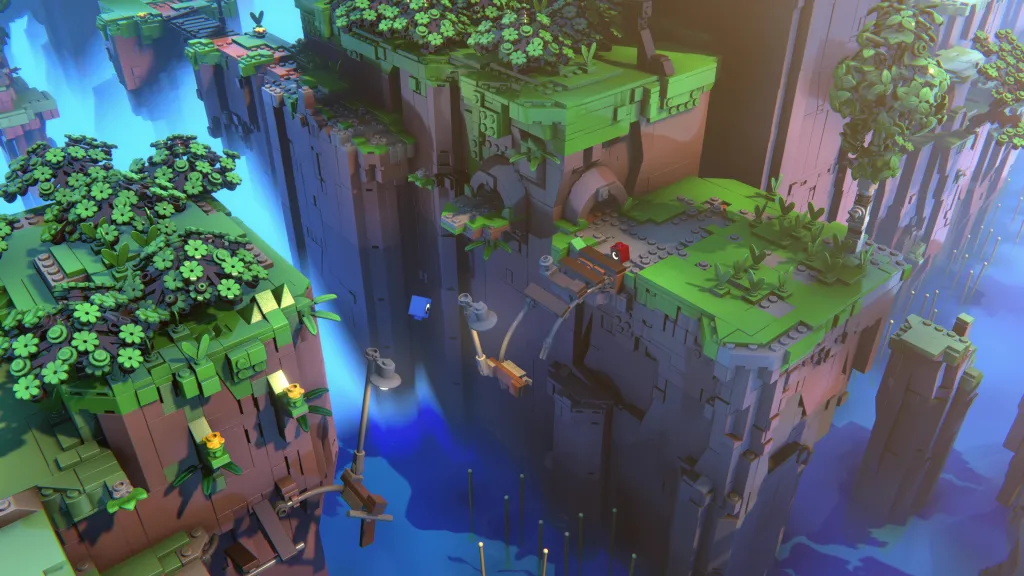
LEGO Voyagers follows two friends who travel far and wide on a journey to fulfill their dreams of becoming astronauts. At least, that’s the most basic and obvious read I got on the story. Very much like LEGO Builder’s Journey, Light Brick Studio takes a minimalist approach to the game’s narrative, lacking any dialogue and telling the story solely through visuals.
And it’s a great approach for a LEGO co-op game, because it gives players the space to craft their own narrative based on their own interpretations and even their personal experiences. It’s obvious that these two characters are close — are they friends, siblings, or something more? Are they young children going on an adventure way beyond their scope, or are they mischievous teenagers looking to vandalize a space station?
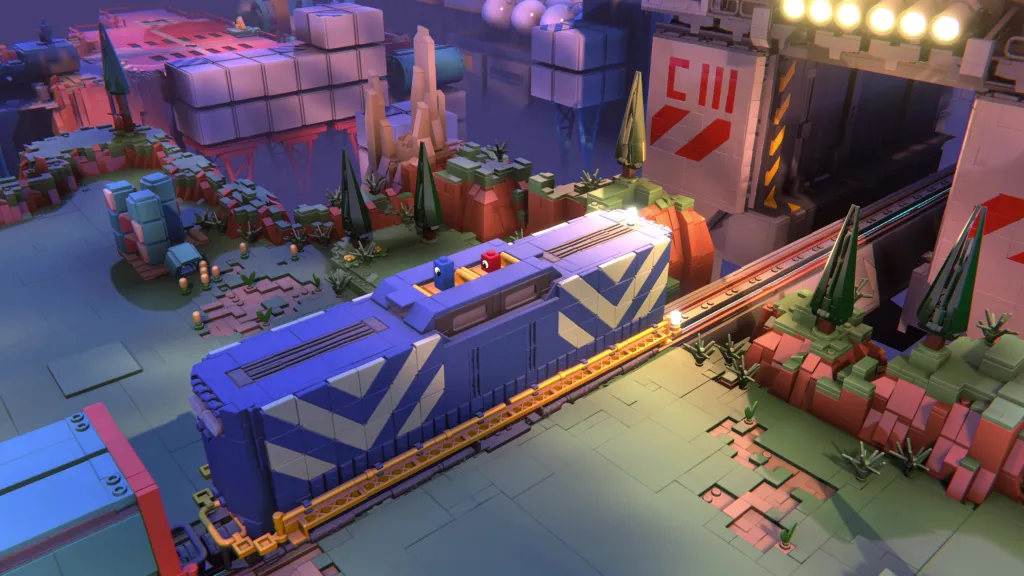
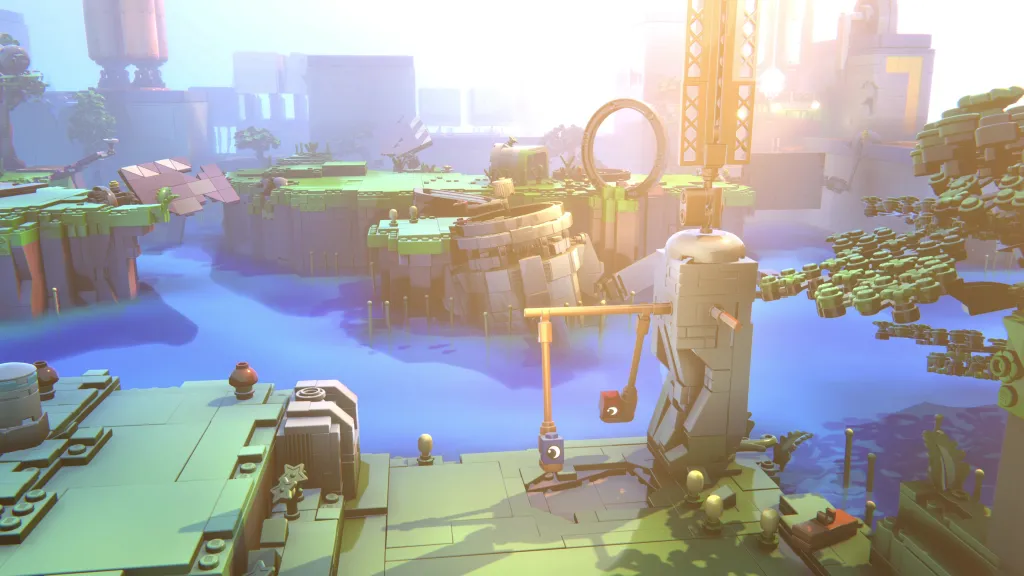
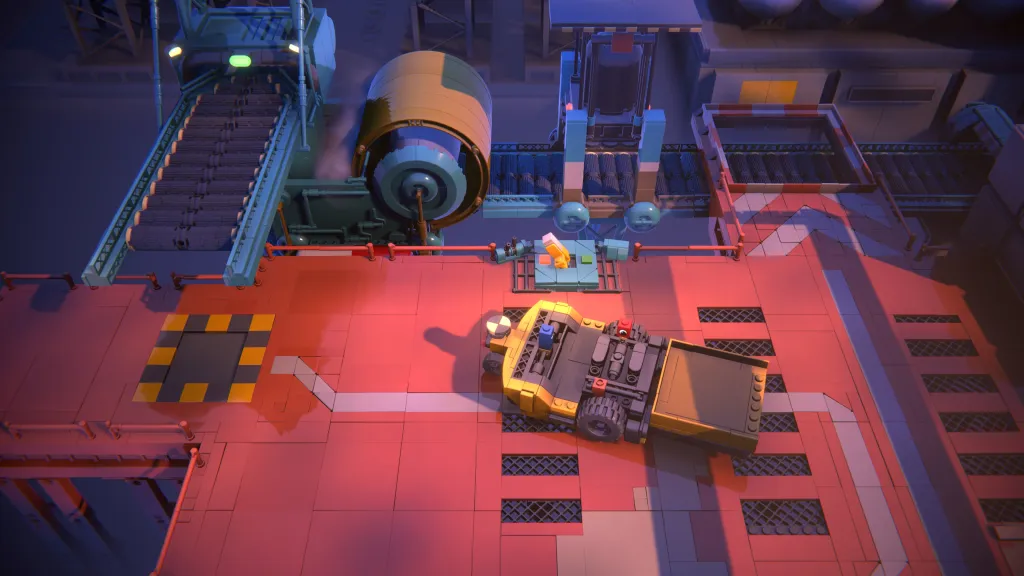
Regardless of how you view the story, the visuals of LEGO Voyagers are gorgeous, with characters and environments that appear tangible thanks to glossy textures and realistic light and reflections. The character designs are lovingly basic, with the players controlling two tiny rectangular LEGO pieces, each with one eye.
You can freely roll around and jump, and they speak in grunts and other fun exclamations, which you can activate with a press of a button, but their noises might be prompted by contextual action, like high-pitched squeals after a big fall or a sound of amazement at an awe-inspiring rocket launch. It’s impossible not to smile at how cute this game is.
Puzzles Start Simple But Increase In Complexity
LEGO Voyagers is a relatively short game, taking somewhere between three to five hours to hit credits. And very much like Hazelight’s co-op games, LEGO Voyagers lets one co-op partner play through a free friend pass, provided that the other player owns the game.
The two main components of Voyagers are puzzle solving and play. The basic rhythm of the game is getting from one place to another, and many of the first puzzles consist of making bridges with LEGO pieces to cross gaps. In between, there are optional moments of play that have no bearing on your progress, but it’s hard not to resist these vignettes, like swinging on a swing set or finding a machine that spins and launches you a distance (although as a bonus, these moments often reward achievements/trophies).