Videos by ComicBook.com
Enter Borderlands 3, a game that, mechanically, was a fairly substantial upgrade over its predecessor in terms of gameplay, but an unbelievable, unmitigated disaster in terms of its narrative. Where Borderlands 2 delivered tight pacing and a layered villain in Handsome Jack, Borderlands 3 buried all that under erratic storytelling, with no sense of self-awareness. Painfully so.
The most frustrating part of Borderlands 3 was the lack of narrative cohesion. It felt like the writers either didn’t understand the characters they were working with or simply weren’t equipped to continue their arcs in a meaningful way. The character assassinations present in Borderlands 3 were some of the worst seen in recent gaming, comparable to the infamous mishandling of Luke Skywalker in The Last Jedi. Fan favorites, like Lilith, were reduced to unrecognizable versions of themselves, all in favor of a new cast of characters no one really cared about anyway.

Take the infamous Ava, for example. Ava is one of the previously mentioned ‘new characters’ in Borderlands 3, and her addition to the narrative did nothing but hinder the experience on so many destructive levels. Introduced as Maya’s impulsive apprentice, Ava was immediately pushed to the forefront of the story with little development, no real growth, and a grating personality that clashed with the tone of every scene she was in. The story forced her into moments clearly meant for legacy characters, moments that fell emotionally flat and were just simply unearned… except for one.
Ava was directly involved in the event that led to Maya’s abrupt death. This moment was incredibly powerful, not because it was sufficiently well-written or emotionally charged with the demise of a beloved character. No, it was powerful because it was caused by genuinely awful storytelling that felt more like a plot convenience to try and thrust Ava into the spotlight. Instead of attempting to honor Maya’s legacy, Borderlands 3 tried to use her death as a cheap catalyst to propel Ava’s purpose in the story, despite her being the near-direct cause of Maya’s death in the first place. The ‘Passing the Torch’ narrative trope that was used here did not work because Ava was not a character who earned the torch in the first place. You’d think it would be enough to condemn a character like Ava, but she arguably gets worse.
Lilith, quite literally the face of the Borderlands franchise and one of its most beloved characters, was also severely mishandled in Borderlands 3, all in service of pushing Ava further into the spotlight. Instead of receiving the focus and respect she had earned over multiple games, Lilith was reduced to a supporting role. She was stripped of most of her powers, sidelined during numerous key story beats (as a result of her lack of power), and constantly undercut by Ava, who spent much of the game disrespecting her without ever suffering any real repercussions, despite being the one responsible for Maya’s death. Frankly, it was a frustrating fall from grace for a character who once embodied the heart and strength of the series. Hopefully, Borderlands 4 gives her a proper revival.

The narrative never gave Ava the growth or accountability needed to justify such a pivotal role. Her behavior made no sense, and her elevation came at the expense of characters fans of the franchise truly cared about. Really, it’s no surprise that many in the Borderlands community despise Ava, seeing her not as a worthy successor, but as a symbol of everything that went wrong with the story.
For contrast, look at Tiny Tina, a character who started equally chaotic and impulsive, but was allowed to grow through real, meaningful experiences. After losing Roland, Tina’s journey of grief and following coping became a powerful emotional thread in the series. It was potent that it eventually became the foundation for an entire spin-off, Tiny Tina’s Wonderlands, a game that exists because of her imagination and her need to process loss. That is powerful storytelling. Tina earned her spotlight through emotional weight and genuine growth.
Ava, by comparison, was handed hers. There was no arc, no reckoning, no emotional anchor. She was pushed into the center stage without earning the audience’s trust, and it shows. Next to someone like Tina, Ava is just a narrative parasite.
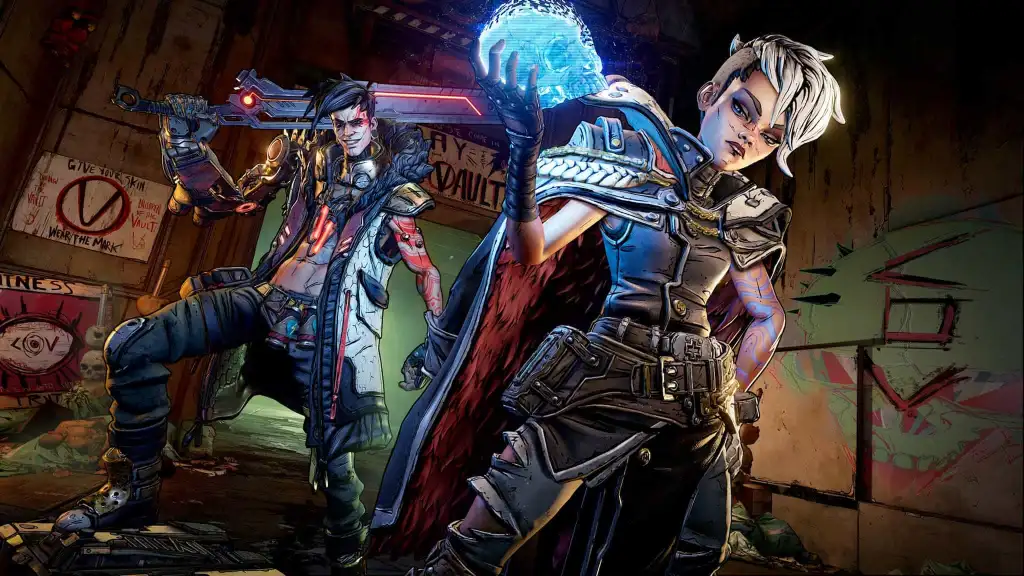
Unfortunately, the damage caused by Borderlands 3 goes beyond Ava. The main antagonists, the Calypso Twins, were little more than caricatures of what an actual villain should be like. They were devoid of any real depth, and they felt less like genuine threats and more like Saturday morning cartoon villains. They were written with the depth of a meme page and the subtlety of a lawnmower, resulting in villains that almost no one in the Borderlands community cares about. The biggest problem was that all their actions felt in service to the player, as if to intentionally put something in a player’s face all to scream, ‘Look, I’m a problem,’ rather than just being one.
In a series that gave us Handsome Jack, one of the most iconic and layered villains in modern gaming, the Calypsos were a really large step backward, narratively. Their motivations were comically shallow, and their constant attempts at edgy streamer humor undermined any sense of danger they were meant to showcase. It’s a shame their core ideals were actually sound, especially at the beginning of the story. However, they never developed, and so their presence cemented just how far Borderlands 3 had strayed from the humorous but intelligent writing that once defined the series.