Videos by ComicBook.com
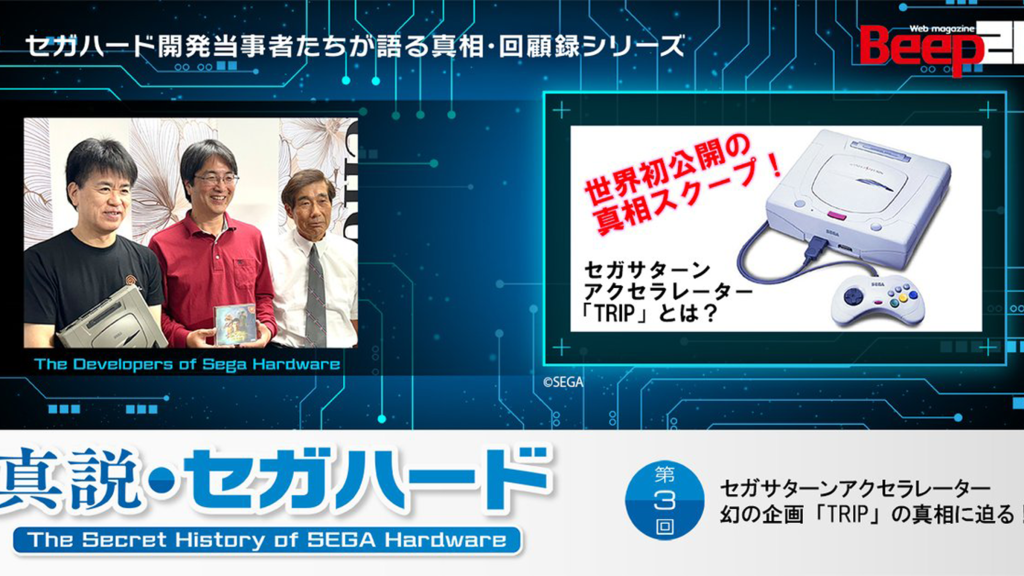
For its time, the Sega Saturn was a powerful machine, boasting 2 MB of RAM, 1.5 MB of VRAM, two 28.6 MHz processors, and more. By today’s standards, that’s nothing, but in 1995, it was a game-changer. While the Sega Saturn was on the market, which admittedly wasn’t very long, several rumors arose about a planned graphics accelerator, which would have boosted the system’s processing power. Had that happened, it might have made the Sega Saturn more competitive, giving it a longer shelf life. The rumor wasn’t baseless because Sega did the same thing with the 32X, helping keep the Genesis alive. Now, after 31 years, the rumor has been proven true.
There Was a Graphics Accelerator for the Sega Saturn

The thing about a rumor is that it’s often based on fact, even if it’s only a tiny truth surrounded by hundreds of assumptions. Sega’s development of transitional devices like the 32X and Sega CD kept the Genesis going for longer than it probably would have without them, so it made sense that something similar might happen for the Sega Saturn. The biggest rumor prevalent during the mid-late 1990s was that the purported graphics accelerator would have enabled the system to run a port of Virtua Fighter 3, a demanding, graphics-intensive game that the Saturn, on its own, couldn’t handle.
As it happens, the rumors were true, as revealed in a recent interview with Beep21 in which Junichi Naoi, formerly of Sega, shared details. The rumor of the graphics accelerator arose and was confirmed during the talk. Not only that, but it would have employed the Hitachi SH-3 chipset; Naoi helped develop the first and second iterations. Naoi was the one responsible for pitching the graphics accelerator to Sega, as he noticed that Sega’s Model 3 arcade system featured games that were too complex for the Saturn. A device was needed to port titles like Virtua Fighter 3, which was desired, as Sega had been porting its successful arcade games to the Genesis for years.