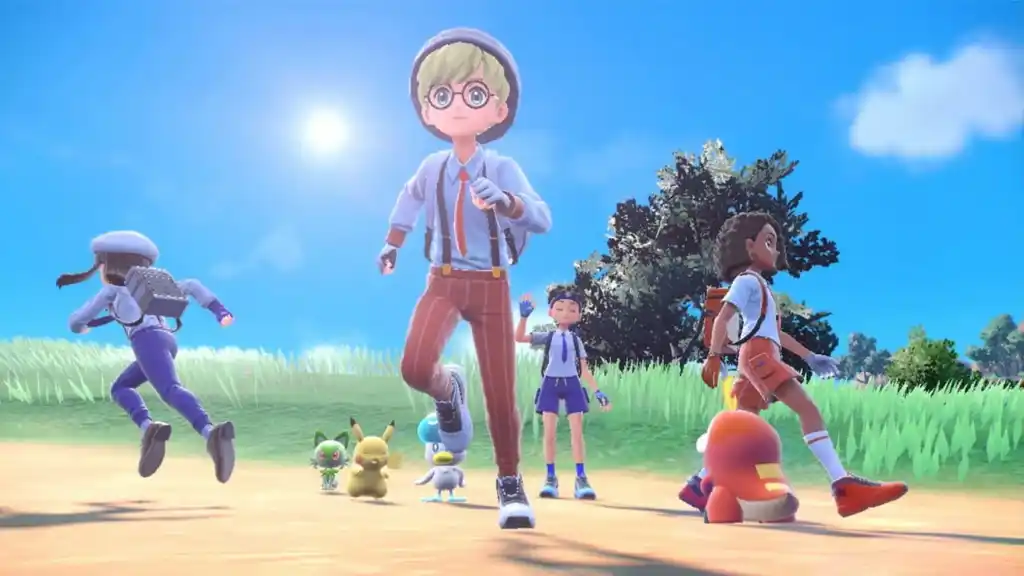
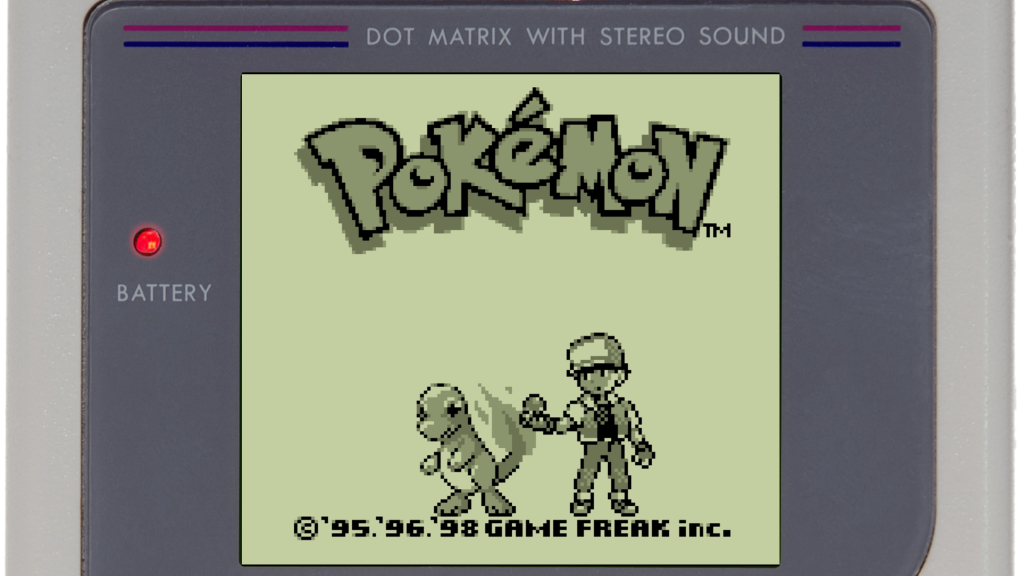
That realization did not come from nostalgia alone, but also from how Pokemon FireRed and LeafGreen treat players. There is very little hand-holding, and progress feels earned rather than guided. That simplicity stands in sharp contrast to newer titles like Pokemon Scarlet and Violet, which often prioritize accessibility at the cost of challenge and exploration. I did not expect these older games to restore my faith in the series, but they almost single-handedly did. At the same time, they made it impossible to ignore where modern Pokemon struggles.
Why Pokemon FireRed and LeafGreen Are Still Beloved
image courtesy of the pokemon company
Part of what makes Pokemon FireRed and LeafGreen so enduring is their clarity of design. Built as remakes of Pokemon Red and Blue, they refine the original formula without losing its identity. The core loop is simple: explore, battle, catch, and improve. There are no unnecessary systems layered on top to distract from that foundation. These Game Boy Advance games offer the fundamental experience of Pokemon as it should be.
Another strength is how the game encourages exploration without constant interruption. You are given a direction, but rarely forced down a path, and are often free to do as you want without constant interruptions. If you want to train your team, explore optional routes, or experiment with different Pokémon, the game allows it. This freedom creates a sense of ownership over your journey. It feels like your adventure, not a scripted experience.
The difficulty also plays a key role. These games are not brutally hard, but they require preparation. Gym battles can punish poor planning, and rival encounters demand awareness of type matchups, ones that change depending on your starter choice. This balance keeps players engaged. It respects their ability to learn and adapt, rather than guiding them through every step.
The Problem With Modern Pokemon Games
image courtesy of the pokemon company
Modern entries like Pokemon Scarlet and Violet have introduced ambitious ideas, including open-world exploration and expanded storytelling. These changes are important, but they often come with trade-offs. One of the biggest issues is how easy the games have become. Forced Experience Share systems and forgiving mechanics reduce the need for strategy. What’s worse is that these are constantly forced down the player’s throat, even near the end of the game.
Linearity is another problem, even in games that present themselves as open-ended. While players can technically choose different paths, progression often feels controlled. Key moments are gated, and the sense of discovery is limited by constant direction. Instead of exploring naturally, players are nudged toward the next objective. Even the open world of Pokemon Scarlet and Violet was not truly open, because there was a set path intended from the start.
Forced segments further disrupt the flow and break immersion. Frequent cutscenes, tutorials, and scripted events slow the pacing. In earlier games, these moments were brief and occasional. Now they feel excessive, pulling players out of the experience. This shift creates a disconnect between the player and the world, making the adventure feel less personal. You feel less like the hero of the story and more like someone being led by their hand throughout the entire game.
Why Pokemon Needs a Modern 2D Revival
image courtesy of the pokemon company
Revisiting Pokemon FireRed and LeafGreen made one thing clear. The series would benefit from returning to its 2D roots, even if only for a single entry. A modern 2D Pokemon game could combine the strengths of classic design with updated visuals and quality-of-life improvements. A 2D game would allow for tighter design and make progression feel more cohesive and rewarding.
Pokemon FireRed and LeafGreen are more than just great remakes. They are a reminder of what Pokemon does best and are essential parts of the experience. If modern Pokémon can recapture even a portion of that design, the series will be in a much stronger place. I hope that Game Freak looks to the past when developing Pokemon Winds and Waves, but even more than that, I hope we continue to get older games added to the Nintendo Switch’s library.
What do you think? Leave a comment below and join the conversation now in the ComicBook Forum!