Videos by ComicBook.com
Marvel in the ’90s is more well-known for failures than successes, but that doesn’t mean there aren’t some great comics from the decade. Marvel still had some amazing creators doing brilliant work. While the ’90s never reached the overall level of quality that Marvel fans had gotten in the ’80s or later in the ’00s (not to mention the ’60s and ’70s), there are still excellent stories. These 10 ’90s Marvel stories are the cream of the crop, excellent stories that have stood the test of time.
10) The Incredible Hulk -1

The late great Peter David’s run on The Incredible Hulk came to a close in 1997, but that doesn’t mean that the book’s quality was going to suffer. I would recommend all of David’s run (my favorite sections of it are the ones drawn by Gary Frank and Adam Kubert), but if you just want one issue to read to see why it’s such a great comic, then The Incredible Hulk -1 is where to go. Marvel’s “Minus One” month was a cool idea, taking readers to times before the beginning of the Silver Age Marvel Universe and telling cool little stories about our favorite heroes before they were heroes. The Incredible Hulk -1, by David and Kubert, took readers back to when Brian Banner was released and Bruce tried to rekindle a relationship with his abusive father. This was a mistake, and it led to a fateful rainy night at the graveside of Bruce’s mother. This is outstanding storytelling from start to finish, a heartbreaker of a comic that shows one of the many formative moments in Banner’s life. It’s excellent. This is the kind of work that Peter David could do, and it’s amazing.
9) Thunderbolts #1-12

Much like the previous entry, I would definitely recommend reading the entire ’90s run of Thunderbolts from Kurt Busiek and Mark Bagley. It is an outstanding superhero comic. However, it’s hard to argue against the first 12 issues being the best. The Thunderbolts had already appeared in The Incredible Hulk, and they were a perfectly serviceable superhero team. However, readers didn’t expect much when they picked up Thunderbolts #1. The issue’s closing twist set the world on fire — that the Thunderbolts were the Masters of Evil in disguise, in Baron Zemo’s most audacious plan (it’s been almost thirty years, so I think the statute of spoilers has run out) yet — and suddenly people who hadn’t bought the book were rushing to their comic store to hopefully get a copy. Busiek and Bagley are on fire during the book’s first year, as the Thunderbolts begin to doubt Zemo’s plan and actually start to enjoy their new lives. These twelve issues are the heart of the story, and after reading these, you will definitely want to keep reading.
8) The Waid/Garney Run on Captain America
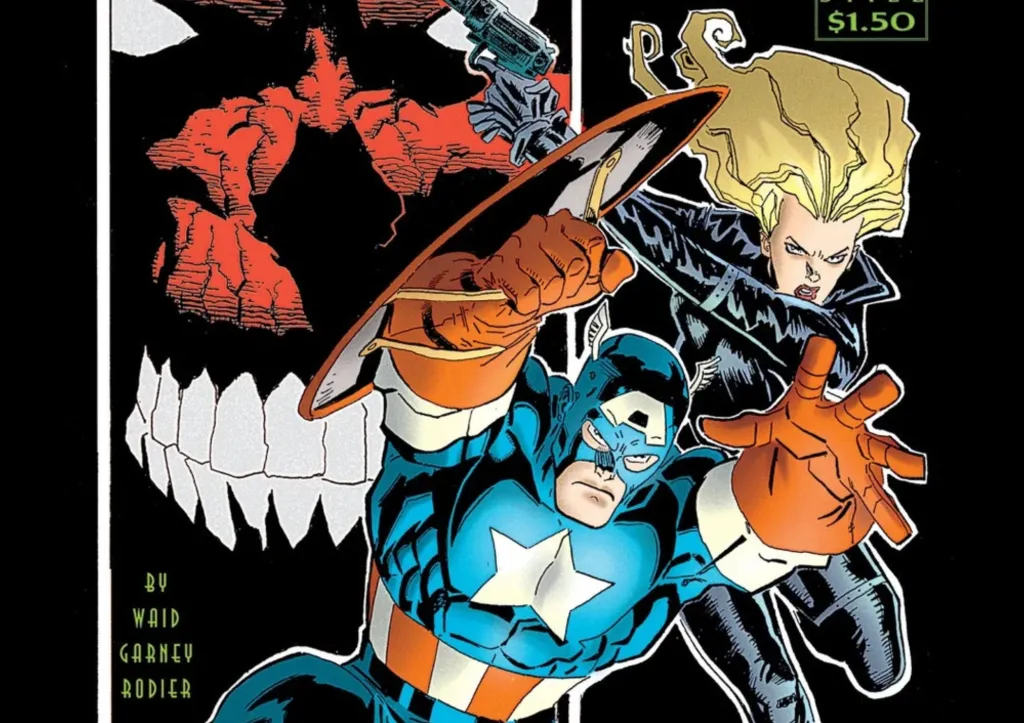
So, this isn’t a story, but multiple stories from one of the best teams in ’90s Marvel. Captain America had a tough time of things in the X-Men dominated ’90s, but eventually Marvel got writer Mark Waid, going through a career renaissance because of his work at DC on The Flash, and teamed him with artist Ron Garney for some outstanding, back to basics Captain America. The two of them worked together on Captain America (Vol. 1) #444-454, Captain America (Vol. 3) #1-6 and 12, Captain America: Sentinel of Liberty #1-6, and gave readers perfect Captain America. Their first run got people talking about Cap again, but was cut short because of the Heroes Reborn deal with Jim Lee and Rob Liefeld. Fans were outraged by this, and when Heroes Reborn ended, Waid and Garney were tapped for the newest volume of Captain America, which led to them teaming up for Captain America: Sentinel of Liberty. Waid and Garney understood what made Captain America stories work, and there are some tremendous Cap stories in their 21 issue run. I’m partial to Captain America (Vol. 3), but it’s all good.
7) The Inhumans (Vol. 2) #1-12
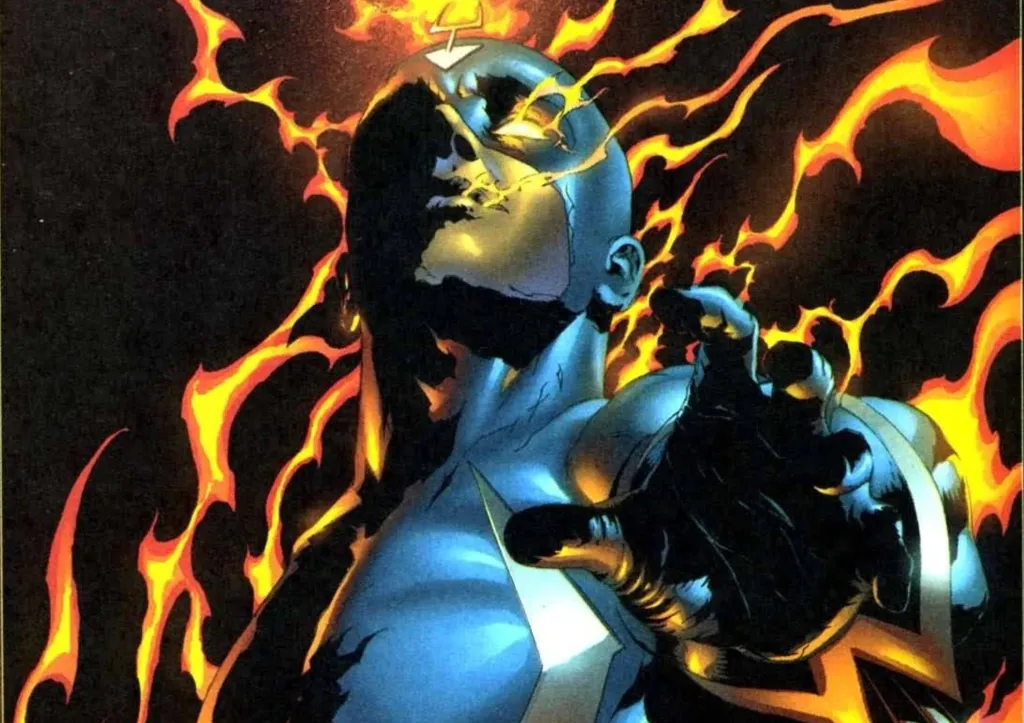
The Marvel Knights imprint reinvigorated Marvel’s B-list in the late ’90s. Kevin Smith, Joe Quesada, and Jimmy Palmiotti’s Daredevil was fantastic and Reginald Hudlin and Mark Texeira’s Black Panther began the process of rebuilding the character, forging him into the character we know today (we don’t speak of the first Marvel Knights Punisher series). However, the best book of the bunch was The Inhumans (Vol. 2) #1-12, from Paul Jenkins and Jae Lee. When territorial issues pit the Inhumans against their human neighbors, things begin to fall apart inside Attilan, as the Royal Family has to face an enemy who is holding all of the cards. This is a near perfect story, and it shows how to make the Inhumans work as a concept in their own series — focusing on the politics and culture of the Inhumans, using the Royal Family as our touchstone. This story is casually brilliant, a perfect representation of how to get the Inhumans right. This is the last time the Inhumans were great, with this story laying out the blueprint to make them work.
6) Wolverine (Vol. 2) #75-100
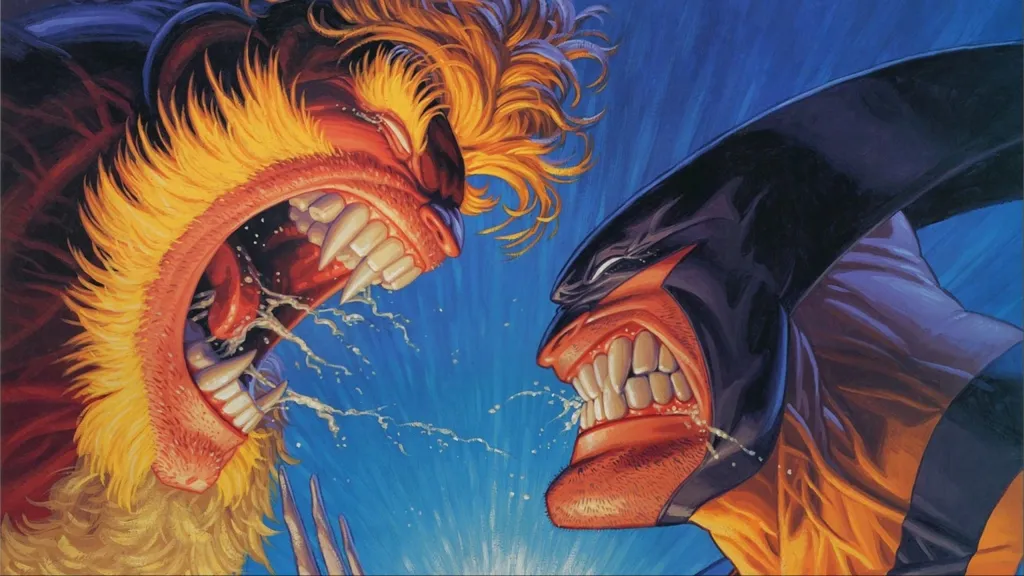
Back in the old days, before writing for the trade became the order of the day, superhero stories worked very differently. Readers would get a series of short stories — one to three issues at most — while a larger narrative was built in the background. This honestly was a much better method, hooking readers long term. In that spirit, I present Wolverine (Vol. 2) #75-100. These 25 issues start with the loss of Wolverine’s adamantium, and see him leave the X-Men on a journey to discover who is he without his indestructible skeleton. Written by Larry Hama with regular artist Adam Kubert and a small army of fill-in artists, these issues are a perfect example of Wolverine at his best. Hama and Kubert make for a tremendous team — the first five pages of Wolverine (Vol. 2) #77 are a perfect confluence of art and writing (the page layout is basically flawless; seriously, do check out those first few pages, they’re sensational) — taking readers on a road trip with Wolverine as he deals with actually being mortal. This is an extremely underrated period of Wolverine, and these 25 issues are some of the best Marvel comics of the ’90s, bar none (also pick up The Age of Apocalypse tie-in Weapon X #1-4, which was published between issue #90 and #91more Hama/Kubert goodness).