Videos by ComicBook.com
The anime adaptation’s iconic “Unravel” opening theme continues to be one of the most celebrated anime openings ever, cementing the series as one of the biggest shows of the 2010s. And then it all fell apart. While the first season was immensely popular when it aired in 2014, that same level of success never followed into the next seasons. The series’ decline can be attributed to multiple things, including low animation budget and a drop in quality from the manga towards the end. The Sink Your Teeth celebration will bring back the original series in theaters for a special commemoration of the series’ eleventh anniversary. Crunchyroll and Sony Pictures Entertainment clearly want to continue making Tokyo Ghoul relevant; now would be the best time to bring the franchise in a big way.
Why Made Tokyo Ghoul Great in the First Place

Original manga author Sui Ishida kept the traditional vampire aesthetic yet added his own spin on the trope. Rather than using vampires again, he instead used the less-used term of ghoul. In Ishida’s world, ghouls are human-looking creatures that must consume human flesh. There’s no way to turn into a ghoul through a bite. Protagonist Ken Kaneki became a half-ghoul hybrid when he was given ghoul organs. This allowed Ishida to still play with the classical themes of vampirism while developing his own unique mythology and lore. Ghouls are still underused and ill-defined in most media, giving Ishida plenty of room to create his own rules about the monsters.
The flesh-eating aspects of a ghoul also drew favorable comparisons with the titans from Attack on Titans, which similarly used non-vampire or zombie-like monsters to create its own mythology. Given that the Attack on Titans anime only premiered a few short years before Tokyo Ghoul, it was honestly a good time for anime about human-eating monsters. Both series were also incredibly bleak, with Tokyo Ghoul in particular salivating on the characters’ misery. Characters constantly die, Kaneki’s negative headspace becomes increasingly pronounced as the series continues, and it’s over-the-top violent and gory. The franchise’s darkness and leathery style has made the original series the prime example of edgy anime. The amount of edge in the series is so overbearing that it becomes almost comical, especially when viewed in a more modern context.
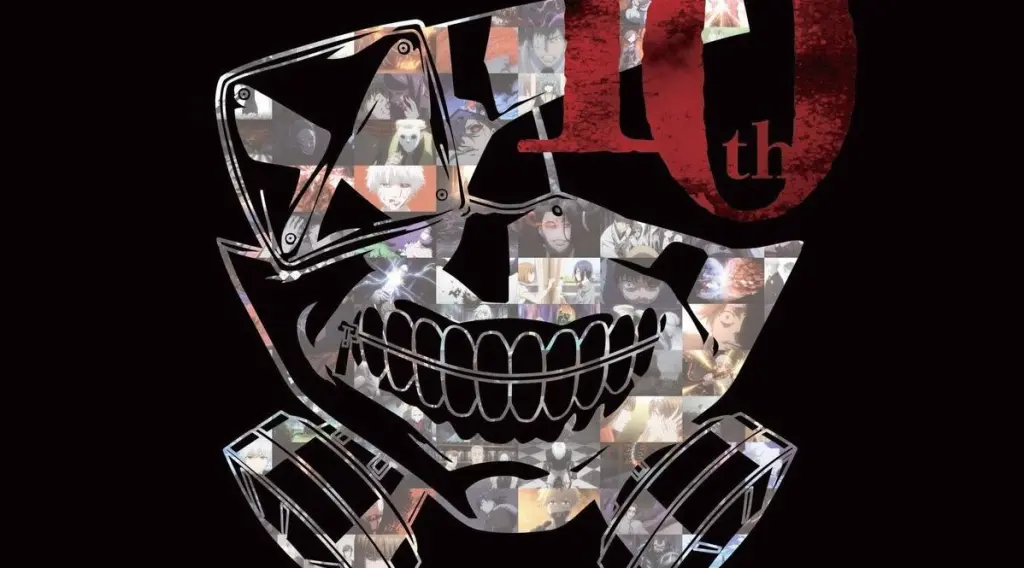
However, there’s a sincerity underneath the leather, distilling themes about human nature and depression. The series served as a metaphor for college life and post-graduation anxiety. Kaneki, a college student at the beginning of the series, is suddenly thrust into the adult world, forced to confront the uncaring reality of adulthood and responsibility. Kaneki’s growing nihilism and depression are a perfect representation of how it sometimes feels once you officially become an adult, with the weight of the world on your shoulders. How Ishida handles Kaneki’s depression and low self-worth feels personal, adding a genuineness to the story, with his art style really catering to the edgy aesthetics of the series. His mask for Kaneki has become one of the more endearing anime symbols in the last two decades, an achievement worth complimenting.