Videos by ComicBook.com
The once-in-a-lifetime attachment that anime fans new and old feel to series like Jujutsu Kaisen and My Hero Academia feels irreplaceable, because it is. But Ichi the Witch, penned by Osamu Nishi (the mangaka behind Welcome to Demon School, Iruma-Kun!!!) with art by Act-Age‘s Shiro Usazaki, is one of Shonen Jump’s top up-and-comers. It shows the pivotal role this generation of Jump manga will play in carrying the torch for those beloved series.
What Is Ichi the Witch?
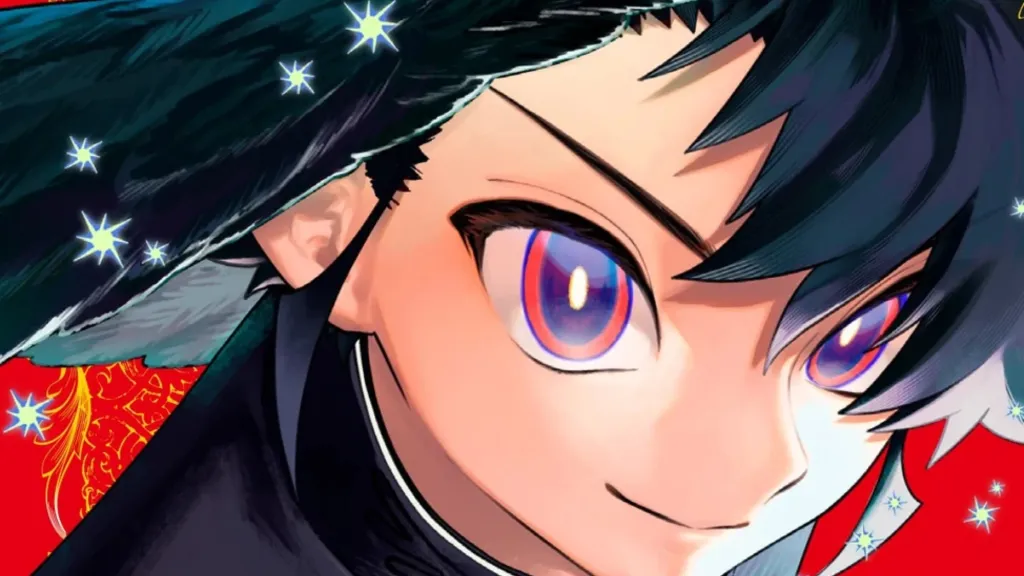
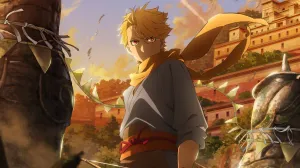
Ichi the Witch centers on Ichi: left for dead in the woods as a child, he becomes a masterful hunter to survive. In Ichi the Witch‘s world, magic is a force of nature, generally materializing as ethereal creatures called majik. Majik can be acquired by witches upon passing a trial of some kind, letting the witches call on their power later.
Of course, there’s a catch! In Ichi, only women can acquire majik and use magic, except for Ichi: a major point of the first ten chapters is his acquisition of a majik called Uroro and his induction into a witches association. Press on a few more chapters and, without going into enough detail to spoil (it happens so early it could hardly be considered a spoiler anyway), it’s revealed that Ichi is a doomed child of prophecy.
Now, how does that work? Is it another “chosen one” story? Not exactly. See, the mysteries in Ichi are dense, but they’re never spelled out. Some manga feel forced, as though they’re trying to say “yes, this series will go on for a long time—look how many questions are left to be answered!” For Ichi, this isn’t the case at all. Its questions are palpable, yet understated. For example, it has infinite runway right now to explore how Ichi’s abandonment might relate to the prophecy, precisely because it hasn’t spelled out the line of inquiry enough to box it in.
In other words, its writing is very clever. In combination with its spry (often irreverent) dialogue, digestibly structured narrative, and creatively choreographed battles (the inventive use of its own mechanics is only rivalled by the likes of JoJo), it’s clear that Ichi the Witch is built to last from the ground up. Its promise rests in the fact that it manages to always pull something unexpected out without even a whiff of contrival.
Ichi the Witch Is Part of a Long Conversation

At the same time, Ichi the Witch always feels very familiar. It’s still young: only about 40 chapters in, as of the time of writing. As far as battle shonen go, that’s basically (at most) a pre-teen. So far, it’s mostly been reviewed on a fairly superficial level: recognizing its great art, story, world-building, and characters, with the occasional mention of how its plot subverts things like gender norms in shonen stories.
Basically, it’s treated as just another battle shonen; it almost feels as though people are so jaded by the recently ended monoliths that they avoid getting attached to a new story by thinking too hard about it. This isn’t helped by the fact that early reviews of Ichi the Witch didn’t get the full picture: it almost tricks you into feeling like it’s a villain-of-the-week manga before exposing you to an overarching plot a bit later on. While its characters clearly have a lot of room to grow, too, their early writing didn’t do much to set them apart from contemporary adventure shonen. (Though Ichi‘s female characters have rightfully received praise.)
What’s incredible above all about Ichi the Witch is its effortless merging of old and new. The art smacks of Togashi’s clean, straight-shooting work in Hunter x Hunter, at times; at others, it has the frenetic energy of Gege’s best-paneled fights in Jujutsu Kaisen. Ichi’s wild-child fundamentals feel like a young Goku, while his impish, friendly, and somewhat rebellious disposition reminds us of Black Clover’s Asta. Parallels can also be drawn between the acquisition of majik in Ichi, Geto’s Cursed Spirit Manipulation in Jujutsu Kaisen, and Shaman King‘s Guardian Spirit system.
However, Ichi is by no means a copycat. It playfully calls out shonen storytelling conventions: an enemy’s takedown of “preachy, idealistic trash” (Chapter 9) feels like a Naruto subtweet. What’s more, its very foundations make cliche devices new again: Ichi‘s acquired magic is a really cool, personal take on a system usually built around natural aptitude and/or impersonal study and training.