Videos by ComicBook.com
Warning: Spoilers ahead for Ichi the Witch Chapter 42!
Ichi the Witch is very early into its run, but it’s already no stranger to throwing subtle jabs at shonen conventions to pave its own way. One possible target of Ichi the Witch might just be Naruto‘s most infamous trope: “Talk-no-Jutsu”, where battles are won through communication and empathy rather than violence. Ichi just acquired a majik that absorbs and weaponizes the feelings of others, and it’s easy to imagine how it could effectively be the “anti-Talk-no-Jutsu.”
Ichi the Witch‘s Bakugami Has a Horrifying Power

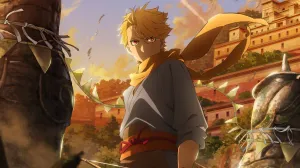
The recent chapters of Ichi the Witch involved Ichi and the crew’s quest to acquire a “slumbering majik” that would apparently help Ichi prepare for his showdown with the World-Hater. The slumbering majik turned out to be a tapir who, when hugged, relieves victims of their sorrows and burdens. The tapir had turned things around entirely in the devastated kingdom of Kagami and been elevated to the level of a deity, leading the kingdom to be renamed in its honor: Bakugami.
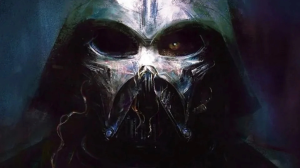
The trick is that these were absolutely Bakugami’s intentions. Bakugami is obsessed with the World-Hater, who it wanted to offer up a grotesque massacre. Its humanoid true form, wrested within the tapir’s snout, had the plan of finding a struggling nation, winning over its people, storing their sorrows, then releasing them all at once to overwhelm the people with despair and death.
As Ichi and his new friend (and prince of Kagami) Gokuraku face off with Bakugami, the harrowing potential of its ability is realized. Years of collective sorrow are piled onto Gokuraku alone, almost causing him to lose his humanity altogether, but through some “power of friendship” antics, Ichi was able to save Gokuraku and acquire Bakugami. Watching Bakugami’s arc play out had some weird resonances with how Naruto structures its characters and its own approach to sorrow.
Naruto Made Empathy A Nonviolent Weapon

In Naruto, creator Masashi Kishimoto always made an explicit effort to open up heroes and villains alike to viewers’ empathy. Behind everything, there was always a tragedy that turned evil people evil. For example: arguably the series’ most heinous act, Pain’s ruthless assault on the shinobi world has a glimmer of motivational pathos: the tragic lives of war orphans raised in the rubble of a village constantly caught up in proxy wars. Even Orochimaru, Naruto‘s most “evil-for-the-sake-of-evil” villain, is explained through intellectual curiosity and eventually subject to an (off-screen) redemption arc following the Fourth Great Ninja War.
These efforts are very intentional. It’s evident both within the series, like the Will of Fire’s ideological emphasis on love and communication as the pathways to peace, and outside the series, like Kishimoto’s interview with French distributor Kana addressing shonen manga’s necessary role in championing sentimental idealism. Naruto takes as its founding principle an idealism that charts out humanity in everyone.
Naruto‘s “Talk-no-Jutsu” showed a very direct way of weaponizing empathy, leveraging idealism and humanity to defuse violence altogether. Where Ichi the Witch diverges with Bakugami is in leveraging sorrow to pack a punch so catastrophic it can entirely strip a target of their humanity and outright kill them with devastation. In other words: “Talk? No! Jutsu!”