Videos by ComicBook.com
For quite some time, Jujutsu Kaisen took the lead in popularity and recognition, especially with its anime adaptation recognized for fluid animation and attention-grabbing fight scenes. When Chainsaw Man’s anime debuted in 2022, the crowd’s attention shifted to include the series with gratuitous violence and compelling world-building. Hell’s Paradise: Jigokuraku not only came to the screen last, but is also notably the least talked about among the Dark Trio. While I would never discredit Chainsaw Man or Jujutsu Kaisen and the hype they’ve brought back to modern anime/manga of the last five years, I do want to discuss why I believe Hell’s Paradise is the better story in the Trio, and why I think its plot and themes have a stronger longevity than its counterparts.
1) Meaningful Use of Character Death

Anime characters carry plot armor in shonen manga, there’s no getting around this overused and common trope. This is one of the reasons the Dark Trio was praised initially by fans; instead of shying away from killing off a character, these series embraced the idea that sometimes in high-stakes situations, the realistic conclusion would be for a character to die. And while this can be devastating, sometimes it drives the plot and other character arcs forward: think Kento Nanami’s death during the “Shibuya Arc” and the full circle it achieved, as well as inspiring Yuji to continue fighting curses.
But acknowledging that characters may need to perish to keep the story realistic and interesting, and giving weight to what’s at stake, doesn’t mean killing characters for the sake of shock value or grim bleakness. The amount of characters knocked out of orbit in Chainsaw Man alone could turn readers off of the plot; after all, why do I want to invest in a new set of main supporting characters when the last were killed off so fast and with such little consequence to Denji’s development and narrative? What’s the point in caring about Choso as Yuji’s only surviving family when he dies in battle and there’s little more than a moment to mourn or acknowledge what happened and what Yuji lost (and no, it isn’t brought up once the heat of the moment passes either).
To create characters is to understand that some may die, it’s also to remember you are telling a story. Not everything needs to be hyperrealistic and dark to drive home how serious your plot is meant to be. One devastating and meaningful character death is worth ten that are barely acknowledged or given the respect they deserve.
Hell’s Paradise follows through with this in a way that shows the creator, Yuji Kaku, understands the importance of preserving a character’s meaning through both death and life. Tenza is a supporting character given his own beliefs and with a kindness and will to protect Nurugai which their bond legitimate and emotional. When he dies protecting her and Shion, we see his ambitions and dreams of what life could be. Once he’s dead, it’s his vision and words that inspire Nurugai to live on and even go back to save Shion in the manga and interrupt his quest for vengeance. This single death ripples through two important characters and their decisions, even when Tenza is not around. It carries meaning. Main characters aren’t fodder to be used for bloody panels that shock the reader, only to be forgotten like they never existed. That balance, of near-death experiences, of murders and battles, and still shining in the importance of a lost life, is what makes Hell’s Paradise stand out.
2) Concise and Focused Plot

The Dark Trio may explore similar themes, but they all have unique plots that have little in common with each other. Chainsaw Man follows Denji, a teenager who merges with a Devil (beings that feed on human energy), and must now work for a company hunting down dangerous Devils and defeating them. Jujutsu Kaisen navigates a world plagued by curses created by the negative emotions of humanity and the sorcerers who fight to destroy them. Hell’s Paradise: Jigokuraku takes place on a mystical island where a group of executioners and criminals search for the elixir of immortality.
These series all dabble in intricate themes such as good versus evil, the nature of humanity, personal choice and the consequences of it, and hope in creating a better world. Each has at least one arc that fans will rabidly defend as a modern classic in the genre (think “Shibuya Incident Arc” for Jujutsu Kaisen, the “Control Devil Arc” of Chainsaw Man, and the “Horai Arc” of Hell’s Paradise). There are intriguing characters who undergo severe changes in all three series, and moments that change the direction of the plot for better or worse.
But Hell’s Paradise knows the story it wants to tell, from start to finish. Are there slower moments and build-up? Absolutely. The plot still follows a mostly linear path directly to the manga’s conclusion and the final message. One thing many fans have noticed in Jujutsu Kaisen is the numerous arcs and storylines that seem to fall flat, get lost in translation, or are just abandoned and never fully explored.
Jujutsu Society as a whole and the nature of the head clans is never fully explained or given backstory; Kenjaku’s master plan and longevity is cut short in a meaningless beheading by Yuta and quickly forgotton; the Culling Games are extremely interesting with parallels to the “Hidden Inventory Arc” and are still quickly dealt with and barely affect the overarching plot of Sukuna’s revival. It often feels like Gege Akutami had a larger story to tell than what he was capable of getting across in the plot, and the final ending suffers for it.
While Chainsaw Man’s manga has not come to an end yet, there are still so many questions as to why the story needed to go past the final reveal of Makima’s true nature. That alone could have been the end of the series, with the manga building up to the final battle between Denji and the mentor who molded her perfect weapon using manipulation and gentle, yet cruel tactics that have made Makima an iconic villain. The deaths of main side characters like Aki and Rocket could have felt like final punches to the gut before the story’s end, rather than footnotes to a new cast introduced in Denji’s life (maybe a continuation manga following Denji raising Nayuta and finding his way in the world). If Jujutsu Kaisen had too many messages it wanted to get across, Chainsaw Man sometimes feels like Tatsuki Fujimoto hasn’t decided on a central message yet at all.
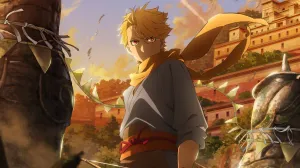
Love it or hate it, Hell’s Paradise sets out to tell a single story: Gabimaru eventually returns to his wife. Every tribulation he faces and every enemy he strikes down are backed by this wish, from the moment we are introduced to his character, that cannot die as an internalized means of staying alive for love. And that is also what sets Hell’s Paradise apart from the other two Dark Trio shonen: the focused theme of love and hope, of carrying on through the love you once had for a comrade, friend, or lover to live on. We reach each narrative checkpoint with the characters as they discover the secret of Shinsenkyo, the connection to mainland Japan, and how to defeat and overcome their adversaries. The plot doesn’t stray far from the information we need to complete a full picture and to flesh out this world and the characters living inside of it.